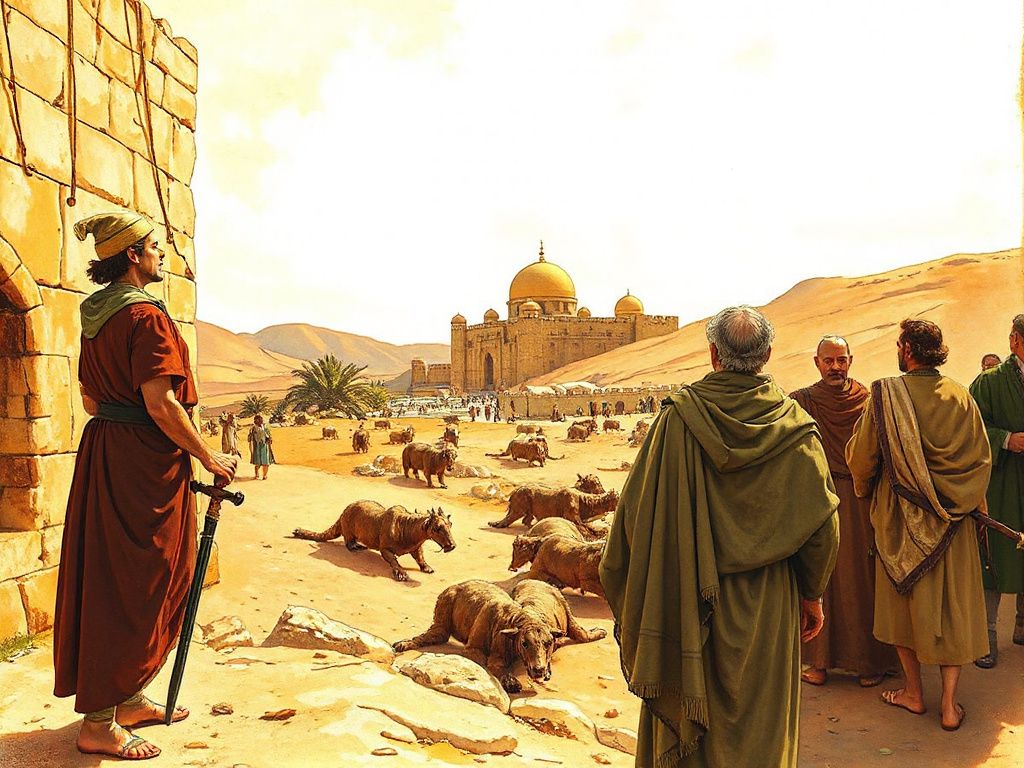
经文研读
2 Chronicles 7:1 — Fire From Heaven and the Glory Filling the Temple
When Solomon finished praying, divine fire consumed the sacrifices and the glory of Jehovah filled the temple.
经文
- 1.所 羅 門 祈 禱 已 畢 , 就 有 火 從 天 上 降 下 來 , 燒 盡 燔 祭 和 別 的 祭 。 耶 和 華 的 榮 光 充 滿 了 殿 ;Now when Solomon had made an end of praying, the fire came down from heaven, and consumed the burnt-offering and the sacrifices; and the glory of Jehovah filled the house.
这段经文的意思
The verse reports two coordinated divine acts. First, fire came down from heaven and consumed the burnt-offering and the sacrifices; second, the glory of Jehovah filled the house. The text places the fire at the very moment Solomon's prayer ends, linking answered prayer with a visible, physical confirmation that the sacrifice has been accepted. The burnt-offering is consumed by heavenly fire rather than by the priests' altar fire, which marks the offering as accepted directly by God rather than merely carried out by human officiants.
The phrase 'the glory of Jehovah filled the house' states that the divine presence now occupies the temple structure itself. In the surrounding verses, the priests cannot enter because the glory has filled the space, and the assembled Israelites see the glory on the house and bow to the ground. The filling functions as a ratification: the building Solomon has constructed is now, by God's own action, set apart as the place where his name dwells.
The verse pairs two ideas that recur in Israel's history: fire consuming the sacrifice, and the glory taking up residence. Together they show that worship offered at this place is accepted, and that the God who accepts it is personally present. The verse is therefore both a conclusion to Solomon's prayer of dedication and the opening of a new stage in which the temple is the confirmed meeting point between God and his people.
背景
2 Chronicles 7 records the conclusion of Solomon's temple-building project. Chapter 7:1 sits at the hinge between the prayer of dedication and the people's response. In verses 2–3 the priests are unable to enter because of the glory, and the Israelites bow with their faces to the pavement and thank Jehovah. Verses 4–10 then describe the seven-day dedication, the additional sacrifices, and a second seven-day feast, with the assembly dismissed on the twenty-third day of the seventh month.
Verses 12–22 shift the scene to a night appearance of Jehovah to Solomon. The Lord affirms that he has heard the prayer and chosen the temple as a house of sacrifice. He then sets out a conditional pattern: if the people called by his name humble themselves, pray, seek his face, and turn from wicked ways, he will hear, forgive, and heal; but if they forsake his statutes and serve other gods, the temple itself will be cast out of his sight. The opening verse's fire and glory are thus the public sign that conditions the following divine speech.
常见问题
Why does the verse mention fire and the glory as two separate things?
The fire accepts the sacrifice by consuming it, and the glory shows that God's presence has taken up the temple. The two together indicate that the worship is received and that the God who receives it is present in the place.
How does this verse relate to what Solomon has just been doing?
The chapter places verse 1 right after Solomon finishes his prayer of dedication. The fire and glory arrive at the moment the prayer ends, marking it as answered and the temple as accepted.
What does the rest of chapter 7 add to the meaning of verse 1?
Verses 2–10 describe the people's response, the seven-day dedication, and the additional sacrifices. Verses 12–22 record a night appearance in which Jehovah confirms he has heard the prayer and sets out what will follow if the people remain faithful or turn away. Verse 1 is therefore the public sign that opens these responses.