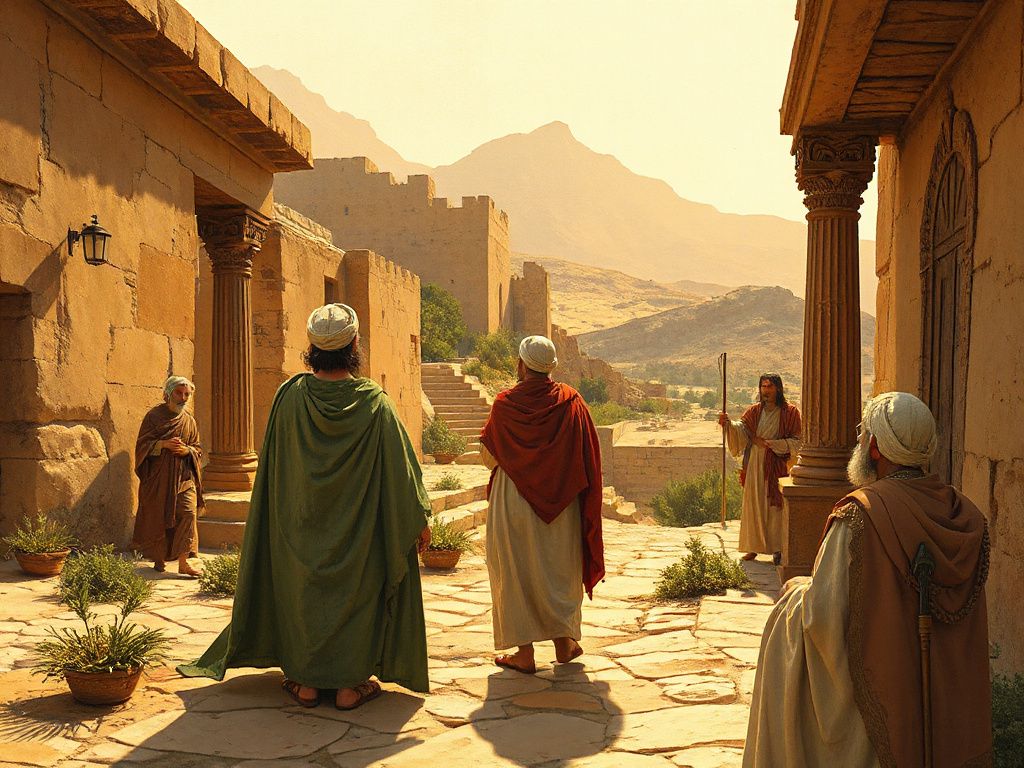
经文研读

2 Corinthians 12:9-10 — Strength Perfected in Weakness

Paul quotes the Lord's reply to his third prayer for the removal of the 'thorn in the flesh': grace is sufficient and power is made perfect in weakness, so he now glories gladly in weaknesses, insults, hardships, persecutions, and distresses, because 'when I am weak, then am I strong.'

经文

  1. 9.他 對 我 說 : 我 的 恩 典 夠 你 用 的 , 因 為 我 的 能 力 是 在 人 的 軟 弱 上 顯 得 完 全 。 所 以 , 我 更 喜 歡 誇 自 己 的 軟 弱 , 好 叫 基 督 的 能 力 覆 庇 我 。And he hath said unto me, My grace is sufficient for thee: for my power is made perfect in weakness. Most gladly therefore will I rather glory in my weaknesses, that the power of Christ may rest upon me.
  2. 10.我 為 基 督 的 緣 故 , 就 以 軟 弱 、 凌 辱 、 急 難 、 逼 迫 、 困 苦 為 可 喜 樂 的 ; 因 我 甚 麼 時 候 軟 弱 , 甚 麼 時 候 就 剛 強 了 。Wherefore I take pleasure in weaknesses, in injuries, in necessities, in persecutions, in distresses, for Christ's sake: for when I am weak, then am I strong.

这段经文的意思

The passage opens with a divine speech report: 'And he hath said unto me, My grace is sufficient for thee: for my power is made perfect in weakness.' This is the answer Paul receives after begging the Lord 'thrice' that the 'thorn in the flesh, a messenger of Satan to buffet me' might depart (vv. 7-8). The reply does not remove the affliction; it redefines the condition under which Paul's work can continue. 'Sufficient' frames grace as enough rather than abundant, and 'made perfect' presents power as something that reaches its intended fullness specifically in weakness rather than alongside it.

Paul then draws the personal conclusion: 'Most gladly therefore will I rather glory in my weaknesses, that the power of Christ may rest upon me.' The 'therefore' ties his boasting directly to the Lord's word. Boasting is redirected from credentials or ecstatic experiences (cf. vv. 1-6) to weaknesses themselves, because the aim of that reorientation is so that 'the power of Christ may rest upon me' — a 'resting upon' or tabernacling of Christ's strength over the apostle's inadequacy.

Verse 10 expands the catalogue and sharpens the paradox. Paul says, 'Wherefore I take pleasure in weaknesses, in injuries, in necessities, in persecutions, in distresses, for Christ's sake: for when I am weak, then am I strong.' Five categories of hardship are named — weaknesses, insults, necessities (lack of resources), persecutions, and distresses — and each is embraced 'for Christ's sake.' The closing aphorism, 'when I am weak, then am I strong,' is the concentrated form of the entire argument: the strength present in Paul's ministry is not his own but Christ's, and it becomes operative precisely where his own resources end.

背景

In 2 Corinthians 12:1-6 Paul mentions visions and revelations, including being 'caught up even to the third heaven' and hearing 'unspeakable words.' He then shifts to boasting 'in weaknesses' rather than in such ecstatic experiences, and introduces the reason: a 'thorn in the flesh, a messenger of Satan' was given to keep him from being 'exalted overmuch' (vv. 7-8). His request that it depart is followed by the divine reply in vv. 9-10, which is the heart of the passage.

Verses 11-13 follow directly: 'for in nothing was I behind the very chiefest apostles, though I am nothing,' and the 'signs of an apostle were wrought among you in all patience, by signs and wonders and mighty works.' These statements about apostolic credentials sit immediately after the claim that power is perfected in weakness, showing that the apostolic signs are understood not as evidence of personal strength but as the manifestation of Christ's power resting on a weak servant.

常见问题

What is the 'thorn in the flesh' that Paul mentions just before this passage?

The passage itself does not define the thorn. In vv. 7-8 it is described as 'a thorn in the flesh, a messenger of Satan to buffet me, that I should not be exalted overmuch,' given in connection with 'the exceeding greatness of the revelations.' Its specific identity — illness, opposition, or another hardship — is not stated in the text.

Why does Paul answer his own prayer for removal with boasting in weakness?

Because the Lord's reply, quoted in v. 9, does not remove the affliction but reinterprets its purpose: 'My grace is sufficient for thee: for my power is made perfect in weakness.' The 'therefore' in 'Most gladly therefore will I rather glory in my weaknesses' ties his new boasting directly to that word. The hardship remains; what changes is the ground of confidence, which is now Christ's power resting on him rather than the absence of the trial.

What does 'when I am weak, then am I strong' mean in context?

Within vv. 9-10 the line is the concentrated summary of the whole paragraph: the strength operative in Paul's apostolic life is not his own resource but Christ's power, and that power 'is made perfect' and 'rests upon' him specifically in the situations he lists — weaknesses, injuries, necessities, persecutions, and distresses. Strength here is not the removal of weakness but the presence of Christ's power within it, which is why the five categories of hardship are said to be taken 'for Christ's sake.'

继续研读

HomeDiscoverStudyReadMe