经文研读
2 Kings 2:11 — Elijah Ascends to Heaven in a Whirlwind
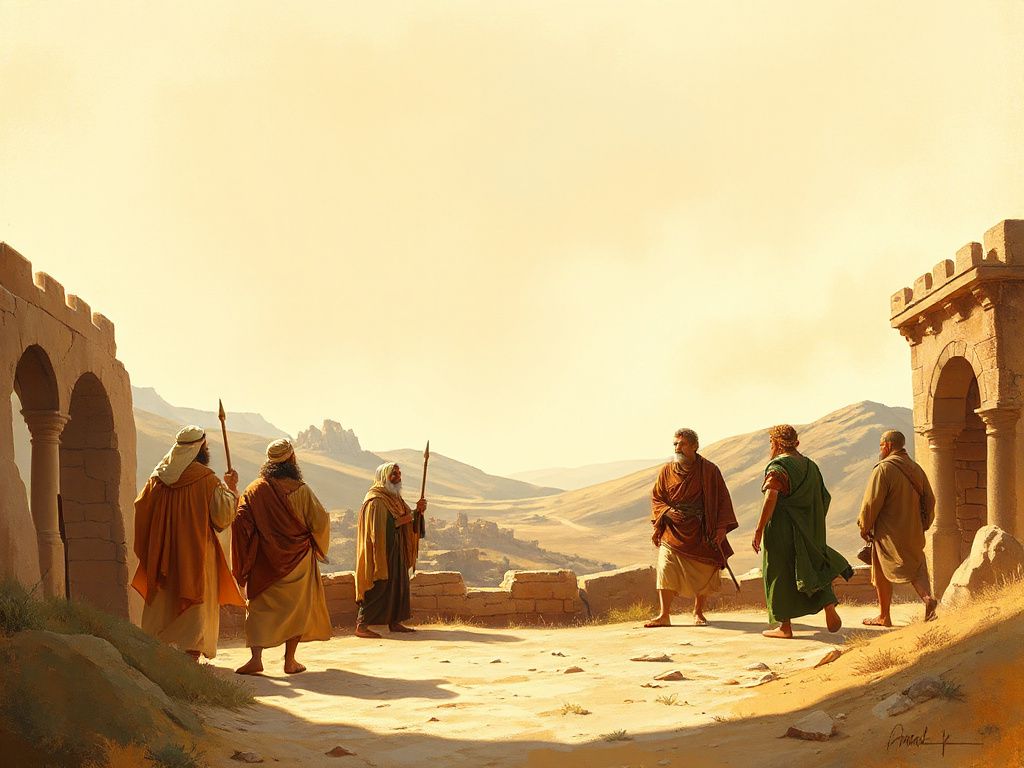
In 2 Kings 2:11, Elijah and Elisha are walking together when a chariot and horses of fire appear, separate them, and Elijah is carried up to heaven by a whirlwind.
经文
- 11.他 們 正 走 著 說 話 , 忽 有 火 車 火 馬 將 二 人 隔 開 , 以 利 亞 就 乘 旋 風 升 天 去 了 。And it came to pass, as they still went on, and talked, that, behold, there appeared a chariot of fire, and horses of fire, which parted them both asunder; and Elijah went up by a whirlwind into heaven.
这段经文的意思
The verse is the climactic moment of the transfer of prophetic authority from Elijah to Elisha. As the two continue walking and talking, a chariot of fire with horses of fire suddenly appears, parts the two men asunder, and Elijah is taken up by a whirlwind into heaven. The text gives no account of death; Elijah simply disappears from Elisha in a theophanic event, and his mantle falls to the ground (v. 13).
The vocabulary is striking. The 'chariot of fire' and 'horses of fire' are not described as an earthly army but as a manifestation of divine presence that intervenes between the two prophets. The 'whirlwind' (Hebrew: סערה, storm-wind) is the vehicle of the taking, and 'heaven' is the destination. The narration refuses to specify what Elisha physically sees at the moment of separation, focusing instead on the visible chariot and the wind that lifts Elijah away.
Because the prior verses establish that Elisha asked for a 'double portion' of Elijah's spirit and was told he would receive it if he saw Elijah being taken (vv. 9-10), verse 11 functions as the condition being fulfilled. Elisha's eyewitness status becomes the basis for the prophetic inheritance he then claims at the Jordan (v. 14), where he strikes the waters with Elijah's mantle and asks, 'Where is Jehovah, the God of Elijah?'
背景
Chapter 2 opens by stating that Jehovah intended to take Elijah up by a whirlwind into heaven (v. 1). Elijah then travels from Gilgal toward Beth-el, Jericho, and finally the Jordan, with Elisha refusing each time to stay behind. Sons of the prophets at Beth-el and Jericho already know that Elijah is to be taken that day (vv. 3, 5).
At the Jordan, Elijah parts the waters with his mantle (v. 8), Elisha asks for a double portion of his spirit (v. 9), and Elijah sets the condition of seeing his departure (v. 10). Verse 11 is the fulfillment. The following verses then show Elisha tearing his clothes (v. 12), retrieving the fallen mantle (v. 13), parting the Jordan himself (v. 14), and being recognized by the sons of the prophets as Elijah's successor (v. 15). The rest of the chapter presents Elisha's first acts of office: refusing a search party (vv. 16-18) and healing the waters of Jericho (vv. 19-22).
常见问题
Why does a chariot of fire appear instead of an angel?
The text itself does not explain the form. It describes the chariot and horses of fire as the visible manifestation that separates the two prophets and accompanies Elijah's ascent, but gives no commentary on why this particular image was chosen.
Did Elijah die in 2 Kings 2:11?
The passage says Elijah 'went up by a whirlwind into heaven' and makes no mention of death. The next verse says Elisha 'saw him no more,' and later prophets speak of Elijah as having been taken without death (compare v. 16, where the sons of the prophets suggest the Spirit may have cast him on a mountain).
What is the 'double portion' that Elisha requested?
In v. 9 Elisha asks that a double portion of Elijah's spirit be upon him. The text frames this as an inheritance request, with Elijah responding that the fulfillment depends on Elisha seeing him taken. Verse 11 provides that eyewitness moment, and v. 15 shows the sons of the prophets recognizing that the spirit of Elijah rests on Elisha.