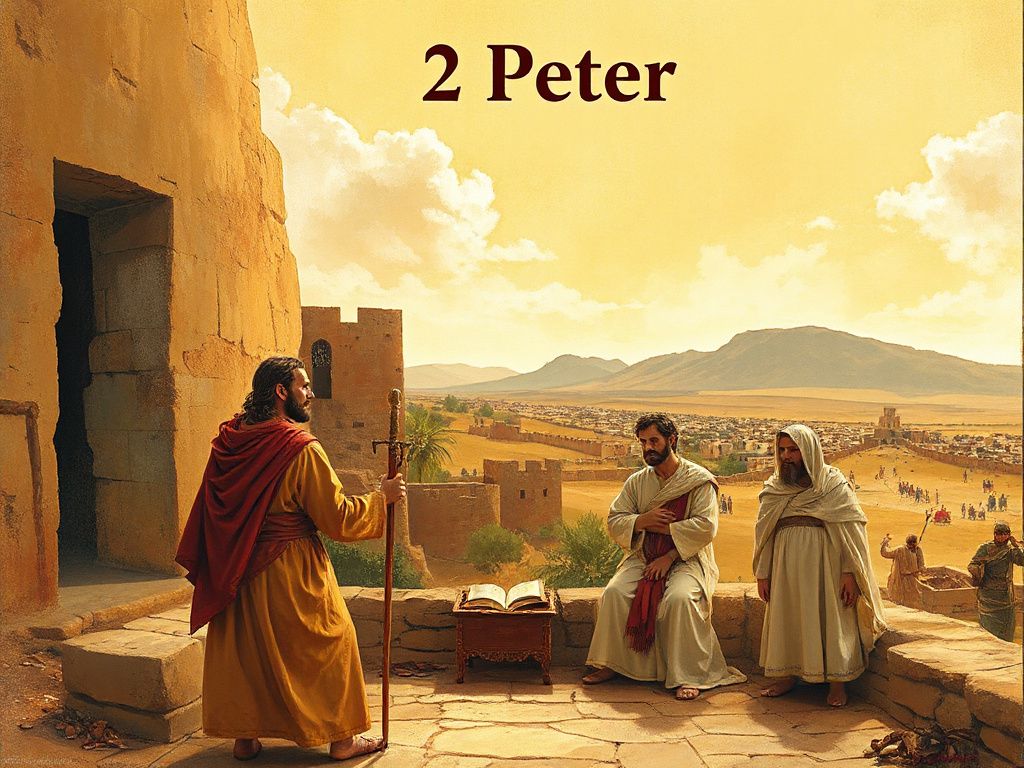
经文研读

2 Peter 1:19 — The Prophetic Word as a Lamp

Peter calls the prophetic word a confirmed, lamp-like light for the present darkness, guiding believers until the full day of Christ's return dawns within them.

经文

  1. 19.我 們 並 有 先 知 更 確 的 預 言 , 如 同 燈 照 在 暗 處 。 你 們 在 這 預 言 上 留 意 , 直 等 到 天 發 亮 , 晨 星 在 你 們 心 裡 出 現 的 時 候 , 才 是 好 的 。And we have the word of prophecy made more sure; whereunto ye do well that ye take heed, as unto a lamp shining in a dark place, until the day dawn, and the day-star arise in your hearts:

这段经文的意思

Peter opens with 'we have the word of prophecy made more sure,' setting up a deliberate comparison between eyewitness experience and prophetic Scripture. The Transfiguration account (verses 16–18) gave Peter and the other apostles firsthand confirmation of Christ's majesty, and now he points to an additional, even more certain witness: the prophetic word. 'Made more sure' frames Scripture not as guesswork or speculation but as a confirmed, reliable deposit that anchors faith.

The lamp metaphor, 'as unto a lamp shining in a dark place,' acknowledges the limits of the present age. The world is portrayed as a place of dimness where full clarity has not yet arrived. Scripture functions within that setting as a present, practical light, not a complete illumination. Peter then defines the lamp's duration with 'until the day dawn, and the day-star arise in your hearts,' indicating that the lamp's role is temporary, until the eschatological day breaks and Christ, the morning star, rises fully within believers.

Peter also calls his readers to active response: 'whereunto ye do well that ye take heed.' The verse treats Scripture reading as a matter of deliberate, ongoing attention rather than passive possession. To 'take heed' to the prophetic lamp is to orient one's life by it while awaiting the dawn it promises.

背景

The surrounding chapter ties the prophetic word to a sustained ethical project. Verses 3–11 describe God's power granting promises that make believers partakers of the divine nature, followed by a chain of virtues from faith to love, climaxing in entrance into 'the eternal kingdom of our Lord and Saviour Jesus Christ.' Verse 19's lamp thus serves a community being shaped toward that kingdom.

Immediately after, verses 20–21 clarify the lamp's origin: 'no prophecy of scripture is of private interpretation,' because 'men spake from God, being moved by the Holy Spirit.' Read together, the passage presents a layered argument: the Transfiguration confirmed Christ's majesty to eyewitnesses, the prophetic word confirmed it further as a reliable lamp, and the Spirit's role behind that word secures its divine origin.

常见问题

Why does Peter say the prophetic word is 'made more sure'?

Because verse 19 follows the Transfiguration account (vv. 16–18), Peter is setting the eyewitness confirmation of Christ's majesty alongside the prophetic word as a second, confirming witness. The prophetic word functions as a further, fixed witness that anchors faith.

What does 'a lamp shining in a dark place' mean?

It is a metaphor acknowledging that the present age is a setting of dimness. Scripture functions within that darkness as a present, reliable light, but not the final, full illumination, which is reserved for the day that is to dawn.

Who or what is the 'day-star' that arises in the hearts?

Within this verse the day-star, or morning star, is presented as the full light that is to arise within believers 'until' it does. Read alongside the Transfiguration context, it points to the fullness of Christ's presence replacing the lamp's partial light.

继续研读

HomeDiscoverStudyReadMe