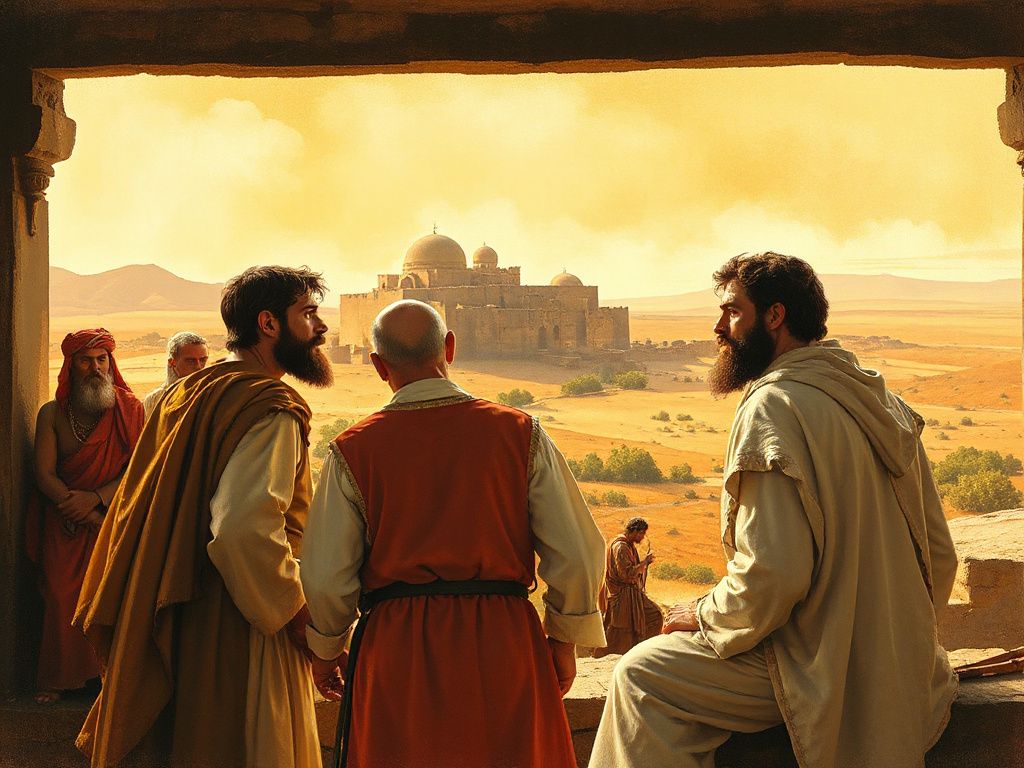
经文研读
2 Samuel 12:13 — David's Confession and Forgiveness
After Nathan's parable exposes David's sin, David confesses, and Nathan declares that the Lord has put away his sin though he will not die.
经文
- 13.大 衛 對 拿 單 說 : 我 得 罪 耶 和 華 了 ! 拿 單 說 : 耶 和 華 已 經 除 掉 你 的 罪 , 你 必 不 至 於 死 。And David said unto Nathan, I have sinned against Jehovah. And Nathan said unto David, Jehovah also hath put away thy sin; thou shalt not die.
这段经文的意思
Verse 13 falls into two halves. David speaks first: 'I have sinned against Jehovah.' The confession is short — no excuse, no mitigation, no mention of Bathsheba or Uriah. He names God's covenant name (Jehovah) and acknowledges that the offense is vertical, directed against the Lord himself, even though the human victims were Uriah and Bathsheba. Brevity is the point: the man who crafted a careful cover-up (2 Samuel 11) now drops every defense.
Nathan's reply is equally brief. 'Jehovah also hath put away thy sin' uses a verb that means to cause the transgression to pass away from the sinner. The clause 'thou shalt not die' refuses the death penalty David himself had just pronounced on the rich man in the parable (v. 5). Within the theology of the passage, the death that David deserved is transferred; the life he retains is granted, not earned.
The verse holds confession and forgiveness together without collapsing them into one event. Forgiveness is real and immediate, spoken by a prophet authorized to declare it. Yet the very next verse (v. 14) shows that the forgiven sinner still inhabits a world shaped by what he did. The text thus distinguishes pardon from the elimination of consequences, a pattern that recurs when the rest of the chapter unfolds.
背景
Verses 1–12 set the confrontation. Nathan tells a parable about a rich man who steals a poor man's one lamb; David, unaware that the parable is about him, condemns the offender to death and fourfold restitution. Nathan then announces 'Thou art the man' and traces the guilt: despising the word of Jehovah, striking Uriah, and taking Bathsheba. The announced consequence is the sword that will never depart from David's house and the public exposure of his private act. Verse 13 sits at the hinge: the indictment is complete, and the response begins.
Verses 13–25 trace what follows the confession. Nathan declares forgiveness and lifts the death sentence, but the child of the affair will die (v. 14) as a consequence that touches the nations' view of God. David then fasts and prays for the child's life, and afterward, when the child dies, he worships and resumes ordinary life, explaining that he can no longer reach the child but will one day go to him. The chapter ends with the birth of Solomon, named Jedidiah — 'beloved of Jehovah' — signaling that the line of promise continues even through the wreckage of David's sin.
常见问题
Is 'put away thy sin' the same as forgiveness elsewhere in the Old Testament?
The Hebrew verb behind 'put away' is used elsewhere in contexts where God removes or causes to pass away the wrongdoing. Within 2 Samuel 12 itself, the verse does not define the mechanism; it simply announces the result through a prophet. Comparing the term to other laws or texts requires sources beyond the material provided here.
Does 'thou shalt not die' mean David faced no consequences?
The verse itself lifts the death penalty, but the chapter immediately continues: the child will die (v. 14), and the sword will not depart from David's house (vv. 10–11). The passage distinguishes between the pardon of the sinner and the ongoing consequences within the household and the public sphere, as the following verses show.
Why does David say he has sinned against Jehovah rather than against Uriah or Bathsheba?
The confession in v. 13 names only Jehovah. The chapter's earlier indictment (vv. 9–10) likewise frames the offense as despising the word of Jehovah and taking the wife of Uriah, indicating that the human acts are treated as violations of the covenant relationship with God. The text does not deny harm to Uriah and Bathsheba; it locates the ultimate accountability before the Lord.