经文研读
2 Samuel 15:30 — The Weeping King Ascends the Mount of Olives
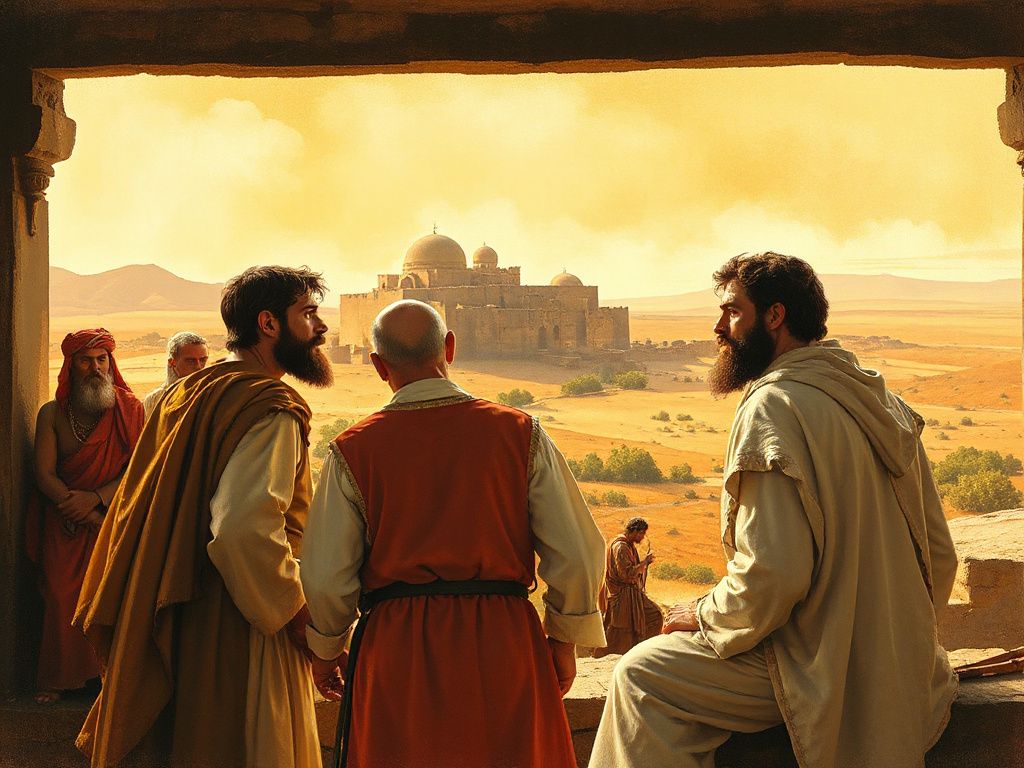
David flees Jerusalem during Absalom's rebellion, ascending the Mount of Olives barefoot, with covered head, weeping openly while his followers share the same posture of mourning.
经文
- 30.大 衛 蒙 頭 赤 腳 上 橄 欖 山 , 一 面 上 一 面 哭 。 跟 隨 他 的 人 也 都 蒙 頭 哭 著 上 去 ;And David went up by the ascent of the mount of Olives, and wept as he went up; and he had his head covered, and went barefoot: and all the people that were with him covered every man his head, and they went up, weeping as they went up.
这段经文的意思
2 Samuel 15:30 is a single sentence that compresses David's physical posture, his location, and the emotional atmosphere of his flight from Jerusalem into one image. He goes up by the ascent of the Mount of Olives — the road leaving the city eastward toward the wilderness. As he climbs, he weeps. His head is covered and his feet are bare. Every man with him adopts the same covering of the head, and they too weep while going up. The verse is not interested in tactics or speech; it records only the body's posture and the tears that fall on the road.
The covered head and bare feet are not random details. In the Old Testament, covering the head with a garment and going barefoot were signs of deep mourning or humiliation, the kind of posture worn by someone in lament or under shame. David is not leading a triumphant march out of the capital; he is leaving as one publicly struck down. The repetition of "weeping as he went up" in the verse's opening and closing lines brackets the whole scene in grief, so that even the geography — the ascent itself — becomes a picture of sorrow.
Because the people with David copy his gestures, the verse turns private grief into a shared procession. David's suffering is not isolated; it spreads to those loyal to him, and together they form a line of mourners climbing the hill. Read this way, the verse functions as a literary portrait: the king who entered Zion is now the king who leaves it stripped of dignity, and the text forces the reader to see that contrast through the simple, repeated details of head, feet, and tears.
背景
The verse sits in the middle of the Absalom rebellion narrative. Earlier in the chapter, Absalom has won the hearts of Israel (vv. 1–6), declared himself king at Hebron (vv. 7–12), and David has been forced to flee Jerusalem with his household and loyal troops, crossing the brook Kidron (vv. 14–23). David has just sent the ark back into the city with Zadok and Abiathar, accepting that he may or may not see God's habitation again (vv. 24–29). Verse 30 then shows the immediate physical and emotional cost of that decision as the procession leaves.
Immediately after verse 30, two pieces of news arrive: Ahithophel, David's counselor, has joined Absalom (v. 31), and Hushai the Archite meets David at the summit of the ascent, also with torn clothing and dust on his head (v. 32). David's response — prayer against Ahithophel's counsel and a plan to send Hushai back as a counter-spy (vv. 33–37) — shows that even in this posture of humiliation, David continues to act strategically and to entrust the outcome to God. Verse 30 is therefore the hinge between the raw emotion of the flight and the political-spiritual maneuvering that follows.
常见问题
Why does David cover his head and go barefoot?
In the Old Testament, covering the head with a garment and removing sandals are signs of deep mourning or humiliation. The verse uses these gestures to portray David as a king publicly struck down by his son's rebellion, not as a ruler leading a triumph.
Why does David weep while going up the Mount of Olives?
David is leaving Jerusalem as a fugitive because of Absalom's coup. The road up the Mount of Olives leads away from the city and toward the wilderness, so the weeping is grief over lost kingdom, possibly over the ark returned to the city, and over the betrayal by his own son, as the surrounding chapter makes clear.
Does the verse say David prayed, or only that he wept?
The verse itself records only the physical posture and tears of David and his men. The first prayer recorded in this section comes in the next verse, when David is told that Ahithophel has joined Absalom and asks God to turn Ahithophel's counsel into foolishness (v. 31).