经文研读
Daniel 6:10 — Prayer, Open Windows, and Unbroken Discipline
Daniel 6:10 shows Daniel continuing his disciplined prayer toward Jerusalem even after the signed interdict forbids it.
经文
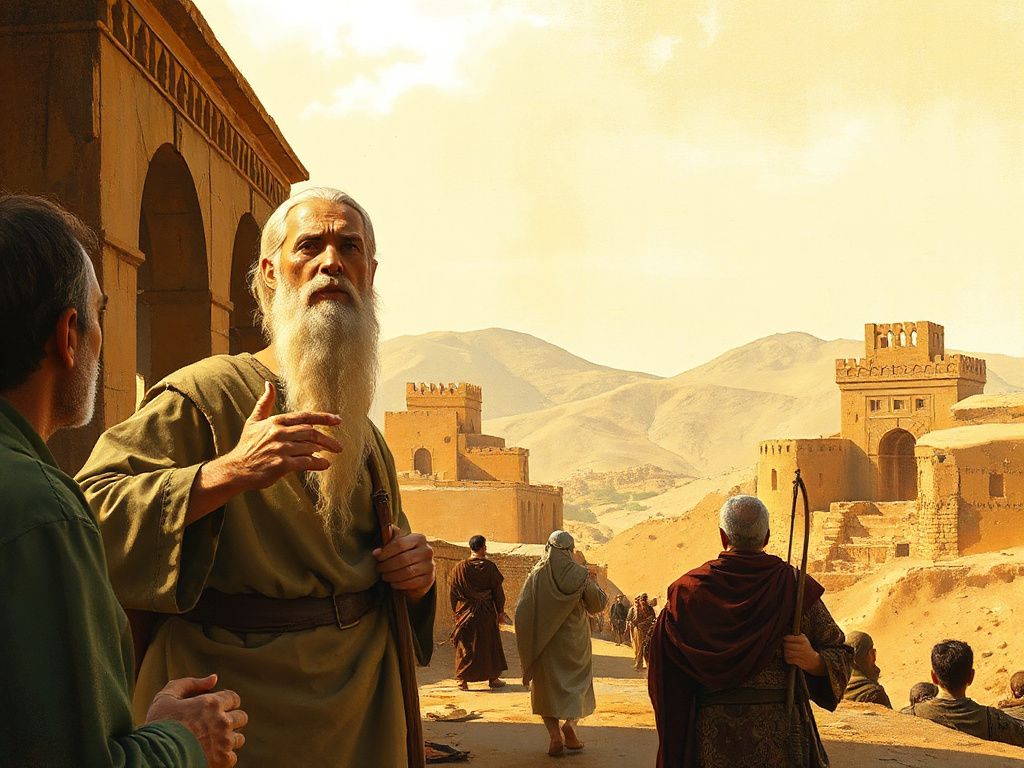
- 10.但 以 理 知 道 這 禁 令 蓋 了 玉 璽 , 就 到 自 己 家 裡 ( 他 樓 上 的 窗 戶 開 向 耶 路 撒 冷 ) , 一 日 三 次 , 雙 膝 跪 在 他 神 面 前 , 禱 告 感 謝 , 與 素 常 一 樣 。And when Daniel knew that the writing was signed, he went into his house (now his windows were open in his chamber toward Jerusalem) and he kneeled upon his knees three times a day, and prayed, and gave thanks before his God, as he did aforetime.
这段经文的意思
The verse centers on a deliberate, public risk: Daniel reads the writing, sees that it has been sealed with the royal signet, and goes home — knowing that the law of the Medes and Persians, as verses 7–9 emphasize, "altereth not." His action is not ignorant but informed. The text frames the choice as a direct conflict between an unchangeable human statute and a higher allegiance, and Daniel chooses the latter without hesitation or secrecy about his motives.
Two details carry the weight of the passage. First, the parenthetical "his windows were open in his chamber toward Jerusalem" identifies his prayer posture physically, anchoring him to the city where God's name was set (cf. Solomon's prayer in 1 Kings 8). Second, the phrase "as he did aforetime" marks this as a pre-existing pattern. Daniel does not improvise resistance or seek a loophole; he continues a discipline of three daily prayers already established before the crisis, which is precisely why the decree can be used against him in verses 11–13.
The prayer itself has two components: "prayed" and "gave thanks before his God." The text refuses to describe Daniel as defiant; it presents him as worshipful. Kneeling (a posture of submission, not confrontation) is paired with thanksgiving, so the verse reads as continued devotion reframed by crisis — the same practice now charged with cost. The chapter later uses Daniel's faithfulness as the basis for Darius's confession in verse 26.
背景
Daniel 6 frames a clear political setup: envious officials, unable to find fault in Daniel's administration (vv. 4–5), maneuver to target "the law of his God" instead. Their strategy in verses 6–9 wraps their attack in royal language — a flattering decree directing all petitions to the king alone for thirty days, sealed under the irrevocable law of the Medes and Persians. Darius signs it unwittingly, and the trap closes.
Verse 10 is the hinge: Daniel's response determines whether the chapter becomes a story of compromise or of deliverance. The verses immediately after (11–13) show the officials exploiting his public prayers, and 14–16 record Darius's distress and Daniel's sentencing. The remainder of the chapter reverses the plot — Daniel's preservation, the accusers' destruction, and Darius's decree honoring "the God of Daniel" (vv. 23–28).
常见问题
Why are Daniel's windows described as open toward Jerusalem?
The direction ties his prayer to the city where God's name was placed. The chapter uses the parenthetical detail to mark his prayer as deliberate worship aimed at the covenant center, not a private or ambiguous gesture.
Was Daniel trying to provoke the officials by praying visibly?
The text says he prayed "as he did aforetime" — meaning he continued an existing pattern, not a new provocation. The visibility is incidental to the long-standing practice and to open windows already in place before the decree.
What is the significance of "the law of the Medes and Persians, which altereth not"?
The repeated phrase (vv. 8, 12, 15) establishes the trap's force: the decree is irreversible by human means. It is precisely the irrevocability that turns Daniel's normal practice into a capital offense and that drives Darius's distress in verse 14, where even the king cannot simply revoke his own word.