经文研读
Ezra 10:4 — The Call to Lead in Repentance
The assembly urges Ezra to take responsibility for the covenant reform because the matter belongs to him, promising support and urging courage.
经文
- 4.你 起 來 , 這 是 你 當 辦 的 事 , 我 們 必 幫 助 你 , 你 當 奮 勉 而 行 。 」Arise; for the matter belongeth unto thee, and we are with thee: be of good courage, and do it.
这段经文的意思
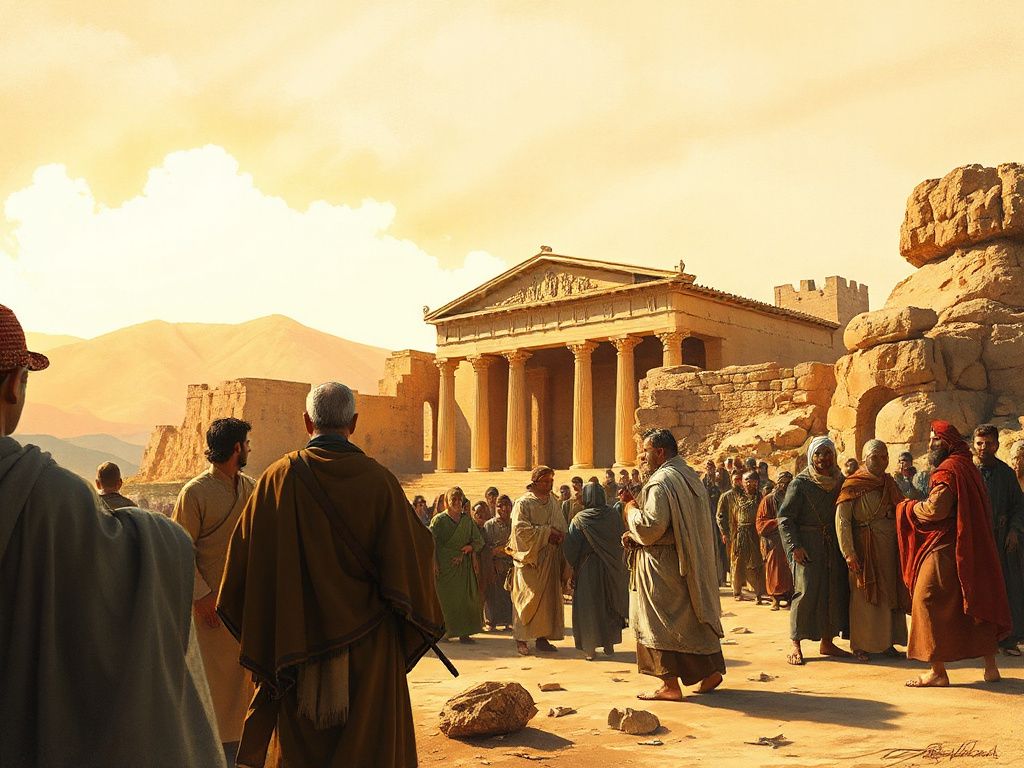
Ezra 10:4 is a direct address to Ezra. After Shecaniah proposed a covenant to put away the foreign wives (v. 3), the gathered assembly turns to Ezra and presses him to act. The clause "for the matter belongeth unto thee" assigns responsibility: as the priest and scribe who had come to teach Israel the law, Ezra is the one positioned to lead this reform. The verse is therefore not just encouragement but an acknowledgment of office.
The second half — "we are with thee: be of good courage, and do it" — is a pledge of communal support. The people who confessed the sin now promise to stand behind its resolution. The combination of delegated authority and promised backing frames repentance as something that moves from confession into decisive, public action.
The closing commands ("arise," "be of good courage," "do it") echo the kind of commissioning language found elsewhere in the Old Testament when a leader is set apart for a hard task. Read in context, the verse is the hinge of Ezra 10: it transfers the proposal of vv. 2–3 into an authorized mandate, which the following verses (5–6) then show Ezra accepting.
背景
Ezra 10 opens with Ezra's prayer and public confession, which draws a great assembly (v. 1). Shecaniah acknowledges the trespass of marrying foreign women but affirms that there is still hope in Israel (v. 2), then proposes a covenant to put away those wives according to the law (v. 3). Verse 4 is the assembly's response, placing the execution of that proposal in Ezra's hands.
Ezra immediately accepts the mandate. In v. 5 he makes the leaders swear to the plan, and in v. 6 he withdraws into a chamber of mourning, refusing food and water over the trespass. What follows — proclamation, a three-day gathering, and a months-long examination — shows that the "do it" of v. 4 is not a single act but the launching of a structured, communal process of reform.
常见问题
Why does the assembly say "the matter belongeth unto thee"?
In the context of Ezra 10, Ezra is the priest and scribe who had been commissioned to teach Israel the law (cf. Ezra 7). The people's words acknowledge that the proposed covenant reform falls under his God-given office, so he is the one to lead it.
Does "be of good courage, and do it" mean the task will be easy?
No. The rest of the chapter makes clear that the reform is painful and lengthy, with months of investigation and many families affected. The command is a charge to act despite difficulty, not a promise of ease.
How does this verse relate to repentance?
The verse shows that confession (v. 1), acknowledgment of sin (v. 2), and a proposed remedy (v. 3) are pressed into concrete action (v. 4). The passage frames true repentance as moving from tears and words into authorized, communal obedience.