经文研读

Ezra 9:6 — Ezra's Prayer of Shame and Guilt

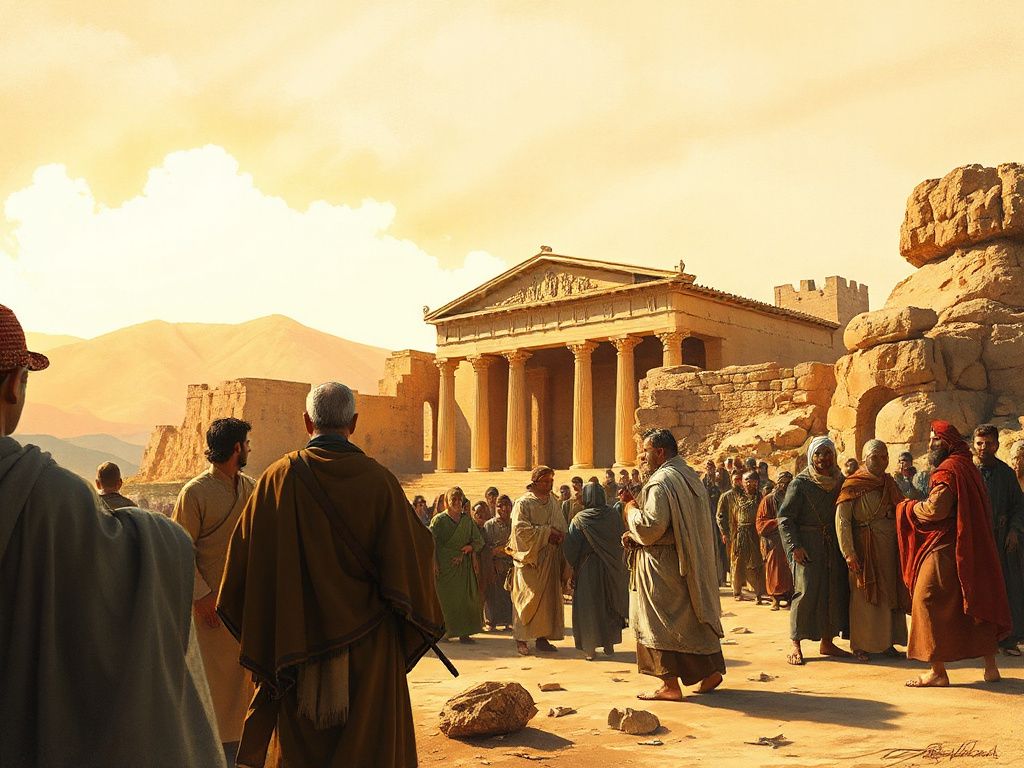
Ezra, overwhelmed by the report of intermarriage with pagan peoples, confesses his shame and guilt before God, acknowledging that Israel's iniquities have risen over their heads and reached to the heavens.

经文

  1. 6.說 : 我 的   神 啊 , 我 抱 愧 蒙 羞 , 不 敢 向 我   神 仰 面 ; 因 為 我 們 的 罪 孽 滅 頂 , 我 們 的 罪 惡 滔 天 。and I said, O my God, I am ashamed and blush to lift up my face to you, my God; for our iniquities are increased over our head, and our guiltiness is grown up unto the heavens.

这段经文的意思

The verse records the opening of Ezra's confessional prayer after he learns that the returned exiles, including priests and Levites, have intermarried with the surrounding peoples (Ezra 9:1-2). The physical acts that precede this prayer — tearing garments and robe, plucking hair, sitting confounded until the evening offering (Ezra 9:3-5) — frame the words of verse 6 as a grief-stricken, formalized lament rather than a casual remark.

The content of the confession uses two spatial images to express the magnitude of guilt. "Our iniquities are increased over our head" paints sin as a flood that rises above the person, leaving no escape, while "our guiltiness is grown up unto the heavens" pictures the offense as ascending to God's throne. Ezra does not minimize or excuse; the language of being "ashamed and blush to lift up my face" shows that he treats the sin as incompatible with bold access to God.

Theologically, the verse locates Ezra's confession in the gap created by disobedience: the people who should enjoy covenant nearness cannot look up. Yet the prayer does not end in despair; the following verses acknowledge God's gracious intervention in leaving a remnant. The shame in verse 6 is therefore not the final word but the precondition for the appeal for mercy that follows.

背景

The chapter opens with officials informing Ezra that the people of Israel, the priests, and the Levites have not separated from the surrounding peoples and have taken foreign wives, mingling "the holy seed" with the nations (Ezra 9:1-2). Ezra's reaction — tearing garments and hair, sitting stunned — leads into the evening sacrifice, where he falls on his knees with outstretched hands and begins the prayer that verse 6 opens (Ezra 9:3-5).

Within the prayer itself, verse 6's confession is followed by a recital of historical guilt ("Since the days of our fathers," Ezra 9:7), a recognition of God's surprising mercy in leaving a remnant (Ezra 9:8-9), and renewed pleas that contrast God's righteousness with the people's ongoing unfaithfulness (Ezra 9:10-15). Verse 6 thus serves as the pivot between the report of sin and the full petition that interprets it.

常见问题

Why does Ezra say he is ashamed to lift up his face?

In Ezra 9:6, the shame is a response to the reported intermarriage of returned exiles with pagan peoples (Ezra 9:1-2). Ezra treats this covenant unfaithfulness as incompatible with bold access to God, so he cannot lift his face until confession is made.

What do the two height images — "over our head" and "unto the heavens" — mean?

The first image, "our iniquities are increased over our head," pictures sin as a flood rising above the person so there is no escape. The second, "our guiltiness is grown up unto the heavens," pictures the offense as ascending to God's throne. Together they express that the guilt is both inescapable for the people and visible to God.

Does Ezra's confession in verse 6 end in despair?

No. Verse 6 opens the confession with shame, but the surrounding prayer goes on to acknowledge God's mercy in leaving a remnant (Ezra 9:8-9) and to appeal for restoration. The shame is the starting point for a petition that confesses sin and seeks God's righteousness together.

继续研读

HomeDiscoverStudyReadMe