经文研读
Joshua 24:14-15 — Choose This Day Whom You Will Serve
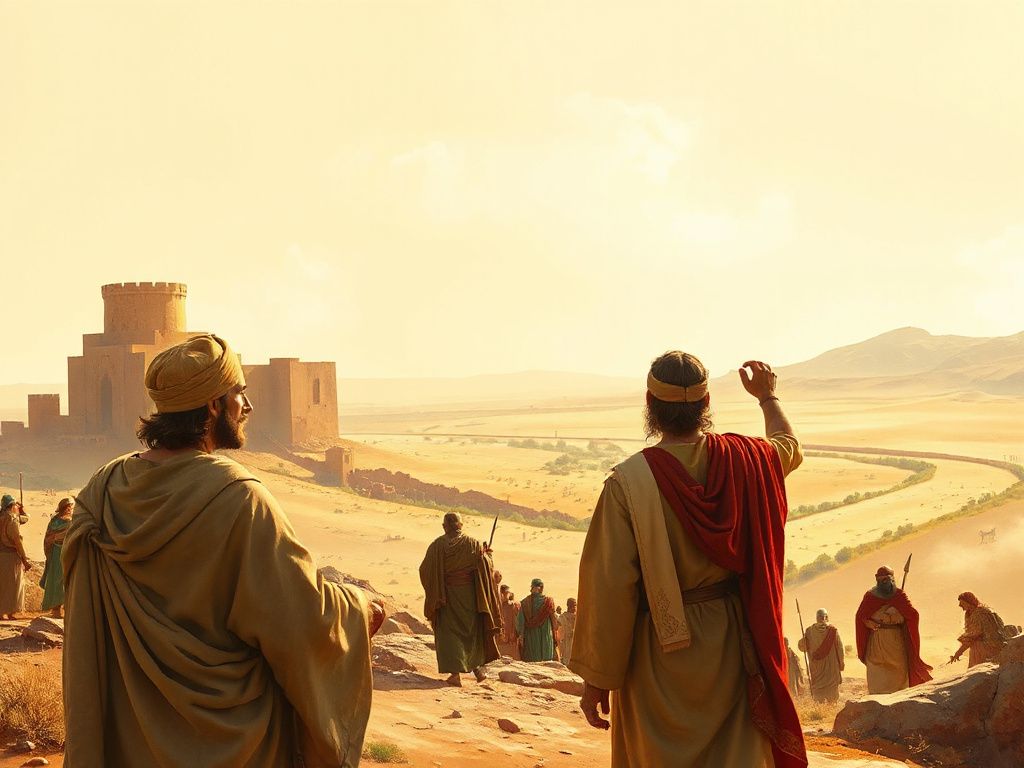
At Shechem Joshua demands that Israel reject the gods of the past and the land, and commit exclusively to serving Jehovah; he leads with his own household's decision.
经文
- 14.現 在 你 們 要 敬 畏 耶 和 華 , 誠 心 實 意 的 事 奉 他 , 將 你 們 列 祖 在 大 河 那 邊 和 在 埃 及 所 事 奉 的 神 除 掉 , 去 事 奉 耶 和 華 。Now therefore fear Jehovah, and serve him in sincerity and in truth; and put away the gods which your fathers served beyond the River, and in Egypt; and serve ye Jehovah.
- 15.若 是 你 們 以 事 奉 耶 和 華 為 不 好 , 今 日 就 可 以 選 擇 所 要 事 奉 的 : 是 你 們 列 祖 在 大 河 那 邊 所 事 奉 的 神 呢 ? 是 你 們 所 住 這 地 的 亞 摩 利 人 的 神 呢 ? 至 於 我 和 我 家 , 我 們 必 定 事 奉 耶 和 華 。And if it seem evil unto you to serve Jehovah, choose you this day whom ye will serve; whether the gods which your fathers served that were beyond the River, or the gods of the Amorites, in whose land ye dwell: but as for me and my house, we will serve Jehovah.
这段经文的意思
Verse 14 is framed as a direct imperative rooted in what God has just been shown to have done: Joshua has recounted the crossing of the Jordan, the hornet that drove out the Amorites, and the gift of a land the people did not labor in (vv. 11-13). The logic is therefore theological — because Jehovah has acted, therefore now fear and serve Him. The two qualifiers, 'in sincerity and in truth' (Hebrew bə·ṯam-mîm û·ḇə·ʾĕ·meṯ), point to inner wholeness and faithfulness rather than outward ritual. The command to 'put away the gods which your fathers served beyond the River, and in Egypt' deliberately bundles two memories: the patriarchal idolatry in Mesopotamia and the gods of the Egyptian context, demanding a clean break with both ancestral and adopted religious pasts.
Verse 15 issues the passage's most quoted line. Joshua addresses the people in the second person and lays out three options: the gods of the fathers 'beyond the River,' the gods of the Amorites 'in whose land ye dwell,' or Jehovah. The verb 'choose' (Hebrew bā·ḥar) carries covenantal weight — it is the same verb used elsewhere in Joshua for selecting a people for God's possession. Joshua does not wait for the people's response before making his own decision; he and his house will serve Jehovah. The clause 'as for me and my house' (Hebrew wa·ʾă·nî wa·bêṯî) models household-level covenant commitment, treating the family as a single unit of decision.
The two verses together form a deliberate pattern of demand, choice, and lead. Joshua demands exclusive loyalty, presents it as an open choice rather than coercion, and then steps forward first. This sequence — call, offer, example — sets up the people's affirmative response in vv. 16-18, where they echo Joshua's language by affirming that Jehovah is the one who brought them out of Egypt and drove out the Amorites, and therefore they also will serve Him. The passage frames covenant fidelity not as inherited by default but as a deliberate, public, and renewable act of allegiance.
背景
Joshua 24 is a covenant-renewal ceremony at Shechem (v. 1), where Joshua first recites the history of God's dealings with Israel from the patriarchs (vv. 2-4), through the exodus and wilderness (vv. 5-7), into the conquest (vv. 8-13). Verses 14-15 sit at the climax of that recital as the human response demanded by the recited grace. Joshua's words reach backward to the gods 'beyond the River' (v. 2) where Terah served other gods, and forward to the Amorite gods of the land Israel now inhabits, framing the choice in terms of two religious pasts and one present.
Immediately after the target passage, the people answer that they too will serve Jehovah (vv. 16-18), citing the exodus and the driving out of the Amorites. Joshua responds with a sobering warning in v. 19 that the people cannot serve Jehovah because He is a holy and jealous God, but the people reaffirm their commitment (vv. 21-24), and Joshua writes the covenant in the book of the law and sets up a stone as a witness (vv. 25-27). The chapter closes with Joshua's death and Eleazar's death (vv. 29-33), giving the passage's call to exclusive loyalty the weight of a final, end-of-era summons.
常见问题
What does 'fear Jehovah' mean in verse 14?
In this context, fearing Jehovah is the reverent response owed to the God who has just been shown to have delivered Israel (vv. 11-13). It is the inner posture that pairs with serving Him 'in sincerity and in truth,' pointing to wholehearted covenant devotion rather than mere outward ritual compliance.
Is Joshua forcing the people to choose?
No. Joshua frames the choice openly: 'choose you this day whom ye will serve' (v. 15). He lays out the alternatives — the gods of the fathers beyond the River, the gods of the Amorites in the land, or Jehovah — and then states his own household's decision. The people's affirmative response in vv. 16-18 is given voluntarily, and Joshua even warns in v. 19 that serving Jehovah is no light matter because He is a holy and jealous God.
Why does Joshua mention 'the gods which your fathers served beyond the River, and in Egypt'?
Joshua is demanding a comprehensive break with the past. The 'gods beyond the River' refers back to the idolatry of the patriarchal era noted in v. 2, where Terah served other gods. Adding 'and in Egypt' extends the demand to whatever religious influences the Israelites absorbed during their time there. Together they require Israel to reject both ancestral heritage that competes with Jehovah and adopted practices from their period of bondage, leaving exclusive loyalty as the only option.