经文研读
Lamentations 1:1 — The Solitary City
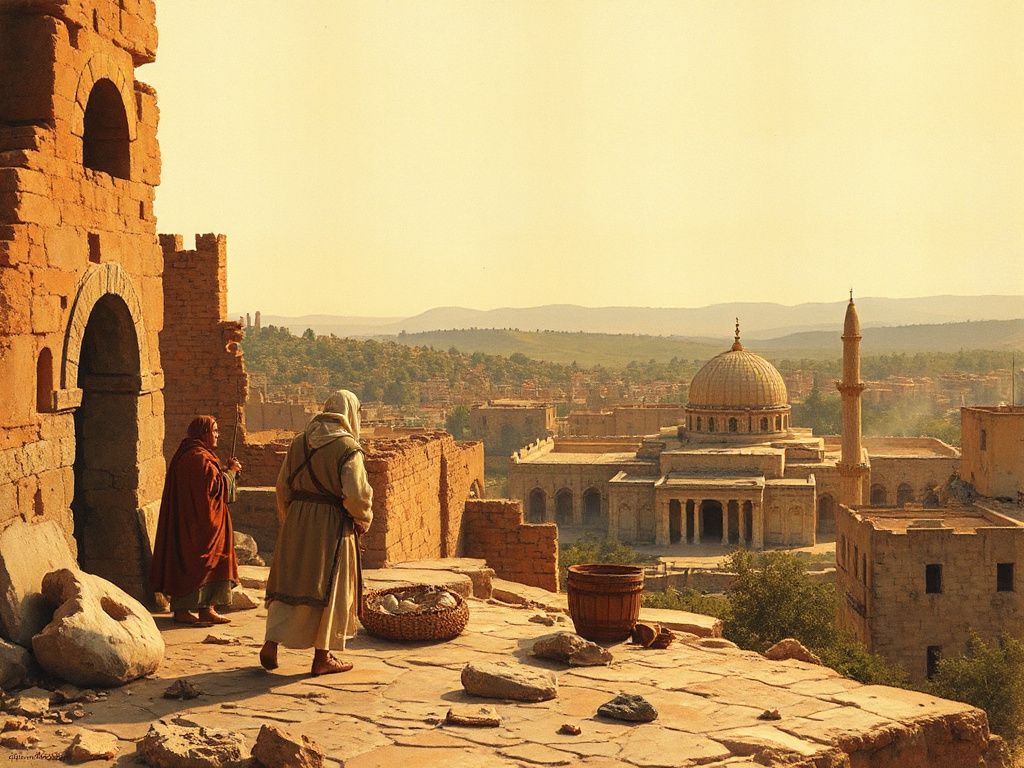
Lamentations 1:1 opens the book by depicting Jerusalem as a once-populous, great, and royal city that now sits alone, widowed, and tributary.
经文
- 1.先 前 滿 有 人 民 的 城 , 現 在 何 竟 獨 坐 ! 先 前 在 列 國 中 為 大 的 , 現 在 竟 如 寡 婦 ; 先 前 在 諸 省 中 為 王 后 的 , 現 在 成 為 進 貢 的 。How doth the city sit solitary, that was full of people! She is become as a widow, that was great among the nations! She that was a princess among the provinces is become tributary!
这段经文的意思
The verse uses three parallel pairs to portray Jerusalem's reversal of fortune. Where there was once a populous city, there is now solitude; where there was greatness among the nations, there is now widowhood; where there was a princess among the provinces, there is now forced labor. Each line moves from honor to shame, from fullness to emptiness, establishing the book's central image: Zion undone.
The repeated questioning opener ("How…") is a Hebrew exclamation of grief rather than a literal inquiry. The city is personified as a woman — a widow who has lost her husband, and a princess who has lost her status. Widowhood in the ancient Near East meant not only loss of a spouse but loss of protection, provision, and social standing. The image of becoming "tributary" captures political subjugation: she who once ruled over surrounding provinces now serves them.
This opening verse sets the literary and theological agenda for the book. It frames Jerusalem's fall as loss — of people, of status, of dignity — and invites the reader to mourn with the poet. What follows in chapter 1 will unfold the causes (transgressions, v. 5), the consequences (mockery, desolation, v. 7), and the unresolved cry for divine attention (vv. 9–11).
背景
Verse 1 launches a five-chapter poetic book. In the immediate context, the solitary city of v. 1 weeps at night with no comforters (v. 2), Judah has gone into exile (v. 3), and Zion's roads mourn because none come to the appointed feasts (v. 4). The sequence shows the social, political, and religious dimensions of the collapse introduced in v. 1: loss of companions, loss of homeland, loss of worship.
By v. 5 the cause is named: "Jehovah hath afflicted her for the multitude of her transgressions." The remaining verses alternate between the poet's identification with the suffering city and direct address to God. The opening question of v. 1, unanswered in itself, frames the book's movement from lament through confession toward the prayer of v. 22.
常见问题
Why does Lamentations 1:1 open with a question?
The opening "How…" is a Hebrew expression of lament, a rhetorical exclamation of grief rather than a request for information. It invites the reader into the poet's shock at the reversal of Jerusalem's fortunes — from populous to solitary, from honored to widowed.
Why is Jerusalem described as a widow and a princess?
Jerusalem is personified as a woman to make the loss concrete. Widowhood signals loss of protector and provision; princess signals lost royal status. Together the two images convey that the city has lost both her relational security and her political dignity.
What does "tributary" mean in this verse?
Tributary describes one who is compelled to labor or pay tribute to a former subordinate. The verse thus depicts not only political defeat but a complete reversal of hierarchy: Jerusalem, once a princess over the provinces, now serves them.