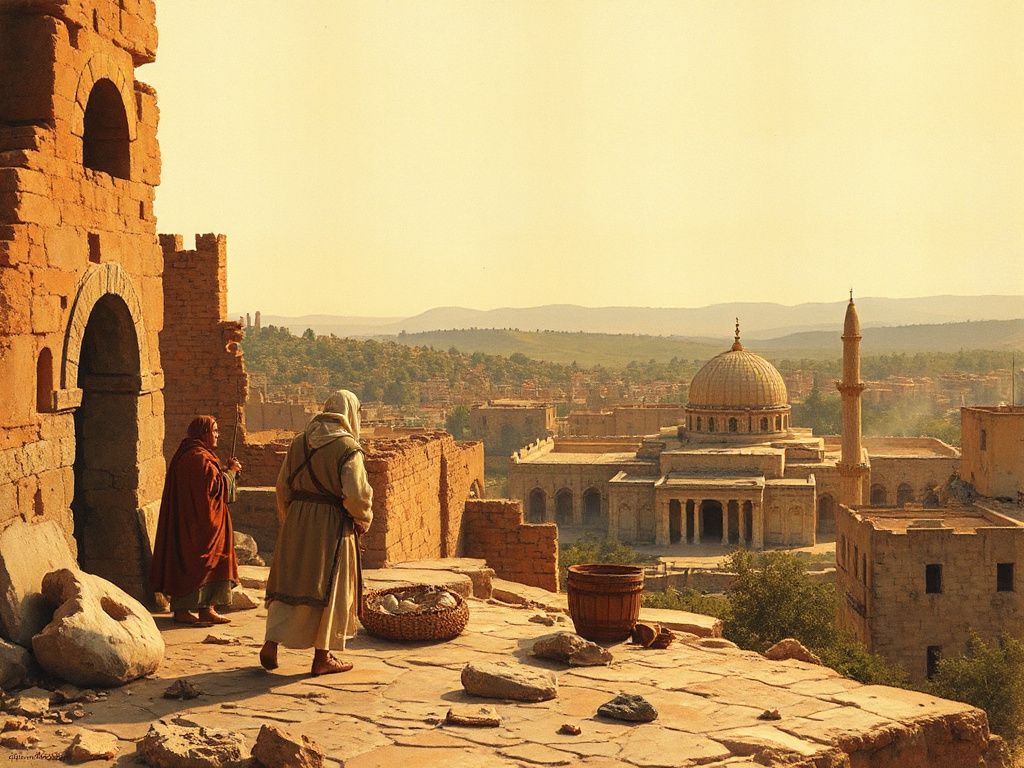
经文研读

Lamentations 3:55 — A Cry from the Lowest Dungeon

In Lamentations 3:55, the speaker cries out to Jehovah from the depths of a dungeon, calling on God's name as the only recourse when all human help has failed.

经文

  1. 55.耶 和 華 啊 , 我 從 深 牢 中 求 告 你 的 名 。I called upon thy name, O Jehovah, out of the lowest dungeon.

这段经文的意思

Lamentations 3:55 is a single, direct petition embedded in a larger movement from despair to hope. The speaker addresses God by name ("O Jehovah") and specifies the location of the cry: "out of the lowest dungeon." The verse has no argument or reasoning attached; it is a bare act of calling, modeling what prayer looks like when the worshiper has nothing left to offer but the name of God.

The phrase "lowest dungeon" intensifies the imagery built up in the surrounding verses (vv. 52–54), where the speaker describes enemies chasing him like a bird, his life being cut off in a dungeon, a stone cast upon him, and waters flowing over his head until he says, "I am cut off." Verse 55 does not deny that extremity; it answers it by reaching upward with God's name. The cry assumes that the name of Jehovah is not bound by geography or depth — it can be invoked even from the lowest place.

Functionally, the verse is the hinge between the complaint of vv. 52–54 and the testimony of vv. 56–58, where the speaker recalls that God heard his voice, drew near, said "Fear not," pleaded his cause, and redeemed his life. Verse 55 supplies the action — calling on the name — that makes the following report of divine response coherent. The name itself is the ground of appeal.

背景

Lamentations 3 is structured as a personal lament, in which an individual voice processes communal catastrophe. Verses 1–18 narrate affliction in the third person; verses 19–21 mark a turn ("This I recall to my mind; therefore have I hope"); verses 22–41 develop theological reflection on God's mercies and human response; verses 42–66 move back into complaint and renewed appeal. Verse 55 sits inside this last movement, where personal complaint and communal prayer interweave.

Within that final movement, verses 48–51 already shift the speaker's eye from his own suffering to "the destruction of the daughter of my people," and verses 52–54 zoom back in on the personal "I": chased, imprisoned, overwhelmed, "cut off." Verse 55 then becomes the personal act of prayer that anchors the communal memory of answered prayer in verses 56–66. The curated note for the verse frames it as modeling personal and communal cry from the abyss of suffering.

常见问题

Why does the verse call it the "lowest" dungeon?

The word intensifies the imagery of vv. 52–54, where the speaker has been cut off in a dungeon, covered with a stone, and drowned by waters over his head. "Lowest" emphasizes that there is no human depth left beneath him; the cry therefore goes upward by necessity.

Does verse 55 describe a literal prison or a figurative state?

The verse itself does not specify. It uses dungeon imagery (bor/bʾʾr) in the context of a poetic lament that mixes personal complaint with communal imagery such as waters over the head (v. 54) and being chased like a bird (v. 52). The curated note reads it as modeling cry from "the abyss of suffering," leaving the referent open between literal and figurative.

How does verse 55 connect to the verses that follow?

Verse 55 supplies the act of prayer that makes verses 56–58 coherent. In v. 55 the speaker calls on God's name; in vv. 56–58 he reports that God heard his voice, drew near with "Fear not," pleaded his cause, and redeemed his life. The name invoked in v. 55 is the same name that responds in vv. 56–58.

继续研读

HomeDiscoverStudyReadMe