经文研读

Nehemiah 6:15-16 — The Wall Finished in Fifty-Two Days

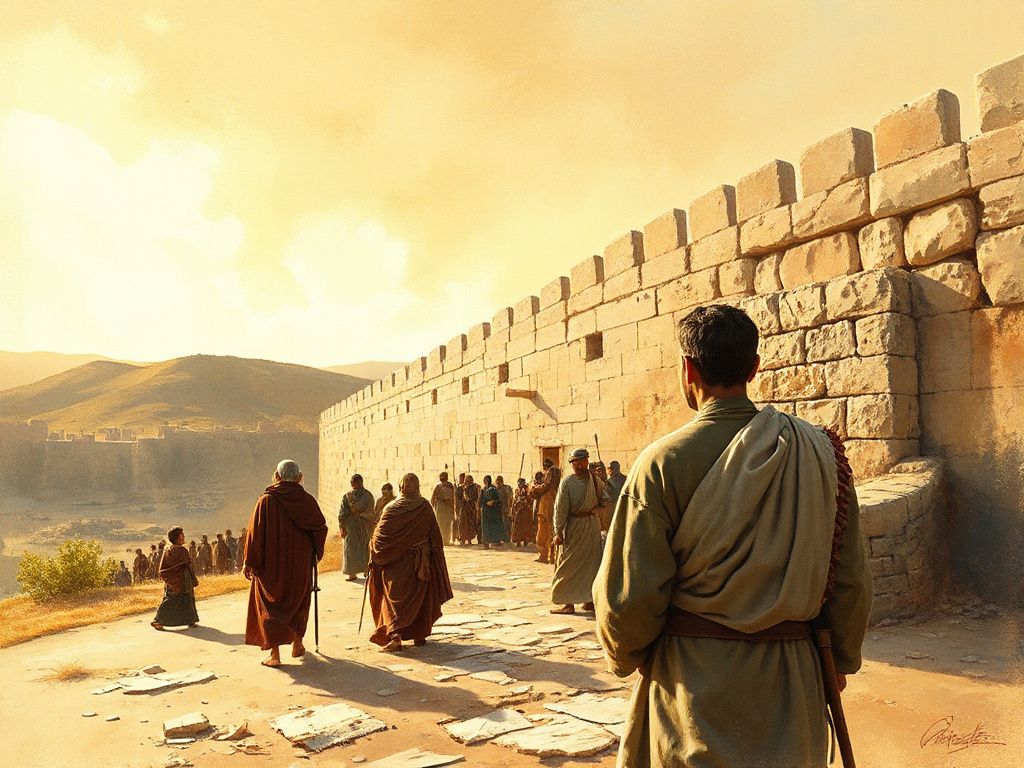
After fifty-two days of opposition, the Jerusalem wall was finished on the twenty-fifth of Elul, and surrounding nations recognized God's hand in the work.

经文

  1. 15.以 祿 月 二 十 五 日 , 城 牆 修 完 了 , 共 修 了 五 十 二 天 。So the wall was finished in the twenty and fifth day of the month Elul, in fifty and two days.
  2. 16.我 們 一 切 仇 敵 、 四 圍 的 外 邦 人 聽 見 了 便 懼 怕 , 愁 眉 不 展 ; 因 為 見 這 工 作 完 成 是 出 乎 我 們 的   神 。And it came to pass, when all our enemies heard thereof, that all the nations that were about us feared, and were much cast down in their own eyes; for they perceived that this work was wrought of our God.

这段经文的意思

Nehemiah 6:15 records a precise conclusion: the wall was finished on the twenty-fifth day of the month Elul, in fifty-two days. The specificity of the date and the brevity of the span highlight that the work was accomplished despite sustained opposition described throughout the chapter. The figure 'fifty-two days' closes the accounting that began at Nehemiah's restart of the project and frames the completion as providentially timely.

Verse 16 then reports the reaction of the surrounding peoples. When 'all our enemies' heard, 'all the nations about us' feared and were 'cast down in their own eyes.' The narrator supplies the explanation: 'they perceived that this work was wrought of our God.' The humbling of hostile observers becomes the public confirmation that the rebuilding was not merely a political project but a divine act.

Together, the two verses form a literary pivot. Internal opposition — intimidation, false prophecy, and compromise — failed (vv. 10–14), and external opposition was silenced. The text attributes the outcome to God, and the recognition by outsiders functions as vindication of Nehemiah's discernment against the hired prophets in the preceding verses.

背景

The completion in vv. 15–16 sits at the center of chapter 6, framed by the closing attempts of Sanballat and Tobiah. Before the verses come the invitation to meet in the plain of Ono (v. 2), the open-letter accusation of rebellion (vv. 5–7), Nehemiah's refusal and prayer (vv. 8–9), and the hired prophet Shemaiah's attempt to lure him into the temple (vv. 10–14). Each attempt aimed to stop or disgrace the rebuilding, and vv. 15–16 announce that none succeeded.

The verses that follow (vv. 17–19) show that the external foes did not vanish after completion; correspondence between Tobiah and Judean nobles, and family alliances, continued. The fear in v. 16, then, is not the end of opposition but a turning point: the project's legitimacy was publicly acknowledged, even as covert pressure from within continued.

常见问题

Why is the date 'twenty-fifth of Elul' given in Nehemiah 6:15?

Nehemiah consistently anchors the rebuilding with precise calendar markers (e.g., the start in the previous section). Stating the exact day and the fifty-two-day span frames the completion as a dated historical event and lets readers measure the speed against the opposition described throughout the chapter.

What does 'cast down in their own eyes' mean in verse 16?

The phrase uses the standard by which the surrounding nations themselves measure worth. Where they had regarded Judah as weak, they now saw themselves humiliated. The collapse of their self-assessment is the outward sign that, as the verse states, 'this work was wrought of our God.'

Does the fear of the nations in v. 16 mean the opposition ended?

Verses 17–19 show that pressure from Tobiah and allied nobles continued after the wall was finished, through correspondence and family ties inside Judah. The fear in v. 16 marks a public recognition that the rebuilding was of God, but it does not by itself silence the covert opposition that Nehemiah still had to navigate.

继续研读

HomeDiscoverStudyReadMe