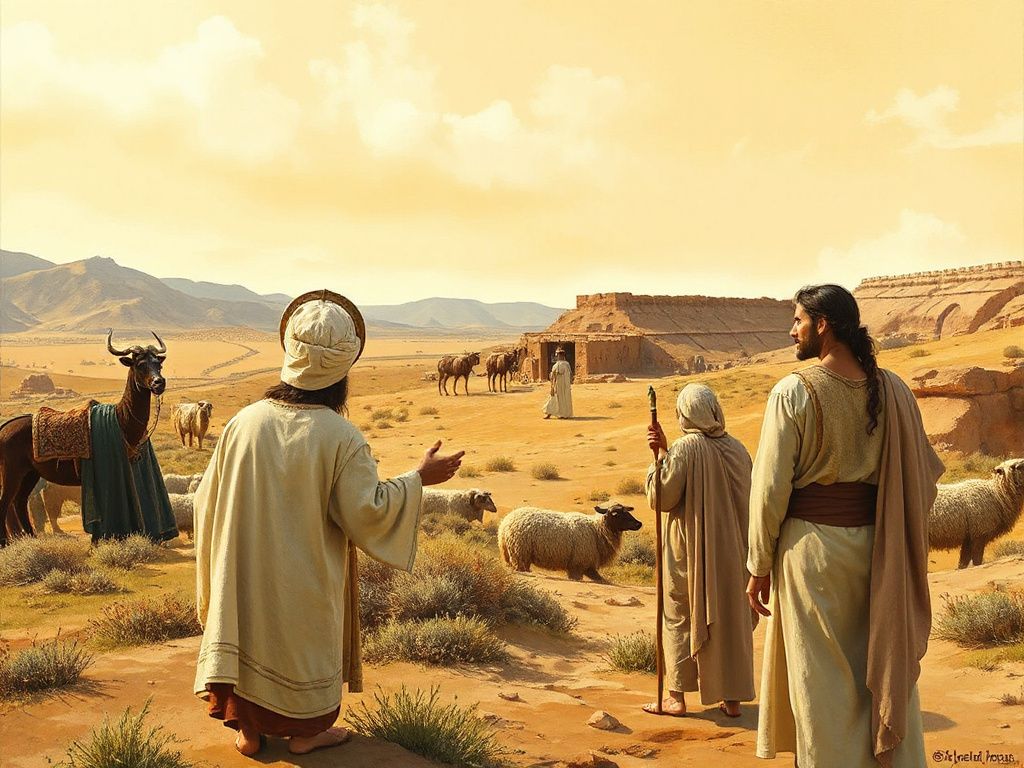
经文研读
Numbers 28:1-2 — God's Command for Due Season Offerings
God commands Israel to present His food offerings, the fire offerings of sweet savor, at their appointed season.
经文
- 1.耶 和 華 曉 諭 摩 西 說 :And Jehovah spake unto Moses, saying,
- 2.你 要 吩 咐 以 色 列 人 說 : 獻 給 我 的 供 物 , 就 是 獻 給 我 作 馨 香 火 祭 的 食 物 , 你 們 要 按 日 期 獻 給 我 ;Command the children of Israel, and say unto them, My oblation, my food for my offerings made by fire, of a sweet savor unto me, shall ye observe to offer unto me in their due season.
这段经文的意思
Numbers 28:1-2 opens with the LORD speaking to Moses, establishing the divine origin of what follows. The address 'Command the children of Israel' frames the instruction as an authoritative order from God, not a suggestion or optional practice. The passage functions as a heading or preamble for the detailed sacrificial calendar that follows in the chapter, signaling that the specifics about lambs, flour, and oil are rooted in a direct divine command.
The core of the verse is God's self-description of the offerings: 'My oblation, my food for my offerings made by fire, of a sweet savor unto me.' By calling the sacrifices 'my food,' the text presents the offerings as something God Himself claims and receives. The repeated possessive 'my' underscores that the sacrifices belong to God, not merely to the priests or the people. The phrase 'sweet savor' (a pleasing aroma) frames the offerings as acceptable and delightful to God, while 'offerings made by fire' identifies them as the burnt and grain offerings consumed on the altar.
The closing charge, 'shall ye observe to offer unto me in their due season,' makes regularity the central demand. 'Due season' points to appointed times that will be spelled out in the rest of the chapter (daily, weekly, monthly, and at the feasts). The word 'observe' implies careful attention and faithfulness—Israel is responsible not just to offer, but to guard the schedule. The passage thus sets the theological foundation: the offerings are God's own provision, given at God's appointed times, requiring Israel's diligent obedience.
背景
Numbers 28 sits near the end of the book's wilderness narratives, after the spy episode (Numbers 13-14) and the ensuing generation-long wandering. The chapter opens the LORD's renewed instruction about the祭祭 calendar as the new generation stands on the threshold of Canaan. This placement connects the detailed sacrificial system to the moment when Israel will settle the land, framing ongoing worship as part of possessing and inhabiting the promised territory.
Within the chapter itself, verse 2's 'due season' is immediately defined by the verses that follow: the continual burnt offering of two lambs daily (vv. 3-8), the additional Sabbath burnt offering (vv. 9-10), the monthly new-moon offering (vv. 11-15), the Passover and Unleavened Bread offerings (vv. 16-25), and the Feast of Weeks offering (vv. 26-31). Thus verses 1-2 function as the chapter's theological introduction: the offerings belong to God, are described by God as His food, and are to be presented faithfully at the appointed times that the chapter then itemizes.
常见问题
Why does God call the offerings 'my food' in Numbers 28:2?
By calling the offerings 'my food,' God claims personal ownership of what is sacrificed on the altar. The language presents the burnt and grain offerings as something God Himself receives, underscoring that the sacrifices belong to Him rather than being merely the priests' or people's. It frames the worship system as a relationship in which God receives what is offered to Him.
What does 'due season' mean in this passage?
'Due season' refers to the appointed times that the rest of Numbers 28 spells out: the daily morning and evening lambs (vv. 3-8), the weekly Sabbath addition (vv. 9-10), the monthly new-moon offering (vv. 11-15), and the feast-day offerings at Passover, Unleavened Bread, and Weeks (vv. 16-31). The phrase signals that the offerings are not occasional but calendrical—they belong to a set rhythm.
What is the difference between 'observe' and 'offer' in verse 2?
'Offer' describes the act of presenting the sacrifice. 'Observe' adds the dimension of careful attention to the schedule and details—guarding the appointed times, making sure nothing is missed or altered. Verse 2 thus demands not only the performance of the ritual but the faithful stewardship of its timing.