经文研读
Revelation 2:10 — Faithful unto Death, the Crown of Life
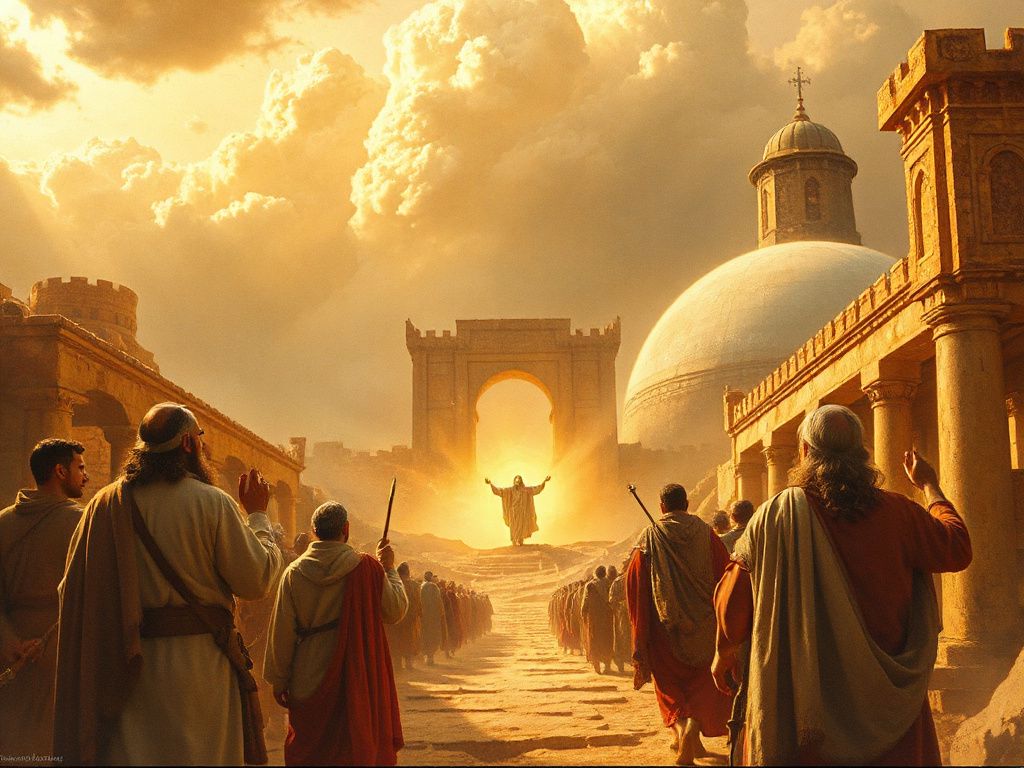
Christ commands the suffering Smyrna believers not to fear what is coming, promising the crown of life to those who remain faithful unto death.
经文
- 10.你 將 要 受 的 苦 你 不 用 怕 。 魔 鬼 要 把 你 們 中 間 幾 個 人 下 在 監 裡 , 叫 你 們 被 試 煉 , 你 們 必 受 患 難 十 日 。 你 務 要 至 死 忠 心 , 我 就 賜 給 你 那 生 命 的 冠 冕 。Fear not the things which thou art about to suffer: behold, the devil is about to cast some of you into prison, that ye may be tried; and ye shall have tribulation ten days. Be thou faithful unto death, and I will give thee the crown of life.
这段经文的意思
Revelation 2:10 contains two imperatives framed around a single promise. The first imperative, "Fear not," addresses a specific, imminent suffering that the speaker announces before it arrives: the devil "is about to cast some of you into prison, that ye may be tried," and they "shall have tribulation ten days." The command to not fear is not a general reassurance; it is grounded in foreknowledge — the suffering is named, bounded, and placed within a known framework before it begins. The second imperative, "Be thou faithful unto death," defines what faithfulness looks like when the suffering is no longer hypothetical but lethal. The promise that follows, "I will give thee the crown of life," makes endurance the explicit condition for receiving it.
The verse links three movements: warning, command, and reward. The warning ("behold, the devil is about to cast…") identifies the source of the coming trial as the devil, who acts with a stated purpose — that the believers "may be tried." This frames the suffering as a testing, not as destruction. The duration is set at "ten days," a strikingly short span given the gravity of what is described, which sharpens the call to endurance by making the cost finite. The command "Be thou faithful unto death" then locates the point of faithfulness at the boundary of life itself, and the promised "crown of life" is given only to those who reach that boundary without letting go.
The vocabulary of verse 10 contrasts sharply with verse 9. Where verse 9 names the believers' material poverty and the blasphemy of a "synagogue of Satan," verse 10 adds imprisonment and death to that list, and responds not with a call to repent (as in 2:5, 2:16) but with a call to endure. The absence of a rebuke and the presence of a crown are the two most distinctive features of the Smyrna letter, and verse 10 is where they meet: Smyrna receives no correction from Christ, only a commendation that becomes a commission to remain faithful through whatever comes, with the crown of life as the stated end.
背景
In Revelation 2:8-11, Christ addresses the church in Smyrna. He identifies himself as "the first and the last, who was dead, and lived again" (v. 8), then acknowledges the believers' "tribulation" and "poverty" while declaring them "rich," and names their opponents as a "synagogue of Satan" (v. 9). Verse 10 sits at the center of this letter, the pivot between the description of present suffering and the promise of verse 11 that "he that overcometh shall not be hurt of the second death."
Unlike the letters to Ephesus (2:4-5), Pergamum (2:14-16), and Thyatira (2:20-23), the Smyrna letter contains no rebuke and no call to repent. Every other church in Revelation 2 that is warned about future suffering is first told to repent; Smyrna is warned about future suffering and told to endure. The letter to Smyrna thus forms a unique unit within the chapter, and verse 10 is its decisive sentence, where warning, command, and promise converge into a single call to remain faithful unto death.
常见问题
Why does Christ tell the Smyrna believers not to fear?
Because the suffering Christ announces is not unknown or unbounded. He names its source (the devil), its form (imprisonment and trial), and its duration (ten days) before it arrives, so that the believers can face it as a defined trial rather than as an open-ended threat.
What does "ten days" of tribulation signify?
In the text itself, "ten days" sets a specific, finite limit on the suffering. The verse does not explain the symbolism of the number; it presents the duration as short and bounded, contrasting with the call to be faithful "unto death" that immediately follows.
What is the "crown of life" promised in this verse?
Within Revelation 2:10, the crown of life is the reward Christ promises to give to the one who is "faithful unto death." The verse defines the crown as the gift given at the limit of endurance — life itself, granted by the one who "was dead, and lived again" (v. 8), to those who do not let go of faithfulness when it costs them their life.