经文研读
Revelation 20:4 — Thrones, Martyrs, and the Thousand-Year Reign
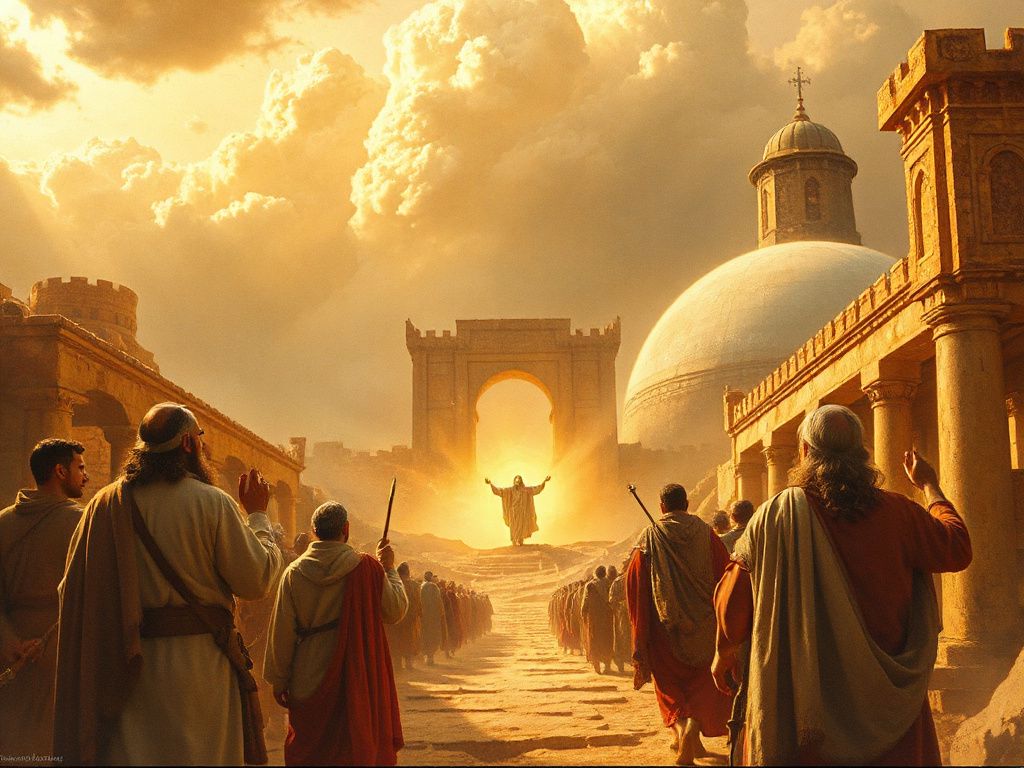
Revelation 20:4 shows thrones granted to the faithful, the vindication of martyrs, and a thousand-year reign with Christ.
经文
- 4.我 又 看 見 幾 個 寶 座 , 也 有 坐 在 上 面 的 , 並 有 審 判 的 權 柄 賜 給 他 們 。 我 又 看 見 那 些 因 為 給 耶 穌 作 見 證 , 並 為 神 之 道 被 斬 者 的 靈 魂 , 和 那 沒 有 拜 過 獸 與 獸 像 , 也 沒 有 在 額 上 和 手 上 受 過 他 印 記 之 人 的 靈 魂 , 他 們 都 復 活 了 , 與 基 督 一 同 作 王 一 千 年 。And I saw thrones, and they sat upon them, and judgment was given unto them: and I saw the souls of them that had been beheaded for the testimony of Jesus, and for the word of God, and such as worshipped not the beast, neither his image, and received not the mark upon their forehead and upon their hand; and they lived, and reigned with Christ a thousand years.
这段经文的意思
Verse 4 opens a two-part vision: thrones occupied by those granted authority to judge, and the souls of martyrs who refused the beast. The text identifies these witnesses three ways — beheaded for the testimony of Jesus and the word of God, refusing to worship the beast or its image, and refusing the mark on forehead and hand. Each description points to active, costly confession rather than passive belief.
The clause 'they lived, and reigned with Christ a thousand years' is the verse's hinge. 'Lived' marks the reversal of their earlier death (beheading) and is taken up in verse 5 as 'the first resurrection.' The 'thousand years' defines the duration of this reign, matching the thousand years used in verses 2–3 for Satan's binding, tying the martyrs' vindication to the dragon's imprisonment.
By placing judicial thrones alongside martyred souls, the verse fuses two images: delegated authority to judge, and resurrection-life shared with Christ. The chapter does not resolve whether the throned judges are the martyrs themselves, other faithful witnesses, or both — the grammar simply lists them as a single group seated and reigning.
背景
Verses 1–3 set the stage: an angel binds the dragon — identified as the old serpent, the Devil, and Satan — for a thousand years and seals him in the abyss, with a brief release to follow. Verse 4 then fills this thousand-year interval with its occupants: enthroned judges and martyred witnesses.
Verses 5–6 clarify the structure. The rest of the dead do not live until the thousand years end; this living is 'the first resurrection,' and it brings priesthood and immunity from the second death. Verse 7 marks the close of the thousand years and the untying of Satan, leading into the Gog-Magog assault, the great white throne, and the lake of fire in verses 11–15.
常见问题
Who are the ones seated on the thrones in Revelation 20:4?
The verse lists 'they' who sit on the thrones alongside the souls of the beheaded martyrs, but it does not specify whether the throned judges are the same martyrs, other faithful saints, or a combined group. The chapter only describes them as recipients of judgment-authority during the thousand years.
What does 'the first resurrection' refer to in this passage?
According to verse 5, 'the first resurrection' is the 'living' of verse 4 — the martyrs and faithful who share reign with Christ for the thousand years. Verse 6 contrasts them with 'the rest of the dead,' who do not live until that period ends, establishing the first resurrection as a distinct event prior to the general resurrection at the great white throne.
Is the thousand-year reign in Revelation 20:4 literal or symbolic?
The passage does not state. The text uses the phrase 'a thousand years' four times in verses 2–7 to bound both Satan's binding and the martyrs' reign. Readers differ on whether 'a thousand years' denotes a literal duration, a symbolic long period, or a present spiritual reality; the chapter itself only fixes the period's length and links it to the release of Satan afterward.