经文研读
Song of Solomon 8:6–7 — The Seal of Unquenchable Love
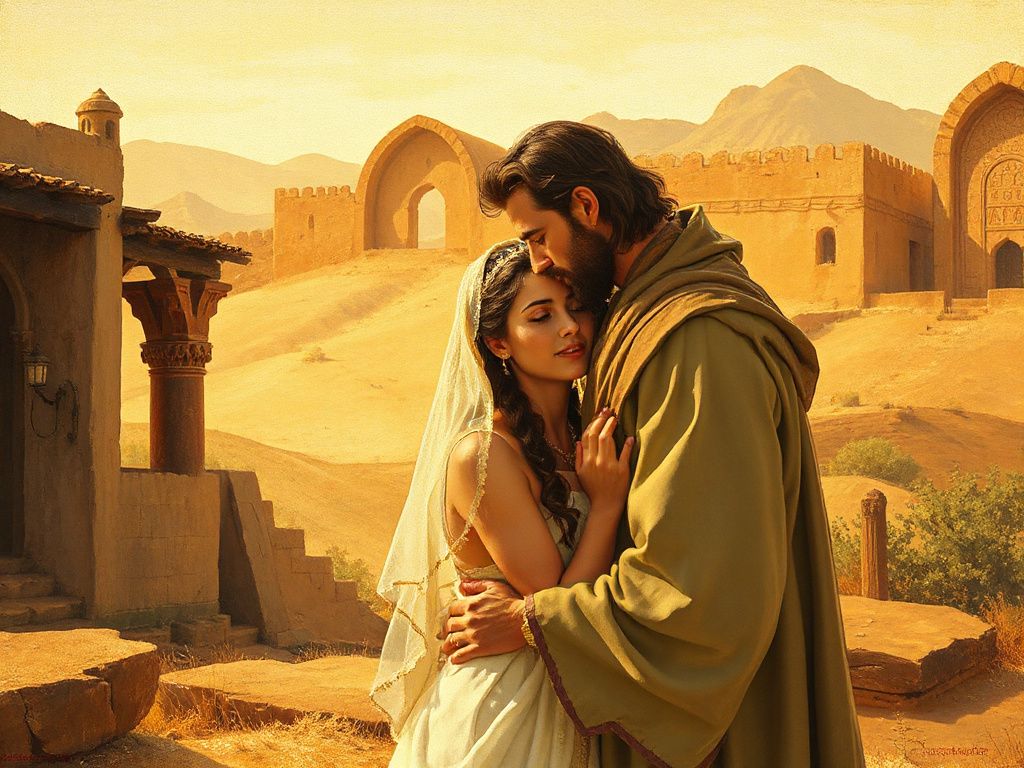
In the book's climax, the woman asks to be sealed upon her beloved's heart and arm, and proclaims that love, like death and Sheol, is unconquerable and cannot be bought.
经文
- 6.求 你 將 我 放 在 你 心 上 如 印 記 , 帶 在 你 臂 上 如 戳 記 。 因 為 愛 情 如 死 之 堅 強 , 嫉 恨 如 陰 間 之 殘 忍 ; 所 發 的 電 光 是 火 焰 的 電 光 , 是 耶 和 華 的 烈 焰 。Set me as a seal upon thy heart, As a seal upon thine arm: For love is strong as death; Jealousy is cruel as Sheol; The flashes thereof are flashes of fire, A very flame of Jehovah.
- 7.愛 情 , 眾 水 不 能 息 滅 , 大 水 也 不 能 淹 沒 。 若 有 人 拿 家 中 所 有 的 財 寶 要 換 愛 情 , 就 全 被 藐 視 。 ( 新 娘 的 兄 弟 )Many waters cannot quench love, Neither can floods drown it: If a man would give all the substance of his house for love, He would utterly be contemned.
这段经文的意思
Verse 6 is a direct petition: 'Set me as a seal upon thy heart, as a seal upon thine arm.' In the ancient Near East a seal was pressed into clay to authenticate ownership and binding commitment; hung near the heart or worn on the arm, it declared whose person and possessions one belonged to. The speaker is not asking for decoration but for covenant identification — that she may be carried into the very presence (heart) and action (arm) of her beloved.
The second half of verse 6 grounds the petition in the nature of the bond itself: 'love is strong as death; jealousy is cruel as Sheol; the flashes thereof are flashes of fire, a very flame of Jehovah.' The poem stacks images of the most irresistible forces known to the audience — death, the grave, divine fire — to say that the love prompting this request is not a passing affection but a relentless, God-given power.
Verse 7 clinches the claim: 'Many waters cannot quench love, neither can floods drown it; if a man would give all the substance of his house for love, he would utterly be contemned.' Love cannot be extinguished by external assault, and it cannot be purchased by total wealth. The verse closes the poem by setting what is priceless beyond every market price.
背景
Verses 6–7 stand at the climax of the book. The immediately prior verses (3–5) move from physical embrace, to the charge not to 'stir up' love until it pleases, to the image of one leaning on a beloved and awakening under the apple-tree. The petition of verse 6 thus arrives as the natural apex of a relationship that has grown from longing into committed union.
After verse 7 the tone shifts to communal and vocational matters — the little sister, the vineyard, the gardens — and the book closes with the woman again urging her beloved to come quickly. Placed where it is, the love-description of 8:6–7 functions as the theological and emotional center that the surrounding verses look back to and forward from.
常见问题
Why does she ask to be set as a seal 'upon the heart' and 'upon the arm'?
In the passage's own imagery, a seal marks ownership and binding commitment. The heart represents inner devotion and the arm represents action; the speaker asks to be carried into both — identified as hers wherever her beloved's affections and deeds go.
What is the force of comparing love to death and Sheol?
Death and Sheol are presented within the poem as the most unstoppable realities known to the audience. By aligning love with them, verse 6 presents love not as a feeling that may come and go, but as a relentless force that cannot be deflected once it has seized a person.
What does it mean that 'many waters cannot quench love'?
Verse 7 sets out two tests of love's endurance: external assault ('many waters… floods') and market exchange ('all the substance of his house'). The verse declares love unw quenchable by either. Water images of overwhelming opposition, and the final line insists that even total wealth cannot buy what love freely gives — the offer itself would be 'utterly contemned.'