BIBLE CHAPTER STUDY
Proverbs 24: Wisdom, Resilience, and the House Built on Knowledge
Proverbs 24 collects sayings that contrast the strength of wisdom with the ruin of folly, calling readers to resilience, justice, and reverence for the Lord and the king.
Scripture
1Be not thou envious against evil men; Neither desire to be with them:
2For their heart studieth oppression, And their lips talk of mischief.
3Through wisdom is a house builded; And by understanding it is established;
4And by knowledge are the chambers filled With all precious and pleasant riches.
5A wise man is strong; Yea, a man of knowledge increaseth might.
6For by wise guidance thou shalt make thy war; And in the multitude of counsellors there is safety.
7Wisdom is too high for a fool: He openeth not his mouth in the gate.
8He that deviseth to do evil, Men shall call him a mischief - maker.
9The thought of foolishness is sin; And the scoffer is an abomination to men.
10If thou faint in the day of adversity, Thy strength is small.
11Deliver them that are carried away unto death, And those that are ready to be slain see that thou hold back.
12If thou sayest, Behold, we knew not this; Doth not he that weigheth the hearts consider it? And he that keepeth thy soul, doth not he know it? And shall not he render to every man according to his work?
13My son, eat thou honey, for it is good; And the droppings of the honeycomb, which are sweet to thy taste:
14So shalt thou know wisdom to be unto thy soul; If thou hast found it, then shall there be a reward, And thy hope shall not be cut off.
15Lay not wait, O wicked man, against the habitation of the righteous; Destroy not his resting-place:
16For a righteous man falleth seven times, and riseth up again; But the wicked are overthrown by calamity.
17Rejoice not when thine enemy falleth, And let not thy heart be glad when he is overthrown;
18Lest Jehovah see it, and it displease him, And he turn away his wrath from him.
19Fret not thyself because of evil-doers; Neither be thou envious at the wicked:
20For there shall be no reward to the evil man; The lamp of the wicked shall be put out.
21My son, fear thou Jehovah and the king; And company not with them that are given to change:
22For their calamity shall rise suddenly; And the destruction from them both, who knoweth it?
23These also are sayings of the wise. To have respect of persons in judgment is not good.
24He that saith unto the wicked, Thou art righteous; Peoples shall curse him, nations shall abhor him:
25But to them that rebuke him shall be delight, And a good blessing shall come upon them.
26He kisseth the lips Who giveth a right answer.
27Prepare thy work without, And make it ready for thee in the field; And afterwards build thy house.
28Be not a witness against thy neighbor without cause; And deceive not with thy lips.
29Say not, I will do so to him as he hath done to me; I will render to the man according to his work.
30I went by the field of the sluggard, And by the vineyard of the man void of understanding;
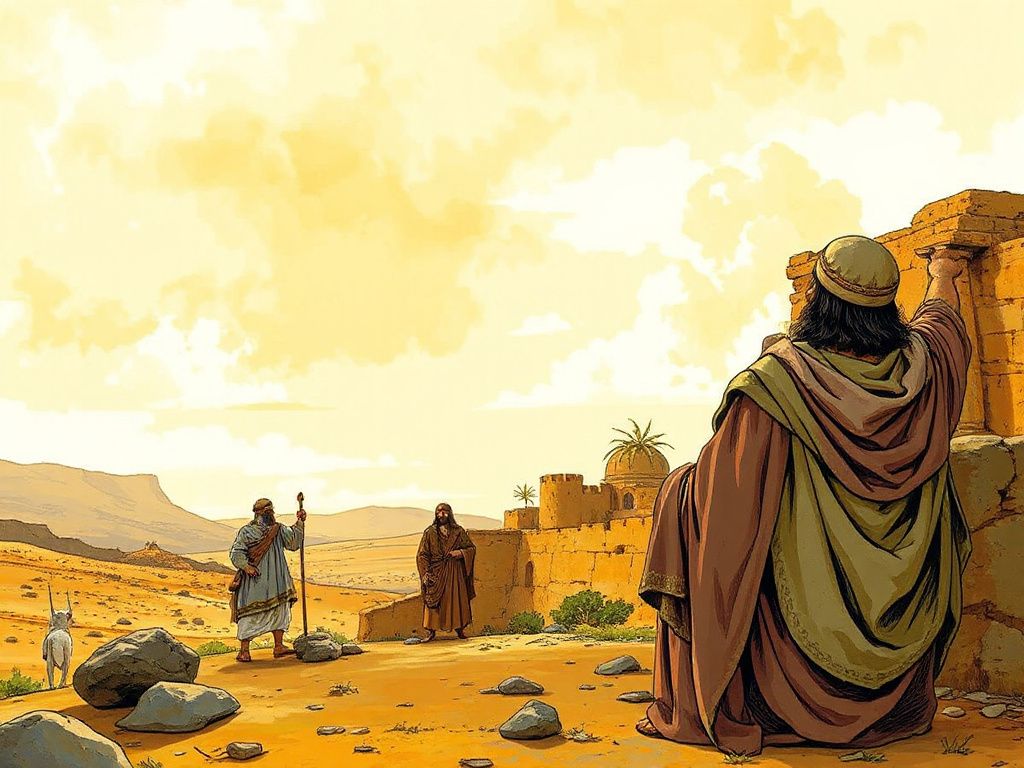
31And, lo, it was all grown over with thorns, The face thereof was covered with nettles, And the stone wall thereof was broken down.
32Then I beheld, and considered well; I saw, and received instruction:
33Yet a little sleep, a little slumber, A little folding of the hands to sleep;
34So shall thy poverty come as a robber, And thy want as an armed man.
What this passage means
The chapter opens by warning against envy of evildoers, whose hearts study oppression (vv. 1–2), and immediately turns to a positive picture: the house is built through wisdom, established by understanding, and filled with precious riches through knowledge (vv. 3–4). The vocabulary moves from construction imagery to strength, so that a wise man is declared strong and a knowledgeable man increases in might (v. 5). Because wisdom is too high for the fool (v. 7), the section grounds practical success in counsel and many advisors (v. 6). The repeated pairing of wisdom, understanding, and knowledge shows that they are not synonyms but layered: wisdom frames the project, understanding stabilizes it, and knowledge fills it.
A second block (vv. 10–18) addresses perseverance under adversity and the moral limits of celebration. The reader is told not to faint in the day of adversity (v. 10) and not to rejoice at an enemy's downfall, lest the Lord see it and be displeased (vv. 17–18). The pivotal saying appears in v. 16: the righteous falls seven times and rises again, but the wicked are overthrown by calamity. This is reinforced by the imagery of honey — wisdom is sweet to the soul and gives a hope that is not cut off (vv. 13–14). Mercy also has a place: one is to deliver those being carried to death rather than claim ignorance before the One who weighs hearts (vv. 11–12).
A third block gathers sayings of the wise about justice, speech, and work (vv. 21–34). Partiality in judgment is condemned (vv. 23–24), a right answer is compared to a kiss (v. 26), and the sluggard's ruined vineyard (vv. 30–34) closes the chapter with the warning that a little more sleep brings poverty as a robber and want as an armed man. Wisdom here is not abstract: it shapes how one judges, testifies, prepares one's livelihood, and resists the small surrenders of laziness. Fear of the Lord and the king (v. 21) frames the entire ethical sequence.
Context
Proverbs 24 belongs to the book's concluding collection of sayings (roughly chs. 22–24), which gathers material in a form closer to numerical proverbs and instruction. The chapter begins in continuity with 23:17–18, repeating the warning not to envy sinners (cf. v. 1 with v. 19), and ends with the sluggard vignette that reappears in expanded form in the further proverbs of Solomon collected in chapters 25–29.
Within the chapter itself, three thematic clusters are evident: wisdom as the foundation of a household and a nation (vv. 3–6), resilience and restraint toward enemies under God's moral gaze (vv. 10–18), and a final group explicitly introduced as 'sayings of the wise' dealing with justice, truthful speech, and diligence (vv. 21–34). The cross references supplied connect the falling-and-rising motif (v. 16) to Psalms and Micah, and the do-not-faint admonition (v. 10) to passages such as Isaiah 40:31 and 2 Corinthians 4:8, showing how the chapter's call to perseverance was echoed across later Scripture.
Key words in the original
- H2451 חׇכְמָה (ḥoḵmâ) — 'wisdom' (Prov 24:3). The chapter presents wisdom as the active builder of the house, the skill that conceives and constructs the project before understanding stabilizes it and knowledge fills it.
- H8394 תְּבוּנָה (ṯəḇûnāh) — 'understanding' (Prov 24:3). Whereas wisdom initiates, understanding establishes; it is the discernment that makes the structure stand, paired here as the second leg of the chapter's three-stage picture of household stability.
- H1847 דַּעַת (ḏaʿaṯ) — 'knowledge' (Prov 24:4). In v. 4, knowledge is what fills the inner rooms with precious and pleasant riches, completing the triad: wisdom builds, understanding establishes, knowledge fills.
Related verses
- Psalms 37:24 Pairs with Proverbs 24:16 — though the righteous falls, he is not utterly cast down, for the Lord upholds him; the proverb's 'rises again' is grounded in God's upholding hand.
- Psalms 34:19 Pairs with Proverbs 24:16 — many are the afflictions of the righteous, yet the Lord delivers him out of them all, matching the proverb that the righteous falls seven times and rises.
- Isaiah 40:31 Pairs with Proverbs 24:10 — those who wait on the Lord renew their strength and do not faint, the positive counterpart to the sluggard's failure of resolve and to fainting in the day of adversity.
Common questions
Why does Proverbs 24 repeat 'do not envy evildoers' (vv. 1, 19)?
The repetition frames the chapter: envying the apparent success of the wicked is the very attitude the book is correcting, and the answer is given immediately — the wicked have no future and their lamp is put out (v. 20), while the righteous falls seven times and rises again (v. 16).
What does 'the righteous falls seven times and rises again' (v. 16) mean?
Within the chapter, it means resilience is the mark of righteousness: falling is not denied but recovery is promised. The proverb does not promise absence of falls; it contrasts the righteous man's rising with the wicked man's being overthrown by calamity, where there is no rising.
What is the function of the sluggard's vineyard at the end of the chapter (vv. 30–34)?
It functions as a closing parable: the speaker observes a ruined field overgrown with thorns, learns instruction from it, and warns that a little more sleep brings poverty like a robber and want like an armed man. It grounds the abstract call to wisdom in the concrete consequence of small surrenders to laziness.