BIBLE CHAPTER STUDY
Psalms 4 — Evening Trust and God's Chosen One
David calls on God to answer his prayer, warns the arrogant to turn from vanity, and ends in peace because Jehovah alone makes him dwell in safety.
Scripture
1For the Chief Musician; on stringed instruments. A Psalm of David. Answer me when I call, O God of my righteousness; Thou hast set me at large when I was in distress: Have mercy upon me, and hear my prayer.
2O ye sons of men, how long shall my glory be turned into dishonor? How long will ye love vanity, and seek after falsehood? [Selah]
3But know that Jehovah hath set apart for himself him that is godly: Jehovah will hear when I call unto him.
4Stand in awe, and sin not: Commune with your own heart upon your bed, and be still. [Selah]
5Offer the sacrifices of righteousness, And put your trust in Jehovah.
6Many there are that say, Who will show us any good? Jehovah, lift thou up the light of thy countenance upon us.
7Thou hast put gladness in my heart, More than they have when their grain and their new wine are increased.
8In peace will I both lay me down and sleep; For thou, Jehovah, alone makest me dwell in safety.
What this passage means
The psalm opens with a direct plea: David addresses God as the God of his righteousness, recalling that God already delivered him from distress, and asks for mercy and an attentive hearing of his prayer. The title places this song under the care of the director and sets it to stringed instruments, framing it as a worship piece meant for the congregation as well as the individual.
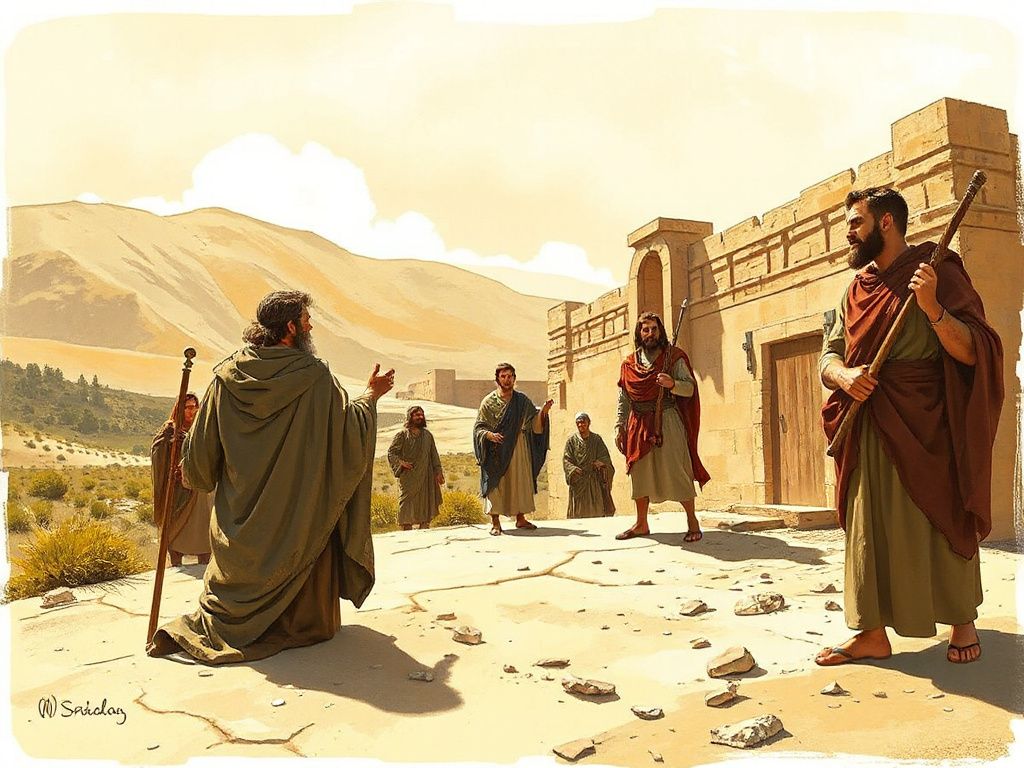
Verses 2–5 shift from complaint to instruction. David confronts the 'sons of men' who turn his honor into shame and chase after vanity and lies, marked by the liturgical pause Selah. He then commands them to tremble and not sin, to search their hearts on their beds in silence, and to offer righteous sacrifices rather than mere ritual. Trust in Jehovah is set against the futility the scoffers pursue.
Verses 6–8 form the climactic response of faith. Where many ask who will show them good, David prays for the light of God's countenance. The gladness God gives surpasses even an abundant harvest, and the psalm closes with David lying down in peace because Jehovah alone settles him in safety.
Context
The supplied chapter note indicates that Psalms 4 was backfilled from remaining Psalms outside an earlier prioritized set, and no additional chapter commentary or contextual framing was provided beyond the psalm text itself and the cross references listed.
The chapter functions as a complete movement: plea to God (v. 1), rebuke of the arrogant with Selah pauses (vv. 2–5), communal longing for God's favor (v. 6), and a personal confession of joy and safety (vv. 7–8). The two Selah markers after verses 2 and 4 divide the psalm into sections that invite the worshiper to pause and reflect.
Key words in the original
- H5542 The Hebrew term סֶלָה (selah), appearing after verses 2 and 4, is defined as a suspension of music or a pause. It signals a liturgical break where the music stops and reflection is invited before the song continues.
- H3519 The word כָּבוֹד (kavod), glossed 'honor,' refers to weight or splendor in a positive sense. David laments that his honor has been turned into disgrace, contrasting the weight of God-given dignity with the lightness of human scorn.
- H7337 The root רָחַב (rachav), here 'gave room,' means to broaden or make wide. David recalls that God broadened his path in distress, an image of relief and expansion that sets up the later confession of peace and safety.
Related verses
- Psalms 3:5 This verse also shows David sleeping in peace after prayer, directly paralleling the closing of Psalms 4:8 where David lies down in safety because of Jehovah alone.
- Proverbs 3:24 The proverb that lying down brings sweet sleep without fear echoes the closing confidence of Psalms 4, where David rests because Jehovah alone makes him dwell in safety.
- Ephesians 4:26 The NT echo of 'Be angry, and sin not' resonates with the command in Psalms 4:4 to tremble and not sin, linking inner restraint with righteous living before God.
Common questions
Why does David call God 'the God of my righteousness'?
Within Psalms 4 itself, the title identifies God as the one who vindicates David and who has already enlarged him in distress; David appeals to that record of righteousness as the basis for asking God to hear him.
What is the meaning of 'Selah' in this psalm?
According to the original-language data provided, Selah (H5542) denotes a suspension of music, a pause inserted for reflection. It marks the transition between David's rebuke of the arrogant and his call to inner repentance.
How does Psalms 4 move from distress to peace?
The psalm progresses from an opening appeal in distress (v. 1), through rebuke and instruction (vv. 2–5), into communal longing for God's face (v. 6), and culminates in personal joy and undisturbed sleep (vv. 7–8), making the movement itself the answer to the plea.