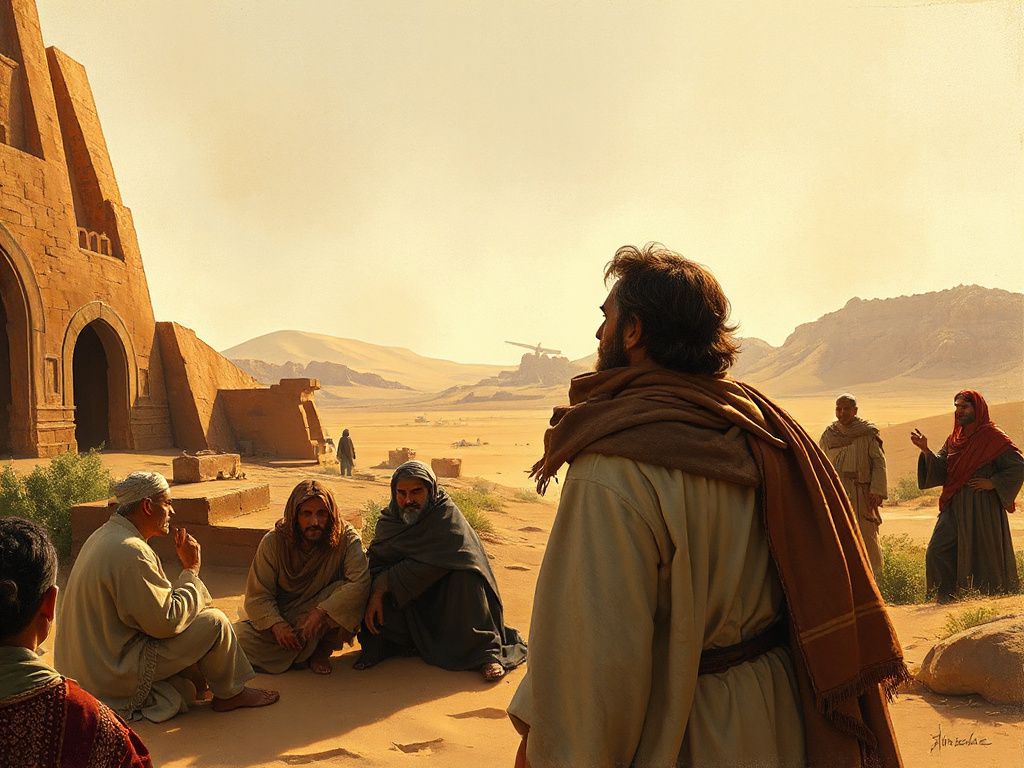
ESTUDIO DEL CAPÍTULO
Job 22 — Elifaz acusa e invita al arrepentimiento
Elifaz el temanita pronuncia su tercer discurso, argumentando que la justicia humana no puede aprovechar a Dios, luego acusando a Job de pecados específicos contra los pobres y concluyendo con una invitación a arrepentirse y hallar restauración.
Escritura
- 1.Respondió Elifaz temanita, y dijo:Then answered Eliphaz the Temanite, and said,
- 2.¿Traerá el hombre provecho a Dios? Al contrario, para sí mismo es provechoso el hombre sabio.Can a man be profitable unto God? Surely he that is wise is profitable unto himself.
- 3.¿Tiene contentamiento el Omnipotente en que tú seas justificado, O provecho de que tú hagas perfectos tus caminos?Is it any pleasure to the Almighty, that thou art righteous? Or is it gain to him, that thou makest thy ways perfect?
- 4.¿Acaso te castiga, O viene a juicio contigo, a causa de tu piedad?Is it for thy fear of him that he reproveth thee, That he entereth with thee into judgment?
- 5.Por cierto tu malicia es grande, Y tus maldades no tienen fin.Is not thy wickedness great? Neither is there any end to thine iniquities.
- 6.Porque sacaste prenda a tus hermanos sin causa, Y despojaste de sus ropas a los desnudos.For thou hast taken pledges of thy brother for nought, And stripped the naked of their clothing.
- 7.No diste de beber agua al cansado, Y detuviste el pan al hambriento.Thou hast not given water to the weary to drink, And thou hast withholden bread from the hungry.
- 8.Pero el hombre pudiente tuvo la tierra, Y habitó en ella el distinguido.But as for the mighty man, he had the earth; And the honorable man, he dwelt in it.
- 9.A las viudas enviaste vacías, Y los brazos de los huérfanos fueron quebrados.Thou hast sent widows away empty, And the arms of the fatherless have been broken.
- 10.Por tanto, hay lazos alrededor de ti, Y te turba espanto repentino;Therefore snares are round about thee, And sudden fear troubleth thee,
- 11.O tinieblas, para que no veas, Y abundancia de agua te cubre.Or darkness, so that thou canst not see, And abundance of waters cover thee.
- 12.¿No está Dios en la altura de los cielos? Mira lo encumbrado de las estrellas, cuán elevadas están.Is not God in the height of heaven? And behold the height of the stars, how high they are!
- 13.¿Y dirás tú: ¿Qué sabe Dios? ¿Cómo juzgará a través de la oscuridad?And thou sayest, What doth God know? Can he judge through the thick darkness?
- 14.Las nubes le rodearon, y no ve; Y por el circuito del cielo se pasea.Thick clouds are a covering to him, so that he seeth not; And he walketh on the vault of heaven.
- 15.¿Quieres tú seguir la senda antigua Que pisaron los hombres perversos,Wilt thou keep the old way Which wicked men have trodden?
- 16.Los cuales fueron cortados antes de tiempo, Cuyo fundamento fue como un río derramado?Who were snatched away before their time, Whose foundation was poured out as a stream,
- 17.Decían a Dios: Apártate de nosotros. ¿Y qué les había hecho el Omnipotente?Who said unto God, Depart from us; And, What can the Almighty do for us?
- 18.Les había colmado de bienes sus casas. Pero sea el consejo de ellos lejos de mí.Yet he filled their houses with good things: But the counsel of the wicked is far from me.
- 19.Verán los justos y se gozarán; Y el inocente los escarnecerá, diciendo:The righteous see it, and are glad; And the innocent laugh them to scorn,
- 20.Fueron destruidos nuestros adversarios, Y el fuego consumió lo que de ellos quedó.Saying, Surely they that did rise up against us are cut off, And the remnant of them the fire hath consumed.
- 21.Vuelve ahora en amistad con él, y tendrás paz; Y por ello te vendrá bien.Acquaint now thyself with him, and be at peace: Thereby good shall come unto thee.
- 22.Toma ahora la ley de su boca, Y pon sus palabras en tu corazón.Receive, I pray thee, the law from his mouth, And lay up his words in thy heart.
- 23.Si te volvieres al Omnipotente, serás edificado; Alejarás de tu tienda la aflicción;If thou return to the Almighty, thou shalt be built up, If thou put away unrighteousness far from thy tents.
- 24.Tendrás más oro que tierra, Y como piedras de arroyos oro de Ofir;And lay thou thy treasure in the dust, And the gold of Ophir among the stones of the brooks;
- 25.El Todopoderoso será tu defensa, Y tendrás plata en abundancia.And the Almighty will be thy treasure, And precious silver unto thee.
- 26.Porque entonces te deleitarás en el Omnipotente, Y alzarás a Dios tu rostro.For then shalt thou delight thyself in the Almighty, And shalt lift up thy face unto God.
- 27.Orarás a él, y él te oirá; Y tú pagarás tus votos.Thou shalt make thy prayer unto him, and he will hear thee; And thou shalt pay thy vows.
- 28.Determinarás asimismo una cosa, y te será firme, Y sobre tus caminos resplandecerá luz.Thou shalt also decree a thing, and it shall be established unto thee; And light shall shine upon thy ways.
- 29.Cuando fueren abatidos, dirás tú: Enaltecimiento habrá; Y Dios salvará al humilde de ojos.When they cast thee down, thou shalt say, There is lifting up; And the humble person he will save.
- 30.El libertará al inocente, Y por la limpieza de tus manos éste será librado.He will deliver even him that is not innocent: Yea, he shall be delivered through the cleanness of thy hands.
Qué significa este pasaje
Elifaz estructura su discurso en tres movimientos: una premisa teológica (vv. 2-4), una lista de acusaciones específicas (vv. 5-9) y un llamado al arrepentimiento (vv. 21-30). Su premisa inicial argumenta desde la trascendencia de Dios: si aun el hombre sabio solo se aprovecha a sí mismo, ¿cuánto menos la justicia humana finita puede añadir algo al Todopoderoso? Esto establece lo que Elifaz considera el marco necesario para entender el sufrimiento: Dios está tan por encima de las transacciones humanas que la autodefensa de Job acerca de su inocencia es irrelevante.
Las acusaciones en los vv. 5-9 se presentan como conclusiones evidentes más que como cargos probados. Elifaz enumera delitos sociales: tomar prendas sin causa, desnudar al desnudo, negar agua y pan al fatigado, favorecer al poderoso, despedir a las viudas con las manos vacías y quebrantar los brazos del huérfano. Cada punto aborda el maltrato al vulnerable, el tipo de opresión que la ley mosaica prohíbe explícitamente. La lógica es retributiva: porque tales lazos y torrentes rodean a Job (vv. 10-11), debe haber cometido estos pecados. Elifaz compara a Job con los malvados de antaño que fueron cortados prematuramente (vv. 15-20), concluyendo que Dios llena sus casas de bienes mientras se distancia de su consejo.
La exhortación final (vv. 21-30) es la apelación pastoral de Elifaz: 'Allégate ahora a él, y tendrás paz'. Insta a Job a recibir instrucción, volver al Todopoderoso, valorar las riquezas materiales como polvo y encontrar al propio Todopoderoso como tesoro. Las bendiciones prometidas — oración respondida, planes establecidos, luz en el camino, liberación aun del no inocente — forman uno de los pasajes de restauración más ricos de Job. Sin embargo, el discurso colapsa porque su premisa es errónea: Elifaz nunca prueba la culpabilidad de Job, y su teología no puede dar cuenta del justo que sufre.
Contexto
Job 22 es el tercer y último discurso de Elifaz el temanita en el ciclo dialógico de Job (chs. 3-31). Elifaz habló primero en los chs. 4-5, Bildad en los chs. 8 y 18, y Zofar en los chs. 11 y 20. Cada amigo se vuelve más severo; las acusaciones de Elifaz aquí son las más específicas y duras de sus tres discursos, nombrando directamente supuestos crímenes que Job nunca menciona. El capítulo se sitúa dentro del argumento más amplio que mantienen los amigos —que el sufrimiento prueba el pecado oculto— mientras Job insiste en su integridad. La nota del capítulo indica que este pasaje pertenece a los capítulos de relleno de Job fuera del conjunto prioritario P0/P1. Las respuestas de Job a este tercer discurso aparecen en los chs. 23-24, donde protesta la escondedura de Dios en lugar de abordar las acusaciones específicas de Elifaz, lo que sugiere que la amistad se ha roto en incomprensión mutua.
Palabras clave del original
- H7706 Shadday (שַׁדַּי) aparece dos veces en este capítulo (vv. 3, 25) como nombre de Dios, traducido a menudo como 'el Todopoderoso'. Elifaz usa el título en su pregunta inicial sobre si la justicia agrada a Shadday y de nuevo en su promesa de que Shadday llegará a ser el tesoro de Job si se arrepiente. La repetición enmarca todo el discurso de Elifaz como una convocatoria de regreso a la relación del pacto con este nombre soberano.
- H5532 El verbo sakan (סָכַן, 'ser de utilidad / ser provechoso') aparece dos veces en el v. 2, formando el eje retórico de la apertura de Elifaz. '¿Qué utilidad tiene el hombre para Dios? Ciertamente el que es sabio es útil para sí mismo'. El uso doblado crea un contraste agudo: cualquier beneficio que produzcan los humanos vuelve a ellos mismos, sin añadir nada al ser de Dios.
- H2656 El sustantivo hephes (חֵפֶץ, 'deleite / deseo / cosa valiosa') aparece en el v. 3: '¿Es algún deleite para el Todopoderoso que tú seas justo?'. La palabra puede denotar deleite, asunto de voluntad o algo preciado. La pregunta de Elifaz presupone que el deleite de Dios no puede comprarse con el desempeño moral humano —una premisa que el propio Job no rechazaría del todo, aunque Job insiste en que la justicia de Dios debería examinarlo.
Versículos relacionados
- Matthew 21:22 Elifaz promete en 22:27, 'Orarás a él, y él te oirá'. Mateo 21:22 recoge la afirmación paralela de Jesús de que todo lo que se pida en oración, creyendo, se recibirá. Ambos textos vinculan la oración respondida a una relación reconciliada —para Elifaz, reconciliación con el Todopoderoso; para Jesús, alineación con la voluntad del Padre.
- Psalms 90:17 Elifaz insta a Job a 'guardar sus palabras en su corazón' (22:22) y a recibir instrucción de la boca de Dios. El Salmo 90:17 pide que el favor del Señor establezca la obra de las manos. Ambos textos tratan la palabra de Dios como el fundamento para que la acción humana sea establecida y no desperdiciada.
- Isaiah 27:5 La invitación de Elifaz 'Allégate ahora a él, y tendrás paz' (22:21) tiene su espejo en Isaías 27:5, donde el Señor invita al ofensor a asirse de su fortaleza y hacer paz. Ambos pasajes enmarcan la reconciliación con Dios como el acto decisivo que revierte las consecuencias de la culpa.
Preguntas frecuentes
¿Por qué Elifaz acusa a Job de pecados que Job nunca mencionó?
Elifaz razona del efecto a la causa: porque Job sufre grandemente, Job debe haber cometido gran pecado. La lista específica en los vv. 6-9 refleja los tipos de opresión que condena la ley mosaica y que Elifaz supone provocarían naturalmente el castigo divino. El capítulo nunca establece la culpabilidad real de Job; la acusación es una deducción de la teología retributiva de Elifaz, no de la evidencia.
¿Cuál es la estructura de Job 22?
El capítulo se divide en tres secciones: los vv. 2-4 dan la premisa teológica de que la justicia humana nada aprovecha a Dios; los vv. 5-20 formulan acusaciones específicas y recuerdan la suerte de los antiguos malvados; los vv. 21-30 ofrecen una invitación al arrepentimiento con promesas de restauración, oración respondida y luz divina en el camino. La tercera sección contiene parte del lenguaje de restauración más bello de Job, aun cuando su premisa es errónea.
¿Es verdadero el consejo de Elifaz en los vv. 21-30?
Muchas afirmaciones individuales de la invitación son verdaderas en sí mismas —Dios oye la oración, levanta al humilde, valora las manos limpias. Pero el capítulo las presenta como condicionales a que Job confiese los pecados que Elifaz le ha atribuido injustamente, de modo que el marco es falso aun donde las líneas son verdaderas. La Escritura posterior hace eco de estas promesas (oración respondida, luz en el camino, salvación del humilde) pero las fundamenta en Cristo en lugar de en la exigencia de que el sufriente demuestre primero una culpa oculta.