ESTUDIO DEL CAPÍTULO
Job 29 — El recuerdo de Job de las bendiciones pasadas
Job recuerda los meses en que la lámpara de Dios iluminaba su camino, su respetado asiento en la puerta de la ciudad, su defensa de los pobres y su expectativa de un futuro largo y floreciente.
Escritura
- 1.Volvió Job a reanudar su discurso, y dijo:And Job again took up his parable, and said,
- 2.¡Quién me volviese como en los meses pasados, Como en los días en que Dios me guardaba,Oh that I were as in the months of old, As in the days when God watched over me;
- 3.Cuando hacía resplandecer sobre mi cabeza su lámpara, A cuya luz yo caminaba en la oscuridad;When his lamp shined upon my head, And by his light I walked through darkness;
- 4.Como fui en los días de mi juventud, Cuando el favor de Dios velaba sobre mi tienda;As I was in the ripeness of my days, When the friendship of God was upon my tent;
- 5.Cuando aún estaba conmigo el Omnipotente, Y mis hijos alrededor de mí;When the Almighty was yet with me, And my children were about me;
- 6.Cuando lavaba yo mis pasos con leche, Y la piedra me derramaba ríos de aceite!When my steps were washed with butter, And the rock poured me out streams of oil!
- 7.Cuando yo salía a la puerta a juicio, Y en la plaza hacía preparar mi asiento,When I went forth to the gate unto the city, When I prepared my seat in the street,
- 8.Los jóvenes me veían, y se escondían; Y los ancianos se levantaban, y estaban de pie.The young men saw me and hid themselves, And the aged rose up and stood;
- 9.Los príncipes detenían sus palabras; Ponían la mano sobre su boca.The princes refrained from talking, And laid their hand on their mouth;
- 10.La voz de los principales se apagaba, Y su lengua se pegaba a su paladar.The voice of the nobles was hushed, And their tongue cleaved to the roof of their mouth.
- 11.Los oídos que me oían me llamaban bienaventurado, Y los ojos que me veían me daban testimonio,For when the ear heard me, then it blessed me; And when the eye saw me, it gave witness unto me:
- 12.Porque yo libraba al pobre que clamaba, Y al huérfano que carecía de ayudador.Because I delivered the poor that cried, The fatherless also, that had none to help him.
- 13.La bendición del que se iba a perder venía sobre mí, Y al corazón de la viuda yo daba alegría.The blessing of him that was ready to perish came upon me; And I caused the widow's heart to sing for joy.
- 14.Me vestía de justicia, y ella me cubría; Como manto y diadema era mi rectitud.I put on righteousness, and it clothed me: My justice was as a robe and a diadem.
- 15.Yo era ojos al ciego, Y pies al cojo.I was eyes to the blind, And feet was I to the lame.
- 16.A los menesterosos era padre, Y de la causa que no entendía, me informaba con diligencia;I was a father to the needy: And the cause of him that I knew not I searched out.
- 17.Y quebrantaba los colmillos del inicuo, Y de sus dientes hacía soltar la presa.And I brake the jaws of the unrighteous, And plucked the prey out of his teeth.
- 18.Decía yo: En mi nido moriré, Y como arena multiplicaré mis días.Then I said, I shall die in my nest, And I shall multiply my days as the sand:
- 19.Mi raíz estaba abierta junto a las aguas, Y en mis ramas permanecía el rocío.My root is spread out to the waters, And the dew lieth all night upon my branch;
- 20.Mi honra se renovaba en mí, Y mi arco se fortalecía en mi mano.My glory is fresh in me, And my bow is renewed in my hand.
- 21.Me oían, y esperaban, Y callaban a mi consejo.Unto me men gave ear, and waited, And kept silence for my counsel.
- 22.Tras mi palabra no replicaban, Y mi razón destilaba sobre ellos.After my words they spake not again; And my speech distilled upon them.
- 23.Me esperaban como a la lluvia, Y abrían su boca como a la lluvia tardía.And they waited for me as for the rain; And they opened their mouth wide as for the latter rain.
- 24.Si me reía con ellos, no lo creían; Y no abatían la luz de mi rostro.I smiled on them, when they had no confidence; And the light of my countenance they cast not down.
- 25.Calificaba yo el camino de ellos, y me sentaba entre ellos como el jefe; Y moraba como rey en el ejército, Como el que consuela a los que lloran.I chose out their way, and sat as chief, And dwelt as a king in the army, As one that comforteth the mourners.
Qué significa este pasaje
Job inicia un nuevo discurso (versículo 1) y desea en voz alta los meses pasados, cuando Dios «velaba» por él y su lámpara brillaba de modo que caminaba a través de la oscuridad (versículos 2–3). El capítulo enmarca la bendición pasada como la presencia de la luz de Dios en la vida cotidiana, no meramente como la ausencia de problemas. El versículo 4 vincula esa luz con la «amistad de Dios sobre mi tienda», relacionando la intimidad con Dios con el florecimiento del hogar.
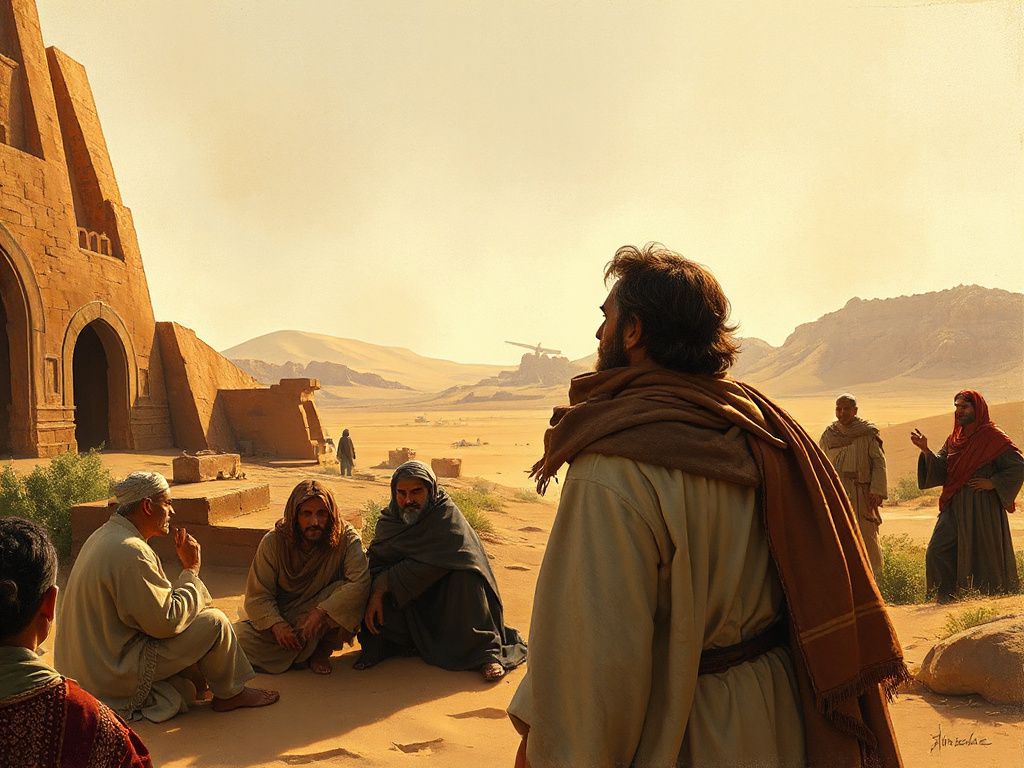
Los versículos 5–17 evocan la posición social de Job: los jóvenes se escondían, los ancianos se levantaban, los príncipes callaban (versículos 8–10); los pobres, el huérfano y la viuda lo bendecían (versículos 12–13); se vestía de justicia como de un manto y un turbante (versículo 14); era ojos para el ciego, pies para el cojo, padre para el necesitado, y quebrantaba la mandíbula del impío (versículos 15–17). El retrato es el de una figura pública cuya función cívica y piedad personal eran inseparables, tratando la justicia misma como vestidura.
Los versículos 18–25 se vuelven hacia las expectativas de Job: morir en su nido, multiplicar sus días como la arena, una raíz extendida hacia las aguas, un arco renovado en su mano (versículos 18–20). Su consejo era aguardado como la lluvia tardía (versículos 21–23), y «se sentaba como jefe», como un rey entre tropas y consolador de los enlutados (versículo 25). El capítulo es un sostenido «entonces», preparando un «ahora» no expresado que confrontarán los capítulos siguientes.
Contexto
El material proporcionado sitúa a Job 29 como un discurso poético independiente introducido por «Job volvió a tomar su parábola» (versículo 1), que los datos en lengua original glosan con la raíz hebrea יָסַף (H3254, «de nuevo») y מָשָׁל (H4912, «discurso/parábola»). La nota curada simplemente incorpora este capítulo junto con otros capítulos de Job fuera de un rango de prioridad designado, por lo que no se ofrece aquí ningún encuadre adicional de la fuente.
El capítulo mismo aporta el único contexto: un largo recuerdo en primera persona de cómo Job alguna vez fue honrado en la puerta de la ciudad (versículos 7–10), defendió a los vulnerables (versículos 12–17) y esperaba bendición continua (versículos 18–25). No se ofrece ningún escenario narrativo, cambio de hablante ni trasfondo externo más allá de los versículos y las referencias cruzadas proporcionadas.
Palabras clave del original
- H4912 El término traducido como «parábola» en el versículo 1 es מָשָׁל (māšāl), glosado en los datos proporcionados como «discurso» y definido como «sentencia concisa, generalmente de naturaleza metafórica; de ahí, un símil (como adagio, poema, discurso)». Su uso señala que lo que sigue no es habla ordinaria, sino una composición poética cuidadosamente ordenada.
- H3254 La forma יָסַף (yāsap̄, H3254) se glosa como «de nuevo». Su presencia en el versículo 1 marca este discurso como una continuación o reanudación, acorde con la nota del capítulo que indica que aquí se están incorporando capítulos adicionales de Job.
- H5216 El versículo 3 usa נֵר (nēr, H5216), glosado como «lámpara» y definido como «una lámpara (es decir, el quemador) o luz (literal o figuradamente)». Job describe la lámpara de Dios brillando sobre su cabeza como la condición bajo la cual caminó a través de la oscuridad, enmarcando la presencia divina como iluminación.
Versículos relacionados
- Psalms 18:28 La imagen del versículo 3 de la lámpara de Dios brillando sobre la cabeza de Job de modo que caminó por la oscuridad coincide con Salmos 18:28, «tú encenderás mi lámpara: Jehová mi Dios alumbrará mi oscuridad», haciendo eco del mismo emparejamiento lámpara/oscuridad a través de los Testamentos.
- Isaiah 61:10 El «me vestí de justicia y me cubrió: mi justicia era como un manto y una diadema» de Job (versículo 14) se corresponde con Isaías 61:10, donde Dios viste al siervo «con el manto de justicia», vinculando la vestidura de justicia que Job se atribuye a sí mismo con la imaginería profética de la vestidura de salvación.
- Deuteronomy 32:2 El versículo 23 compara la recepción de los oyentes a la palabra de Job con abrir su boca «como para la lluvia tardía», recordando Deuteronomio 32:2, donde se dice que la doctrina «goteará como la lluvia» y el habla «destilará como el rocío», vinculando el consejo de Job al patrón mosaico de la palabra que da vida.
Preguntas frecuentes
¿Por qué Job anhela los meses de antaño en lugar de su estado actual?
Los versículos 2–3 definen aquellos meses pasados por la activa vigilancia de Dios y su lámpara brillante, de modo que el anhelo de Job es realmente por la presencia sentida de Dios que una vez hizo navegable la oscuridad. El capítulo construye ese contraste retóricamente: cada bendición recordada (versículos 4–17) y cada futuro esperado (versículos 18–25) subraya lo que el presente ha perdido.
¿Qué tipo de papel social describe Job en los versículos 7–17?
Él describe a una figura pública sentada en la puerta de la ciudad cuya palabra silencia a los príncipes y cuyas acciones rescatan al pobre, al huérfano, a la viuda, al ciego y al cojo, tratando la justicia como su vestidura diaria (versículo 14) y la justicia como quebrantar la mandíbula del opresor (versículo 17). El papel funde la autoridad cívica con la justicia personal en un solo oficio.
¿Qué espera Job para su futuro en los versículos 18–25?
Espera morir en su nido, multiplicar sus días como la arena, tener una raíz extendida hacia las aguas y un arco renovado en su mano (versículos 18–20), y ser buscado como aquel cuya palabra se aguarda como la lluvia tardía (versículos 21–23), sentándose como jefe, como un rey y consolador de los enlutados (versículo 25). El horizonte es prosperidad ininterrumpida e influencia duradera.