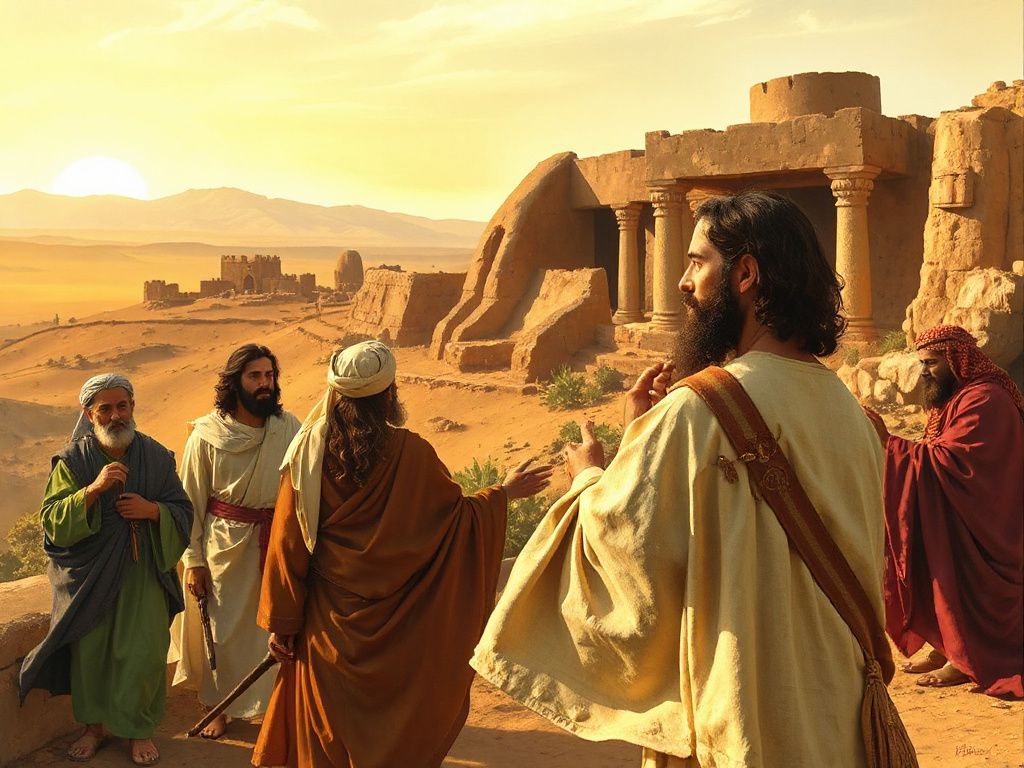
ESTUDIO DEL CAPÍTULO
Mateo 7: Juicio, oración y los dos cimientos
Mateo 7 cierra el Sermón del Monte con enseñanzas sobre no juzgar, la oración persistente, la puerta estrecha, el discernimiento de los falsos profetas y la obediencia a las palabras de Jesús, y termina con el asombro de la multitud ante su enseñanza con autoridad.
Escritura
- 1.No juzguéis, para que no seáis juzgados.Judge not, that ye be not judged.
- 2.Porque con el juicio con que juzgáis, seréis juzgados, y con la medida con que medís, os será medido.For with what judgment ye judge, ye shall be judged: and with what measure ye mete, it shall be measured unto you.
- 3.¿Y por qué miras la paja que está en el ojo de tu hermano, y no echas de ver la viga que está en tu propio ojo?And why beholdest thou the mote that is in thy brother's eye, but considerest not the beam that is in thine own eye?
- 4.¿O cómo dirás a tu hermano: Déjame sacar la paja de tu ojo, y he aquí la viga en el ojo tuyo?Or how wilt thou say to thy brother, Let me cast out the mote out of thine eye; and lo, the beam is in thine own eye?
- 5.¡Hipócrita! saca primero la viga de tu propio ojo, y entonces verás bien para sacar la paja del ojo de tu hermano.Thou hypocrite, cast out first the beam out of thine own eye; and then shalt thou see clearly to cast out the mote out of thy brother's eye.
- 6.No deis lo santo a los perros, ni echéis vuestras perlas delante de los cerdos, no sea que las pisoteen, y se vuelvan y os despedacen.Give not that which is holy unto the dogs, neither cast your pearls before the swine, lest haply they trample them under their feet, and turn and rend you.
- 7.Pedid, y se os dará; buscad, y hallaréis; llamad, y se os abrirá.Ask, and it shall be given you; seek, and ye shall find; knock, and it shall be opened unto you:
- 8.Porque todo aquel que pide, recibe; y el que busca, halla; y al que llama, se le abrirá.for every one that asketh receiveth; and he that seeketh findeth; and to him that knocketh it shall be opened.
- 9.¿Qué hombre hay de vosotros, que si su hijo le pide pan, le dará una piedra?Or what man is there of you, who, if his son shall ask him for a loaf, will give him a stone;
- 10.¿O si le pide un pescado, le dará una serpiente?or if he shall ask for a fish, will give him a serpent?
- 11.Pues si vosotros, siendo malos, sabéis dar buenas dádivas a vuestros hijos, ¿cuánto más vuestro Padre que está en los cielos dará buenas cosas a los que le pidan?If ye then, being evil, know how to give good gifts unto your children, how much more shall your Father who is in heaven give good things to them that ask him?
- 12.Así que, todas las cosas que queráis que los hombres hagan con vosotros, así también haced vosotros con ellos; porque esto es la ley y los profetas.All things therefore whatsoever ye would that men should do unto you, even so do ye also unto them: for this is the law and the prophets.
- 13.Entrad por la puerta estrecha; porque ancha es la puerta, y espacioso el camino que lleva a la perdición, y muchos son los que entran por ella;Enter ye in by the narrow gate: for wide is the gate, and broad is the way, that leadeth to destruction, and many are they that enter in thereby.
- 14.porque estrecha es la puerta, y angosto el camino que lleva a la vida, y pocos son los que la hallan.For narrow is the gate, and straitened the way, that leadeth unto life, and few are they that find it.
- 15.Guardaos de los falsos profetas, que vienen a vosotros con vestidos de ovejas, pero por dentro son lobos rapaces.Beware of false prophets, who come to you in sheep's clothing, but inwardly are ravening wolves.
- 16.Por sus frutos los conoceréis. ¿Acaso se recogen uvas de los espinos, o higos de los abrojos?By their fruits ye shall know them. Do men gather grapes of thorns, or figs of thistles?
- 17.Así, todo buen árbol da buenos frutos, pero el árbol malo da frutos malos.Even so every good tree bringeth forth good fruit; but the corrupt tree bringeth forth evil fruit.
- 18.No puede el buen árbol dar malos frutos, ni el árbol malo dar frutos buenos.A good tree cannot bring forth evil fruit, neither can a corrupt tree bring forth good fruit.
- 19.Todo árbol que no da buen fruto, es cortado y echado en el fuego.Every tree that bringeth not forth good fruit is hewn down, and cast into the fire.
- 20.Así que, por sus frutos los conoceréis.Therefore by their fruits ye shall know them.
- 21.No todo el que me dice: Señor, Señor, entrará en el reino de los cielos, sino el que hace la voluntad de mi Padre que está en los cielos.Not every one that saith unto me, Lord, Lord, shall enter into the kingdom of heaven; but he that doeth the will of my Father who is in heaven.
- 22.Muchos me dirán en aquel día: Señor, Señor, ¿no profetizamos en tu nombre, y en tu nombre echamos fuera demonios, y en tu nombre hicimos muchos milagros?Many will say to me in that day, Lord, Lord, did we not prophesy by thy name, and by thy name cast out demons, and by thy name do many mighty works?
- 23.Y entonces les declararé: Nunca os conocí; apartaos de mí, hacedores de maldad.And then will I profess unto them, I never knew you: depart from me, ye that work iniquity.
- 24.Cualquiera, pues, que me oye estas palabras, y las hace, le compararé a un hombre prudente, que edificó su casa sobre la roca.Every one therefore that heareth these words of mine, and doeth them, shall be likened unto a wise man, who built his house upon the rock:
- 25.Descendió lluvia, y vinieron ríos, y soplaron vientos, y golpearon contra aquella casa; y no cayó, porque estaba fundada sobre la roca.and the rain descended, and the floods came, and the winds blew, and beat upon that house; and if fell not: for it was founded upon the rock.
- 26.Pero cualquiera que me oye estas palabras y no las hace, le compararé a un hombre insensato, que edificó su casa sobre la arena;And every one that heareth these words of mine, and doeth them not, shall be likened unto a foolish man, who built his house upon the sand:
- 27.y descendió lluvia, y vinieron ríos, y soplaron vientos, y dieron con ímpetu contra aquella casa; y cayó, y fue grande su ruina.and the rain descended, and the floods came, and the winds blew, and smote upon that house; and it fell: and great was the fall thereof.
- 28.Y cuando terminó Jesús estas palabras, la gente se admiraba de su doctrina;And it came to pass, when Jesus had finished these words, the multitudes were astonished at his teaching:
- 29.porque les enseñaba como quien tiene autoridad, y no como los escribas.for he taught them as one having authority, and not as their scribes.
Qué significa este pasaje
Los versículos 1–6 abordan el juicio. Jesús prohíbe el juicio censor y utiliza la imagen exagerada de una 'viga' (δοκόν) frente a una 'paja' (κάρφος) para mostrar que el autoconocimiento debe preceder a la corrección de los demás. La mención conjunta de perros y cerdos en el versículo 6 advierte contra el mal manejo de lo santo, sin definir el referente exacto.
Los versículos 7–12 pasan a la oración y la Regla de Oro. Pedir, buscar y llamar se presentan como respuestas garantizadas para el petitorio persistente, fundamentadas en el carácter del Padre celestial. El versículo 12, la forma positiva de la Regla de Oro, se identifica como el resumen de 'la ley y los profetas'.
Los versículos 13–27 forman una exhortación conclusiva. La puerta estrecha, la advertencia sobre los falsos profetas reconocidos por sus frutos, y la afirmación de Jesús de que simplemente decir 'Señor, Señor' es insuficiente conducen a la parábola de los dos constructores, que separa a los oyentes de los hacedores. Los versículos 28–29 señalan el asombro de la multitud porque, a diferencia de los escribas, Jesús enseñaba 'como quien tiene autoridad' (ἐξουσίαν).
Contexto
Mateo 7 concluye el Sermón del Monte iniciado en el capítulo 5. El capítulo pasa de la enseñanza correctiva de Jesús sobre la ley a los mandatos éticos sobre la vida comunitaria, la oración y la elección escatológica. El 'No juzguéis' inicial no es una prohibición absoluta de todo discernimiento; el propio versículo 6 implica un discernimiento entre lo 'santo' y lo que no lo es.
El capítulo termina señalando que las multitudes estaban asombradas porque Jesús enseñaba 'como quien tiene autoridad, y no como sus escribas' (7:29). Esto prepara las enseñanzas contrastantes que siguen en los capítulos 8–9, donde Jesús demuestra esta autoridad mediante sanidades y declaraciones.
Palabras clave del original
- G2919 κρίνω ('juzgar') aparece repetidamente en 7:1–2. En estos versículos, la repetición verbal vincula el juzgar humano con el ser juzgado por el mismo criterio, subrayando la reciprocidad más que la mera prohibición.
- G2595 κάρφος ('una ramita seca o paja', traducido 'paja') en 7:3 contrasta con δοκός ('un madero', traducido 'viga'). El contraste de tamaño entre la mota y la viga refuerza la idea del autoconocimiento antes de la corrección.
- G1385 δοκός ('un madero', traducido 'viga') en 7:3–4 forma la contraparte mayor del κάρφος. La hipérbole de un madero en el propio ojo hace visible lo absurdo de ignorar la falta propia mientras se corrige la ajena.
Versículos relacionados
- Luke 13:24 El paralelo en Lucas, 'Esforzaos por entrar por la puerta estrecha', se hace eco de Mateo 7:13–14. Ambos subrayan la dificultad y el número reducido de quienes hallan el camino de la vida.
- Luke 6:46 Lucas 6:46, '¿Por qué me llamáis, Señor, Señor, y no hacéis lo que yo digo?', es paralelo a la advertencia de Mateo 7:21–23 de que el reconocimiento verbal de Jesús como Señor es insuficiente sin obediencia.
- Romans 2:13 Romanos 2:13 declara que 'los hacedores de la ley serán justificados'. Esto conecta directamente con la parábola de los dos constructores en Mateo 7:24–27, donde solo oír se derrumba mientras que hacer las palabras de Jesús permanece firme.
Preguntas frecuentes
¿Significa Mateo 7:1 que los cristianos nunca deben juzgar nada?
El propio capítulo matiza el carácter absoluto. El versículo 6 llama a distinguir lo 'santo' de los 'perros y los cerdos', y los versículos 15–20 instruyen a reconocer a los falsos profetas 'por sus frutos'. Por tanto, el 'No juzguéis' se dirige al juicio censor e hipócrita, no a todo discernimiento moral o doctrinal.
¿Garantiza siempre el pedir, como dicen Mateo 7:7–8?
Mateo 7:7–8 formula una promesa sin condiciones en este punto del texto. Pasajes relacionados como Mateo 21:22, Marcos 11:24 y Juan 15:7 añaden condiciones como 'creer' o 'permanecer', y 1 Juan 3:22 vincula la oración respondida al guardar los mandamientos de Dios. El propio capítulo, en el versículo 21, considera que el mero pedir verbal es insuficiente sin hacer la voluntad del Padre.
¿Quiénes son los 'perros' y los 'cerdos' en Mateo 7:6?
El texto los identifica solo por su conducta: los que 'pisotearían' lo santo y 'se volverían y os despedazarían'. El capítulo no especifica el referente. Las identificaciones propuestas en la tradición cristiana varían (p. ej., burladores endurecidos, maestros apóstatas, personas hostiles al evangelio), pero este estudio describe únicamente lo que afirma el texto proporcionado.