ESTUDIO DEL CAPÍTULO
Nehemías 8 — La lectura de la Ley y la Fiesta de los Tabernáculos
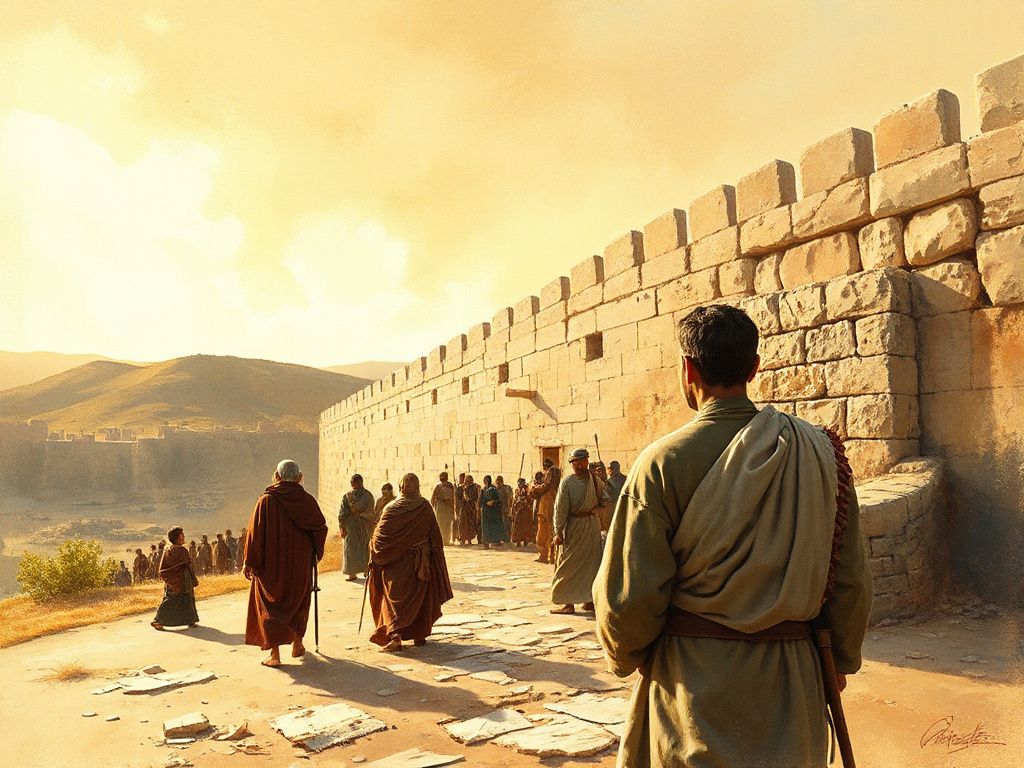
Esdras lee la ley mosaica ante el pueblo reunido en la Puerta de las Aguas; después de llorar, los dirigentes los llaman al gozo santo, y la comunidad luego celebra la Fiesta de los Tabernáculos como está escrito.
Escritura
- 1.y se juntó todo el pueblo como un solo hombre en la plaza que está delante de la puerta de las Aguas, y dijeron a Esdras el escriba que trajese el libro de la ley de Moisés, la cual Jehová había dado a Israel.And all the people gathered themselves together as one man into the broad place that was before the water gate; and they spake unto Ezra the scribe to bring the book of the law of Moses, which Jehovah had commanded to Israel.
- 2.Y el sacerdote Esdras trajo la ley delante de la congregación, así de hombres como de mujeres y de todos los que podían entender, el primer día del mes séptimo.And Ezra the priest brought the law before the assembly, both men and women, and all that could hear with understanding, upon the first day of the seventh month.
- 3.Y leyó en el libro delante de la plaza que está delante de la puerta de las Aguas, desde el alba hasta el mediodía, en presencia de hombres y mujeres y de todos los que podían entender; y los oídos de todo el pueblo estaban atentos al libro de la ley.And he read therein before the broad place that was before the water gate from early morning until midday, in the presence of the men and the women, and of those that could understand; and the ears of all the people were attentive unto the book of the law.
- 4.Y el escriba Esdras estaba sobre un púlpito de madera que habían hecho para ello, y junto a él estaban Matatías, Sema, Anías, Urías, Hilcías y Maasías a su mano derecha; y a su mano izquierda, Pedaías, Misael, Malquías, Hasum, Hasbadana, Zacarías y Mesulam.And Ezra the scribe stood upon a pulpit of wood, which they had made for the purpose; and beside him stood Mattithiah, and Shema, and Anaiah, and Uriah, and Hilkiah, and Maaseiah, on his right hand; and on his left hand, Pedaiah, and Mishael, and Malchijah, and Hashum, and Hashbaddanah, Zechariah, and Meshullam.
- 5.Abrió, pues, Esdras el libro a ojos de todo el pueblo, porque estaba más alto que todo el pueblo; y cuando lo abrió, todo el pueblo estuvo atento.And Ezra opened the book in the sight of all the people; (for he was above all the people;) and when he opened it, all the people stood up:
- 6.Bendijo entonces Esdras a Jehová, Dios grande. Y todo el pueblo respondió: ¡Amén! ¡Amén! alzando sus manos; y se humillaron y adoraron a Jehová inclinados a tierra.and Ezra blessed Jehovah, the great God. And all the people answered, Amen, Amen, with the lifting up of their hands: and they bowed their heads, and worshipped Jehovah with their faces to the ground.
- 7.Y los levitas Jesúa, Bani, Serebías, Jamín, Acub, Sabetai, Hodías, Maasías, Kelita, Azarías, Jozabed, Hanán y Pelaía, hacían entender al pueblo la ley; y el pueblo estaba atento en su lugar.Also Jeshua, and Bani, and Sherebiah, Jamin, Akkub, Shabbethai, Hodiah, Maaseiah, Kelita, Azariah, Jozabad, Hanan, Pelaiah, and the Levites, caused the people to understand the law: and the people stood in their place.
- 8.Y leían en el libro de la ley de Dios claramente, y ponían el sentido, de modo que entendiesen la lectura.And they read in the book, in the law of God, distinctly; and they gave the sense, so that they understood the reading.
- 9.Y Nehemías el gobernador, y el sacerdote Esdras, escriba, y los levitas que hacían entender al pueblo, dijeron a todo el pueblo: Día santo es a Jehová nuestro Dios; no os entristezcáis, ni lloréis; porque todo el pueblo lloraba oyendo las palabras de la ley.And Nehemiah, who was the governor, and Ezra the priest the scribe, and the Levites that taught the people, said unto all the people, This day is holy unto Jehovah your God; mourn not, nor weep. For all the people wept, when they heard the words of the law.
- 10.Luego les dijo: Id, comed grosuras, y bebed vino dulce, y enviad porciones a los que no tienen nada preparado; porque día santo es a nuestro Señor; no os entristezcáis, porque el gozo de Jehová es vuestra fuerza.Then he said unto them, Go your way, eat the fat, and drink the sweet, and send portions unto him for whom nothing is prepared; for this day is holy unto our Lord: neither be ye grieved; for the joy of Jehovah is your strength.
- 11.Los levitas, pues, hacían callar a todo el pueblo, diciendo: Callad, porque es día santo, y no os entristezcáis.So the Levites stilled all the people, saying, Hold your peace, for the day is holy; neither be ye grieved.
- 12.Y todo el pueblo se fue a comer y a beber, y a obsequiar porciones, y a gozar de grande alegría, porque habían entendido las palabras que les habían enseñado.And all the people went their way to eat, and to drink, and to send portions, and to make great mirth, because they had understood the words that were declared unto them.
- 13.Al día siguiente se reunieron los cabezas de las familias de todo el pueblo, sacerdotes y levitas, a Esdras el escriba, para entender las palabras de la ley.And on the second day were gathered together the heads of fathers' houses of all the people, the priests, and the Levites, unto Ezra the scribe, even to give attention to the words of the law.
- 14.Y hallaron escrito en la ley que Jehová había mandado por mano de Moisés, que habitasen los hijos de Israel en tabernáculos en la fiesta solemne del mes séptimo;And they found written in the law, how that Jehovah had commanded by Moses, that the children of Israel should dwell in booths in the feast of the seventh month;
- 15.y que hiciesen saber, y pasar pregón por todas sus ciudades y por Jerusalén, diciendo: Salid al monte, y traed ramas de olivo, de olivo silvestre, de arrayán, de palmeras y de todo árbol frondoso, para hacer tabernáculos, como está escrito.and that they should publish and proclaim in all their cities, and in Jerusalem, saying, Go forth unto the mount, and fetch olive branches, and branches of wild olive, and myrtle branches, and palm branches, and branches of thick trees, to make booths, as it is written.
- 16.Salió, pues, el pueblo, y trajeron ramas e hicieron tabernáculos, cada uno sobre su terrado, en sus patios, en los patios de la casa de Dios, en la plaza de la puerta de las Aguas, y en la plaza de la puerta de Efraín.So the people went forth, and brought them, and made themselves booths, every one upon the roof of his house, and in their courts, and in the courts of the house of God, and in the broad place of the water gate, and in the broad place of the gate of Ephraim.
- 17.Y toda la congregación que volvió de la cautividad hizo tabernáculos, y en tabernáculos habitó; porque desde los días de Josué hijo de Nun hasta aquel día, no habían hecho así los hijos de Israel. Y hubo alegría muy grande.And all the assembly of them that were come again out of the captivity made booths, and dwelt in the booths; for since the days of Jeshua the son of Nun unto that day had not the children of Israel done so. And there was very great gladness.
- 18.Y leyó Esdras en el libro de la ley de Dios cada día, desde el primer día hasta el último; e hicieron la fiesta solemne por siete días, y el octavo día fue de solemne asamblea, según el rito.Also day by day, from the first day unto the last day, he read in the book of the law of God. And they kept the feast seven days; and on the eighth day was a solemn assembly, according unto the ordinance.
Qué significa este pasaje
Nehemías 8 se centra en una lectura pública y accesible de la Escritura. El pueblo se reúne «como un solo hombre» y pide al escriba Esdras que traiga «el libro de la ley de Moisés, que Jehová había mandado a Israel» (v. 1). Esdras lee desde un púlpito de madera, asistido por un grupo nombrado que está de pie a cada lado (vv. 4–5), y los levitas explican el texto para que los oyentes lo entiendan (vv. 7–8). La afirmación del capítulo es que oír la ley no basta; la interpretación que produce entendimiento es parte integral del evento.
La primera respuesta del pueblo al oír la ley es el llanto (v. 9). Nehemías, Esdras y los levitas redirigen ese dolor: el día es santo, y se les dice que coman, beban, repartan porciones con los que no tienen preparado, y que «el gozo de Jehová» sea su fortaleza (vv. 10–11). La reunión se convierte en comida compartida, regalos y gran regocijo (v. 12), mostrando que la respuesta propia a la palabra de Dios es tanto reverencia como gozo.
Al segundo día los jefes estudian la ley y descubren el mandato descuidado de habitar en tabernáculos durante el séptimo mes (vv. 13–15). El pueblo junta ramas, construye tabernáculos en los techos, en los patios y en las plazas públicas, y celebra la fiesta durante siete días seguida de una asamblea solemne al octavo (vv. 16–18). El texto señala explícitamente que esto no se había hecho desde los días de Josué hijo de Nun, haciendo de esta observancia un acto deliberado de restauración del pacto.
Contexto
El capítulo forma parte de la secuencia de restauración posexílica. Está enmarcado por el proyecto de construcción del muro y el reasentamiento descrito antes en el libro, y constituye el clímax textual de esa restauración: la comunidad del pacto se reúne en torno a la Torá en lugar de en torno a muros o al poder político. La nota al pie del pasaje lo identifica como «Lectura de la ley y renovación», lo cual concuerda con esta orientación.
El capítulo está internamente unificado por un movimiento desde la asamblea (vv. 1–3) a la exposición (vv. 4–8), del dolor al gozo mandado (vv. 9–12), y de la exposición a la obediencia del pacto en forma de la Fiesta de los Tabernáculos (vv. 13–18). La lectura pública del primer día se vincula al estudio del segundo día por parte de los jefes, y ambos se vinculan al mismo objetivo: que el pueblo «entendiese las palabras que se les declaraban» (v. 12) y obrara conforme a lo que hallaba en la ley (vv. 14–15).
Palabras clave del original
- H8451 תּוֹרַת (tôraṯ), «ley» — en Nehemías 8 este término denota la instrucción escrita entregada por medio de Moisés. La glosa lo marca como «un precepto o estatuto, especialmente el Decálogo o el Pentateuco», lo cual encaja con la referencia repetida del capítulo al «libro de la ley de Moisés». El capítulo trata este libro como un objeto para ser leído en voz alta y explicado.
- H5608 סֹּפֵר (sōp̄ēr), «escriba» — la glosa define la raíz verbal como «marcar con una señal como cuenta o registro, es decir, inscribir». En Nehemías 8 el título se aplica a Esdras (vv. 1, 4, 9, 13), y el rol es funcional: Esdras es quien trae, abre y lee el libro ante la asamblea.
- H7339 רְחוֹב (rəḥôḇ), «plaza» — glosado como «una anchura, es decir, avenida o área». La «plaza ancha» frente a la Puerta de las Aguas (vv. 1, 3, 16) es el espacio cívico abierto que hace posible una lectura pública, y el término señala que el evento no es una reunión privada o sacerdotal, sino una celebrada en un espacio abierto al pueblo reunido.
Versículos relacionados
- Psalms 28:7 Nehemías 8:10 declara: «el gozo de Jehová es vuestra fortaleza». El Salmo 28:7 expresa el mismo binomio de confianza y regocijo, situando la fortaleza y el gozo en el Señor más que en los recursos del oyente.
- Proverbs 17:22 Nehemías 8 conecta el oír la palabra de Dios con un gozo mandado que se convierte en la «fortaleza» del pueblo (v. 10). Proverbios 17:22 presenta un corazón alegre como restaurador en el mismo registro, vinculando el gozo con el bienestar de quien lo recibe.
- Ecclesiastes 9:7 Nehemías 8:10 instruye al pueblo a «comer de lo gordo y beber de lo dulce» porque el día es santo. Eclesiastés 9:7 da un encargo muy paralelo: comer pan con gozo y beber vino con corazón alegre, fundando ambos en la aceptación que Dios hace de las obras del que le sirve.
Preguntas frecuentes
¿Por qué el capítulo describe al pueblo reuniéndose «como un solo hombre»?
La frase «como un solo hombre» (v. 1) es un modismo corporativo. No describe a un individuo, sino que enfatiza la unidad de propósito: toda la comunidad pide la ley junta, no como facciones dispersas. El capítulo presenta el oír la ley como un acto que el pueblo realiza como una sola asamblea, no como hogares aislados.
¿Por qué se le dice al pueblo que no llore en un día dedicado a oír la ley?
El llanto en el v. 9 es una respuesta de dolor al oír la ley, como afirma el texto. Nehemías, Esdras y los levitas no niegan la seriedad de la ley; reencuadran el día como un día santo, y mandan gozo, comer, repartir porciones, y prohíben el duelo porque «el gozo de Jehová es vuestra fortaleza» (v. 10). El punto es que oír la palabra del pacto produce tanto contrición como gozo mandado, y los dirigentes dirigen a la asamblea hacia lo segundo.
¿Por qué es significativa la renovada observancia de la Fiesta de los Tabernáculos en Nehemías 8?
Los jefes hallan el mandato del tabernáculo en la ley al segundo día (vv. 13–15) y el pueblo luego celebra la fiesta durante siete días con una asamblea al octavo día (vv. 16–18). El capítulo afirma explícitamente que esto no se había hecho desde los días de Josué hijo de Nun. La importancia es, por tanto, pactal: oír la ley conduce no solo a una respuesta emocional de un día, sino a un acto concreto de obediencia que recupera una fiesta largamente descuidada, haciendo del capítulo un paradigma de reforma fundamentada en la Escritura.