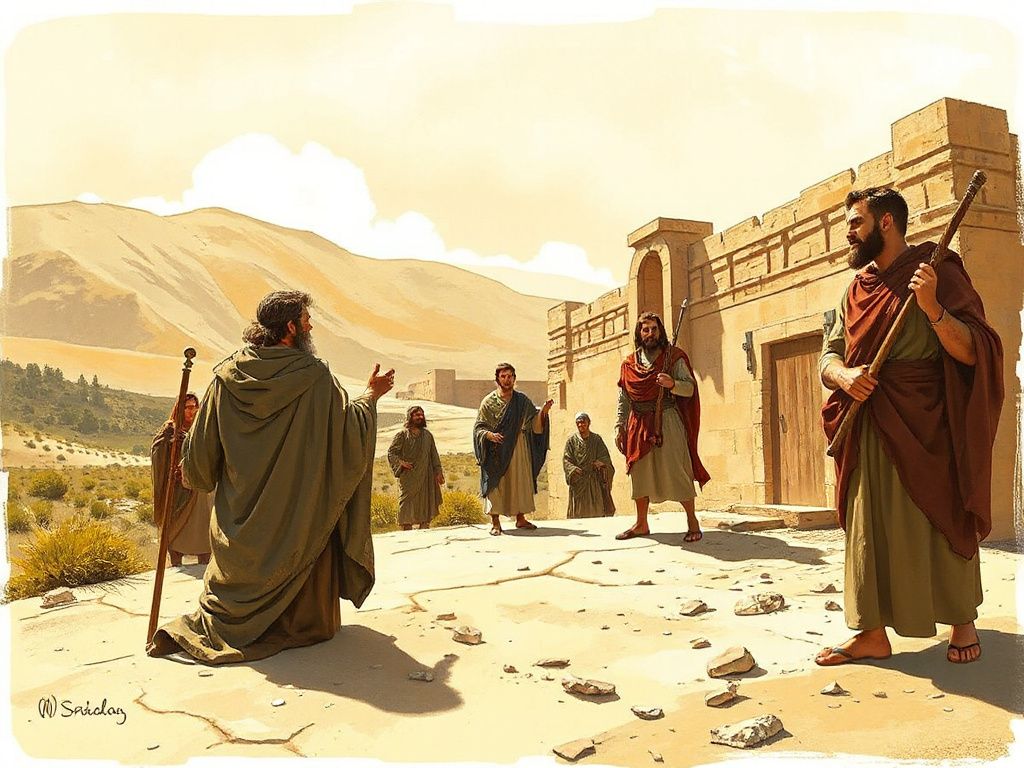
ESTUDIO DEL CAPÍTULO
Salmos 132 — El voto de David y la elección de Sion por Dios
Un Cántico de los Ascensos que pide a Dios que se acuerde de la aflicción de David, relata su voto de asegurar un lugar de reposo para el Arca, y registra las promesas juradas por Dios de preservar la línea davídica y de habitar en Sion.
Escritura
- 1.Acuérdate, oh Jehová, de David, Y de toda su aflicción;A Song of Ascents. Jehovah, remember for David All his affliction;
- 2.De cómo juró a Jehová, Y prometió al Fuerte de Jacob:How he sware unto Jehovah, And vowed unto the Mighty One of Jacob:
- 3.No entraré en la morada de mi casa, Ni subiré sobre el lecho de mi estrado;Surely I will not come into the tabernacle of my house, Nor go up into my bed;
- 4.No daré sueño a mis ojos, Ni a mis párpados adormecimiento,I will not give sleep to mine eyes, Or slumber to mine eyelids;
- 5.Hasta que halle lugar para Jehová, Morada para el Fuerte de Jacob.Until I find out a place for Jehovah, A tabernacle for the Mighty One of Jacob.
- 6.He aquí en Efrata lo oímos; Lo hallamos en los campos del bosque.Lo, we heard of it in Ephrathah: We found it in the field of the wood.
- 7.Entraremos en su tabernáculo; Nos postraremos ante el estrado de sus pies.We will go into his tabernacles; We will worship at his footstool.
- 8.Levántate, oh Jehová, al lugar de tu reposo, Tú y el arca de tu poder.Arise, O Jehovah, into thy resting-place; Thou, and the ark of thy strength.
- 9.Tus sacerdotes se vistan de justicia, Y se regocijen tus santos.Let thy priest be clothed with righteousness; And let thy saints shout for joy.
- 10.Por amor de David tu siervo No vuelvas de tu ungido el rostro.For thy servant David's sake Turn not away the face of thine anointed.
- 11.En verdad juró Jehová a David, Y no se retractará de ello: De tu descendencia pondré sobre tu trono.Jehovah hath sworn unto David in truth; He will not turn from it: Of the fruit of thy body will I set upon thy throne.
- 12.Si tus hijos guardaren mi pacto, Y mi testimonio que yo les enseñaré, Sus hijos también se sentarán sobre tu trono para siempre.If thy children will keep my covenant And my testimony that I shall teach them, Their children also shall sit upon thy throne for evermore.
- 13.Porque Jehová ha elegido a Sion; La quiso por habitación para sí.For Jehovah hath chosen Zion; He hath desired it for his habitation.
- 14.Este es para siempre el lugar de mi reposo; Aquí habitaré, porque la he querido.This is my resting-place for ever: Here will I dwell; For I have desired it.
- 15.Bendeciré abundantemente su provisión; A sus pobres saciaré de pan.I will abundantly bless her provision: I will satisfy her poor with bread.
- 16.Asimismo vestiré de salvación a sus sacerdotes, Y sus santos darán voces de júbilo.Her priests also will I clothe with salvation; And her saints shall shout aloud for joy.
- 17.Allí haré retoñar el poder de David; He dispuesto lámpara a mi ungido.There will I make the horn of David to bud: I have ordained a lamp for mine anointed.
- 18.A sus enemigos vestiré de confusión, Mas sobre él florecerá su corona.His enemies will I clothe with shame; But upon himself shall his crown flourish.
Qué significa este pasaje
El Salmo 132 comienza invocando al SEÑOR para que «se acuerde de David y de todas sus aflicciones» (v. 1) — no la苦难 en sí, sino las苦难 autoimpuestas que David soportó antes de asegurar una morada permanente para el Arca del Pacto. Los versículos 2–5 enmarcan esas苦难 como un voto: David hizo un juramento y votó al Fuerte de Jacob que no entraría en su casa, ni subiría a su lecho, ni daría sueño a sus ojos hasta haber hallado un lugar para el SEÑOR (vv. 2–5). El voto es el eje teológico del salmo, presentando el proyecto del templo no como ambición real, sino como fidelidad al pacto.
Los versículos 6–10 pasan del voto de David a la respuesta de la comunidad. Habiendo oído del Arca en Efrata y hallándola en «el campo del bosque», los adoradores entran en sus tabernáculos y se postran ante su estrado, pidiendo al SEÑOR que se levante hacia su lugar de reposo con el arca de su poder (vv. 6–8). Oran para que los sacerdotes sean vestidos de justicia, los santos den voces de alegría, y el rostro del ungido no sea vuelto atrás (vv. 9–10). La súplica por el rey se fundamenta en la devoción previa de David a la casa del SEÑOR.
Los versículos 11–18 pasan de la petición al juramento divino. El SEÑOR juró a David con verdad que del fruto de su vientre pondría sobre su trono (v. 11), y que sus hijos, si guardaban el pacto y el testimonio, se sentarían sobre su trono para siempre (v. 12). La razón se expresa explícitamente: «Porque el SEÑOR ha elegido a Sion; la ha deseado para su habitación» (v. 13). Los versículos restantes despliegan las consecuencias de esa elección — provisión abundante, pobres saciados, sacerdotes vestidos de salvación, el cuerno de David que florece, su corona resplandeciente, y sus enemigos vestidos de vergüenza (vv. 14–18). El salmo enmarca así el templo, la dinastía y Sion como un único compromiso divino.
Contexto
El Salmo 132 es uno de los quince Cánticos de los Ascensos (Salmos 120–134). Su lugar en esa colección y su enfoque en Sion lo vinculan a otros salmos de ascenso que hablan de Jerusalén y la peregrinación. El salmo mismo está construido en dos mitades: los versículos 1–10 apelan a Dios sobre la base del voto de David y la adoración del pueblo al estrado del Arca, y los versículos 11–18 citan la respuesta de Dios en forma de juramento. La frase «arca de tu poder» (v. 8) y la petición de que los sacerdotes sean «vestidos de justicia» (v. 9) enmarcan el templo como el lugar donde el poder de Dios y su fidelidad al pacto se hacen visibles. La referencia a una «lámpara para mi ungido» (v. 17) y al «cuerno de David» que ha de brotar son términos clave retomados posteriormente en las referencias cruzadas proporcionadas. La nota seleccionada simplemente marca el capítulo como material completado para los Salmos fuera de P0/P1, por lo que no se ofrece ningún encuadre histórico adicional más allá del texto del propio salmo y las referencias cruzadas citadas.
Palabras clave del original
- H3068 El nombre del pacto de Dios (transliterado como ‘yəhwāh’) aparece repetidamente en este salmo — en el voto de David (v. 2), en la invocación a levantarse (v. 8), y en el juramento de Dios a David (vv. 11, 13). Su uso repetido ancla toda petición y promesa en la identidad personal y de pacto del Dios de Israel.
- H4609 ‘Mmaʿălôṯ’ (ascensos) señala al Salmo 132 como uno de los Cánticos de los Ascensos, un subgrupo dentro del Salterio cuyo entorno litúrgico exacto el material proporcionado no especifica.
- H0046 ‘ʾăḇiyr’ (Fuerte) aparece en el v. 2 en el título «Fuerte de Jacob», el mismo descriptor reiterado en el v. 5 («Fuerte de Jacob»). El salmo empareja consistentemente el nombre personal «SEÑOR» (H3068) con este epíteto para el Dios de Jacob.
Versículos relacionados
- 2 Samuel 7:12 El juramento del v. 11 — «Del fruto de tu cuerpo pondré sobre tu trono» — refleja el lenguaje de 2 Samuel 7:12, donde Dios promete a David que después de que descanse con sus padres, su descendencia será levantada y su reino establecido.
- Psalms 78:68 «Porque el SEÑOR ha elegido a Sion» (v. 13) es paralelo al Salmo 78:68, que también nombra la elección de la tribu de Judá y el monte Sion que Dios amó, reforzando a Sion como la morada divinamente designada.
- Luke 1:69 La promesa del salmo «Allí haré brotar el cuerno de David» (v. 17) se refleja en Lucas 1:69, donde se dice que Dios levantó un cuerno de salvación para nosotros en la casa de su siervo David, vinculando la imaginería davídica a la posterior afirmación mesiánica.
Preguntas frecuentes
¿Por qué el salmo pide a Dios que «se acuerde de David y de todas sus aflicciones»?
La palabra hebrea traducida como «aflicción» apunta a las苦难 que David soportó por voto antes de asegurar un lugar de reposo para el Arca (vv. 2–5). La petición pide a Dios que actúe en favor del rey ungido recordando esa abnegación previa, no simplemente que compadezca del sufrimiento de David.
¿Cuál es la relación entre los versículos 1–10 y los versículos 11–18?
Los versículos 1–10 son petición humana fundamentada en el voto de David y la adoración de la comunidad al estrado del Arca. Los versículos 11–18 pasan a la respuesta divina, presentando el compromiso juramentado de Dios con la línea davídica, la elección de Sion y el florecimiento del ungido contra sus enemigos.
¿Qué significa «el cuerno de David que ha de brotar» (v. 17) en su contexto?
Dentro del salmo, la frase se empareja con «una lámpara para mi ungido» y se enmarca por el juramento de Dios de sentar el fruto del vientre de David sobre su trono (v. 11). El «cuerno» y la «lámpara» juntos presentan la línea davídica como habilitada, perdurable y divinamente sostenida, descripción luego reflejada en Lucas 1:69 entre las referencias cruzadas proporcionadas.