ESTUDIO DEL CAPÍTULO
Salmos 81 — Un llamado a escuchar y una advertencia desoída
Un salmo festivo convoca a una adoración gozosa, narra la redención de Dios de Egipto y suplica a Israel que escuche, mientras lamenta que se han negado a hacerlo.
Escritura
- 1.Cantad con gozo a Dios, fortaleza nuestra; Al Dios de Jacob aclamad con júbilo.For the Chief Musician; set to the Gittith. A Psalm of Asaph. Sing aloud unto God our strength: Make a joyful noise unto the God of Jacob.
- 2.Entonad canción, y tañed el pandero, El arpa deliciosa y el salterio.Raise a song, and bring hither the timbrel, The pleasant harp with the psaltery.
- 3.Tocad la trompeta en la nueva luna, En el día señalado, en el día de nuestra fiesta solemne.Blow the trumpet at the new moon, At the full moon, on our feast - day.
- 4.Porque estatuto es de Israel, Ordenanza del Dios de Jacob.For it is a statute for Israel, An ordinance of the God of Jacob.
- 5.Lo constituyó como testimonio en José Cuando salió por la tierra de Egipto. Oí lenguaje que no entendía;He appointed it in Joseph for a testimony, When he went out over the land of Egypt, Where I heard a language that I knew not.
- 6.Aparté su hombro de debajo de la carga; Sus manos fueron descargadas de los cestos.I removed his shoulder from the burden: His hands were freed from the basket.
- 7.En la calamidad clamaste, y yo te libré; Te respondí en lo secreto del trueno; Te probé junto a las aguas de Meriba. SelahThou calledst in trouble, and I delivered thee; I answered thee in the secret place of thunder; I proved thee at the waters of Meribah. [[Selah
- 8.Oye, pueblo mío, y te amonestaré. Israel, si me oyeres,Hear, O my people, and I will testify unto thee: O Israel, if thou wouldest hearken unto me!
- 9.No habrá en ti dios ajeno, Ni te inclinarás a dios extraño.There shall no strange god be in thee; Neither shalt thou worship any foreign god.
- 10.Yo soy Jehová tu Dios, Que te hice subir de la tierra de Egipto; Abre tu boca, y yo la llenaré.I am Jehovah thy God, Who brought thee up out of the land of Egypt: Open thy mouth wide, and I will fill it.
- 11.Pero mi pueblo no oyó mi voz, E Israel no me quiso a mí.But my people hearkened not to my voice; And Israel would none of me.
- 12.Los dejé, por tanto, a la dureza de su corazón; Caminaron en sus propios consejos.So I let them go after the stubbornness of their heart, That they might walk in their own counsels.
- 13.¡Oh, si me hubiera oído mi pueblo, Si en mis caminos hubiera andado Israel!Oh that my people would hearken unto me, That Israel would walk in my ways!
- 14.En un momento habría yo derribado a sus enemigos, Y vuelto mi mano contra sus adversarios.I would soon subdue their enemies, And turn my hand against their adversaries.
- 15.Los que aborrecen a Jehová se le habrían sometido, Y el tiempo de ellos sería para siempre.The haters of Jehovah should submit themselves unto him: But their time should endure for ever.
- 16.Les sustentaría Dios con lo mejor del trigo, Y con miel de la peña les saciaría.He would feed them also with the finest of the wheat; And with honey out of the rock would I satisfy thee.
Qué significa este pasaje
El salmo se abre con una convocatoria urgente a adorar a Dios con instrumentos, cánticos y gritos de alegría (vv. 1–3). La instrucción de tocar la trompeta en la luna nueva y en la luna llena fundamenta este gozo en el calendario litúrgico de Israel, no en un sentimiento privado. La adoración aquí es pública, programada y corporal: la voz, las manos y el aliento participan por completo.
La sección central gira hacia el testimonio. Dios instituyó la fiesta como un estatuto en José, recordando el éxodo: la liberación de la carga del hombro, del cesto de las manos, la respuesta desde el lugar secreto del trueno y la prueba en las aguas de Meribá (vv. 5–7). El poema condensa toda la historia de la redención en un único recuerdo que debe ser repetido cada vez que la fiesta regresa.
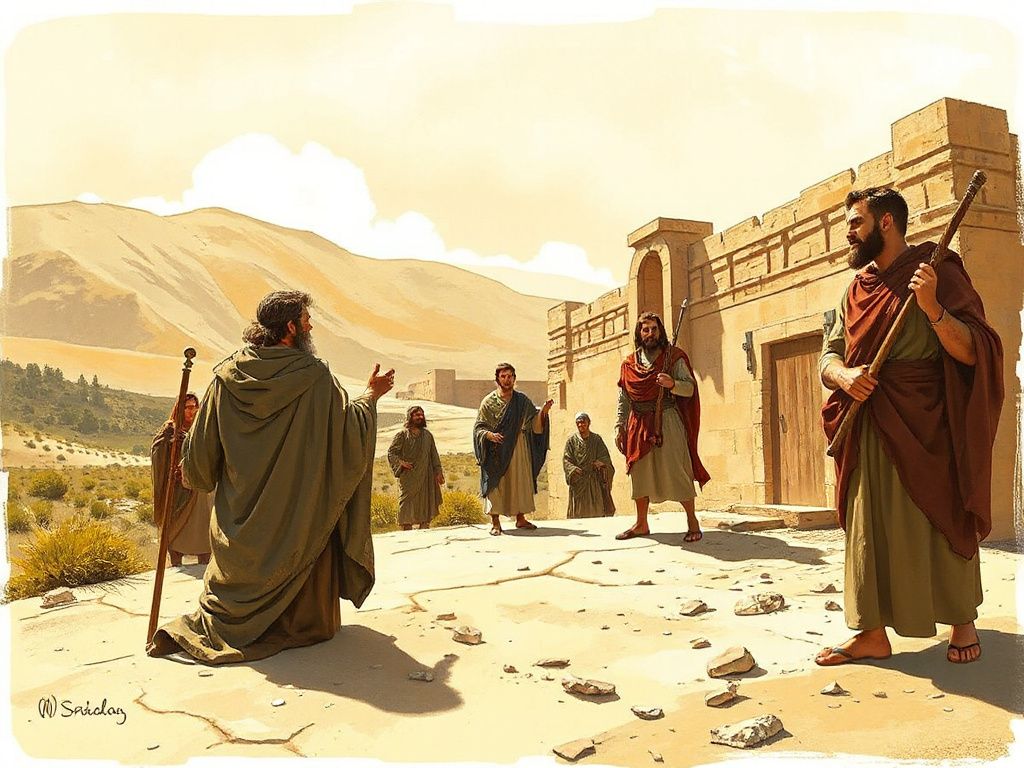
El movimiento final pasa de la memoria a la advertencia. Dios suplica: «¡Oh, si mi pueblo me escuchara!» (vv. 8–13). Porque Israel no quiso escuchar, Dios «los dejó andar» tras la terquedad de su corazón. Sin embargo, la oferta sigue en pie: si caminaran en los caminos de Dios, los enemigos serían sometidos y el pueblo sería alimentado con lo mejor del trigo y con miel de la roca (vv. 14–16). El salmo es, por tanto, a la vez repetición y ultimátum.
Contexto
El salmo se atribuye a Asaf y está dispuesto «para el director del coro… sobre la gaita de Gat», lo que indica su uso en el ministerio de la música del templo. Sus referencias a la luna nueva, a la luna llena y a «nuestro día de fiesta» ubican el escenario dentro de las festividades appointed de Israel, muy probablemente la Fiesta de los Tabernáculos (véase el lenguaje de los vv. 3–5). La nota proporcionada no ofrece comentario adicional, por lo que la lectura aquí se extrae del texto del capítulo mismo. El movimiento desde la celebración (vv. 1–5) hacia la narrativa de la liberación (vv. 5–7), y de allí a la amonestación y el lamento (vv. 8–16), constituye la columna vertebral estructural que da forma a cómo se entiende cada parte.
Palabras clave del original
- H7442 El verbo rānan, traducido «cantar con gozo» en el v. 2, transmite un grito resonante y estridente: no una contemplación silenciosa, sino una fuerte proclamación pública que acompaña la adoración festiva descrita a lo largo de los vv. 1–3.
- H2706 El sustantivo ḥōq («estatuto») en el v. 5 nombra la fiesta como una ordenanza vinculante: algo no opcional sino establecido por Dios. Esta es la misma raíz detrás del lenguaje de «estatuto» de los vv. 4–5, que enmarca la fiesta como obligación covenantal y no como costumbre.
- H8628 El verbo tāqaʿ («tocar») en el v. 4 denota un sonido agudo y vibrante. Aplicado al cuerno de carnero (šôpār), señala algo más que música: es la convocatoria que reúne a Israel para la fiesta descrita en los vv. 3–4.
Versículos relacionados
- Exodus 20:2 La confesión «Yo soy Jehová tu Dios, que te hice subir de la tierra de Egipto» (v. 10) es la declaración inicial del Decálogo, que ancla el llamado del salmo a la lealtad exclusiva en el acto fundamental de la redención.
- Jeremiah 7:24 El lenguaje de Israel caminando «en la terquedad de su corazón» (v. 12) es retomando directamente por la acusación de Jeremías, mostrando que el lamento del salmo por un Israel que no escucha se convirtió en un patrón duradero en la tradición profética de Israel.
- Deuteronomy 32:13 La promesa de alimentar a Israel con «miel de la roca» (v. 16) evoca el cántico de Moisés, donde la imaginería de la roca ya nombra la provisión en el desierto que el salmo transforma en una invitación futura.
Preguntas frecuentes
¿Qué fiesta tiene en vista el Salmo 81?
El capítulo mismo no nombra la fiesta. Solo especifica la luna nueva, la luna llena y «nuestro día de fiesta» (vv. 3–4). Algunos lectores conectan este lenguaje con la Fiesta de los Tabernáculos, pero el salmo en sí no ofrece una identificación explícita.
¿Por qué dice Dios «los dejé andar tras la terquedad de su corazón» (v. 12)?
Dentro del capítulo, esta declaración sigue inmediatamente a «mi pueblo no escuchó mi voz» (v. 11). La acción de Dios se presenta como consecuencia de una negativa persistente: porque Israel no quiso escuchar, Dios les permitió seguir sus propios consejos en lugar de forzar su obediencia.
¿Sigue abierta la oferta de los vv. 13–16 al final del salmo?
El capítulo concluye con «yo los alimentaría… yo te saciaría» (vv. 15–16). Dado que el lamento de los vv. 11–12 va seguido de la renovada invitación del v. 13, las palabras finales se leen como una oferta permanente y no como una sentencia cumplida: el salmo cierra en apelación, no en finalidad.