GUÍA DE PELÍCULA BÍBLICA
Una noche con el rey
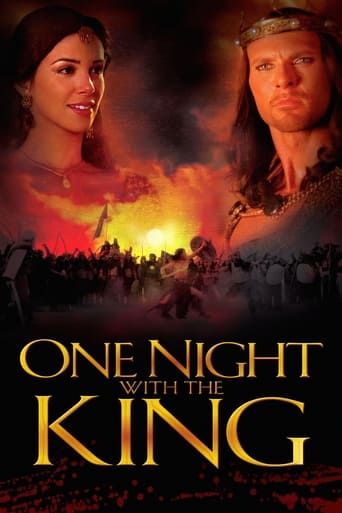
One Night with the King · Película · 2006 · 123 min
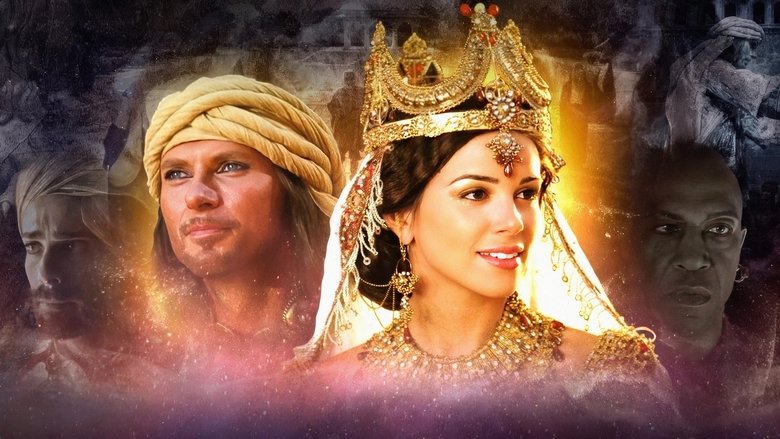
One Night with the King (2006) dramatises the Book of Esther, in which a young Jewish woman named Esther becomes queen of Persia and risks her life to save her people from destruction.
De qué trata
According to the provided overview, One Night with the King follows a Jewish girl raised among her people who enters the Persian king's search for a new bride after the previous queen is deposed. Her intelligence and interest in the scrolls of the palace catch the king's eye, and he chooses her as queen. When enemies of the Jews incite the king toward genocide, Esther learns her own identity and risks her life to intervene.
The story is recorded in the Book of Esther (chapters 1–10), set in the Persian Empire during the reign of King Ahasuerus (identified in tradition with Xerxes I). The biblical figures named for this film are Esther and Mordecai. The narrative centers on the survival of the Jewish exiles in Persia and the origin of the festival of Purim.
Dónde está en la Biblia
- Ester 4:14Mordecai's challenge to Esther frames her queenship as providential: deliverance may come from elsewhere, but she may have been placed in the palace 'for such a time as this.' This verse is the hinge on which the film's central decision turns.
- Ester 4:16Esther asks the Jews in Shushan to fast three days before she approaches the king unsummoned, a capital offense under Persian law. Her resolve — 'if I perish, I perish' — becomes the moral center of the story.
- Ester 6:1On the very night before Esther's second banquet, the king cannot sleep and has the royal chronicles read aloud, remembering Mordecai's earlier unrewarded service. The narrative uses this coincidence to set up Haman's downfall.
- Ester 7:3-4At her second banquet Esther finally names the threat: she and her people have been 'sold to be destroyed, to be slain, and to perish.' This is the petition the film builds its climactic scene around.
- Ester 8:15-17The reversal is complete: Mordecai emerges in royal apparel, and the Jews in every province experience 'light and gladness, and joy and honor.' This passage underlies any film depiction of the story's joyful resolution and the origin of Purim.
En qué se aparta de la Biblia
The provided overview is a general retelling of the Esther narrative rather than a specific scene list, so individual departures are not detailed here. Viewers may want to compare the film's pacing and dialogue with how the Book of Esther compresses a sequence of palace events — Esther's preparation (Esther 2), Mordecai's discovery of the plot and the king's sleepless night (Esther 6:1), Esther's two banquets and petition (Esther 7:3–4), and the sudden reversal in which Haman is hanged on the gallows he prepared for Mordecai (Esther 7:10) and the Jews are given relief (Esther 8:15–17).
Because the Esther scroll never mentions God by name, adaptations sometimes add religious framing (prayer, devotion) that the text itself does not contain. Watch for how the film handles Esther 4:16, where the Bible records only a public fast and Esther's resolve — 'if I perish, I perish' — and compare that moment of decision with the way the screenplay presents her motives. Also note Esther 6:1, where a sleepless king reads the royal chronicles and Mordecai is remembered; the film may rearrange this coincidence into a more causal chain of events.
Preguntas para conversar
- 1
Why does Esther risk approaching the king unsummoned?
According to Esther 4:16, approaching the king without being summoned was punishable by death. Esther asks the Jews to fast three days and resolves, 'if I perish, I perish,' because the alternative is the destruction of her people described in Esther 7:3–4.
- 2
What turns the king's anger against Haman instead of the Jews?
Esther 6:1 records that on the night before her second banquet the king could not sleep and had the royal chronicles read, which reminded him that Mordecai had once saved his life. This sequence of events sets up Haman's downfall, and Esther 7:10 records that Haman was hanged on the gallows he had prepared for Mordecai.
- 3
What is the outcome the film depicts for the Jewish people?
Esther 8:15–17 describes the reversal: Mordecai goes out in royal apparel of blue and white, the city of Shushan rejoices, and throughout the empire the Jews experience 'light and gladness, and joy and honor,' a feast and a good day. This passage is the scriptural basis for the celebratory resolution and the background to the festival of Purim.
Dónde verla
Disponibilidad para Canadá; cambia con el tiempo. Verifica en la plataforma antes de verla. TMDb ↗
Después de verla, lee el pasaje: encontrarás detalles que ninguna película alcanza a mostrar.