BIBLE FILM GUIDE
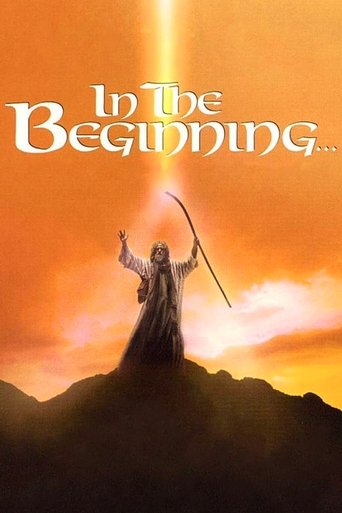
In the Beginning
Series · 2000
A 2-part NBC miniseries that dramatizes the patriarchal narratives of Genesis 12–50, following Abraham, Sarah, Jacob, and Joseph.
What the story covers
In the Beginning is a 2-part biblical television miniseries directed by Kevin Connor, starring Martin Landau and Jacqueline Bisset. It premiered on NBC on November 12, 2000. The series adapts the patriarchal narratives in Genesis 12–50, covering the lives of Abraham, Sarah, Jacob, and Joseph.
These are some of the most foundational stories in the Old Testament: God's covenant with Abraham, the birth of Isaac, Jacob's family and his sons, and Joseph's enslavement and rise in Egypt. The series focuses on the figures whose stories the Bible uses to trace the early history of Israel before the exodus.
Where it is in the Bible
- Genesis 12:1-3God's call to Abram to leave his country and family, with the promise that 'in thee shall all the families of the earth be blessed.' This passage launches the patriarchal narratives the miniseries adapts.
- Genesis 15:6Abram 'believed in Jehovah; and he reckoned it to him for righteousness.' A pivotal text on faith and God's reckoning, often tied to the Abrahamic covenant the series explores.
- Genesis 22:18After the binding of Isaac, God restates the covenant: 'in thy seed shall all the nations of the earth be blessed; because thou hast obeyed my voice.' The miniseries covers Abraham's testing of Isaac.
- Genesis 28:13-14At Bethel, God renews the Abrahamic promise to Jacob: the land, the descendants 'as the dust of the earth,' and blessing 'to the west, and to the east, and to the north, and to the south.' The series follows Jacob's journey.
- Genesis 50:20Joseph tells his brothers: 'ye meant evil against me; but God meant it for good, to save much people alive.' A key thematic climax for the Joseph arc the miniseries depicts.
How it differs from the Bible
The overview is brief, so specific plot details cannot be drawn from it. As a dramatization of long biblical narratives, the miniseries necessarily compresses decades of family history. Watch for how it condenses Abraham's journey from Ur into Canaan and Egypt, the long wait for Isaac, and the chain of events that sends Joseph to Egypt — moments the Bible unfolds across many chapters.
Scripture repeatedly shows the covenant promise that 'in thee shall all the families of the earth be blessed' (Genesis 12:3; 22:18; 28:14). The series adapts the patriarchal period as a connected family saga; when watching, compare how the drama handles Abraham's call, Isaac's near-sacrifice, Jacob's vision at Bethel, and Joseph's words to his brothers in Genesis 45 and 50, where Joseph frames his suffering as something God used to 'save much people alive' (50:20).
Discussion questions
- 1
How closely does the miniseries follow the Bible's patriarchal narratives?
The series adapts Genesis 12–50, but as a dramatization it must compress and sequence events. Compare each major scene with the chapters of Genesis it draws on.
- 2
Which covenant promises does the series highlight across the generations?
Watch for the repeated promise that 'in thee shall all the families of the earth be blessed' (Genesis 12:3; 22:18; 28:14) as it is restated to Abraham, Isaac, and Jacob.
- 3
How does the series treat Joseph's framing of his suffering?
Scripture presents Joseph telling his brothers that God sent him ahead 'to preserve life' (Genesis 45:5-8) and that 'God meant it for good' (Genesis 50:20). Notice whether the miniseries echoes this theological framing.
Where to watch
Availability is for Canada and changes over time — check the platform before watching. TMDb ↗
Reflections on Genesis
After watching, read the passage itself — you will find details no film has time to show.