Genesis 10:26
「And Joktan begat Almodad, and Sheleph, and Hazarmaveth, and Jerah,」
Genesis 25:1
「And Abraham took another wife, and her name was Keturah.」
Genesis 21:26
「And Abimelech said, I know not who hath done this thing: neither didst thou tell me, neither yet heard I of it, but to-day.」
Genesis 1:1-5
Genesis · Ch.1
Genesis 1:1-5 First Five Days
Genesis 1:6-25
Genesis 1:6-25 The Sixth Day
Genesis 15:9
「And he said unto him, Take me a heifer three years old, and a she-goat three years old, and a ram three years old, and a turtle-dove, and a young pigeon.」
Genesis 23:11
「Nay, my lord, hear me: the field give I thee, and the cave that is therein, I give it thee; in the presence of the children of my people give I it thee: bury thy dead.」
Genesis 14:7
「And they returned, and came to En-mishpat (the same is Kadesh), and smote all the country of the Amalekites, and also the Amorites, that dwelt in Hazazon-tamar.」
Circumcision
The sign of God's covenant with Abraham, performed on Isaac on the eighth day as commanded, marking belonging to the covenant people of Israel.
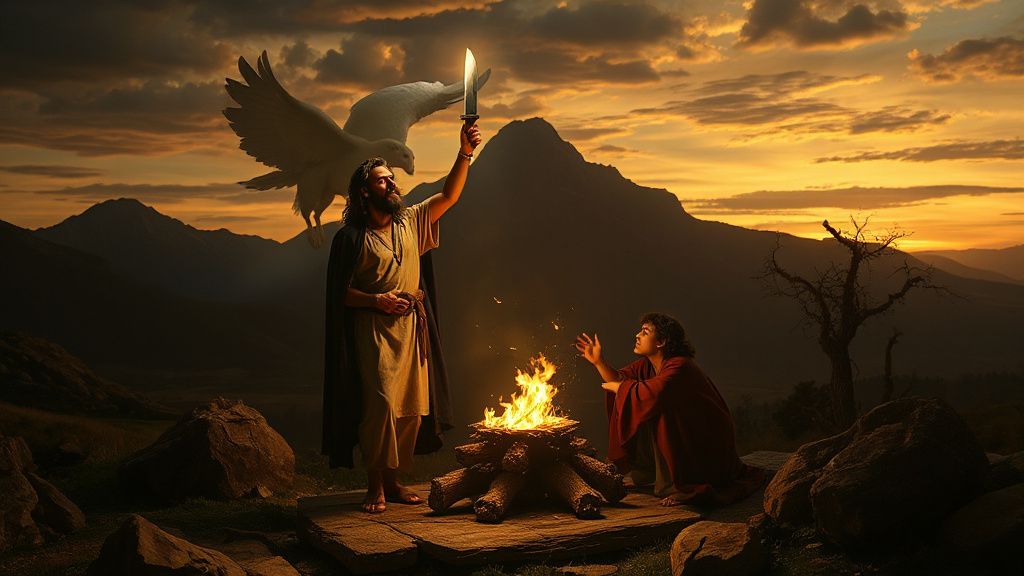
Land of Moriah
The region where Abraham offered Isaac, later identified as the mountain where Solomon built the Temple. Prefigures Jerusalem as the center of true worship.
Burnt Offering
A sacrifice wholly consumed by fire, symbolizing total dedication and substitution. Isaac's binding foreshadows Christ's complete self-offering on behalf of humanity.
Covenant
A solemn divine binding agreement between God and Abraham and his descendants, central to biblical theology, encompassing promises of land, descendants, and God's presence.
Angel/Messenger
A heavenly being sent by God to execute His will and protect His people. Abraham trusted God's angel to guide his servant in finding Isaac's bride.
YHWH
The covenant name of God, revealed to Moses as 'I AM THAT I AM.' Its repeated use in Jacob's narrative identifies YHWH as the God who faithfully keeps the covenant made with Abraham and Isaac.
What can we infer about Isaac's role, awareness, and experience in the binding narrative?
Though Scripture is silent, why did Isaac, as a grown man, not resist?
How does rabbinic tradition interpret the Sabbath rest of Day 7 as the completion of the seven days of creation?
The Sabbath as the crown of creation and a covenant of rest with the made world.
What state does 'formless and void' actually describe at the beginning of creation?
The Hebrew tohu wa-bohu has sparked countless interpretations—chaos, potential, or theological statement?
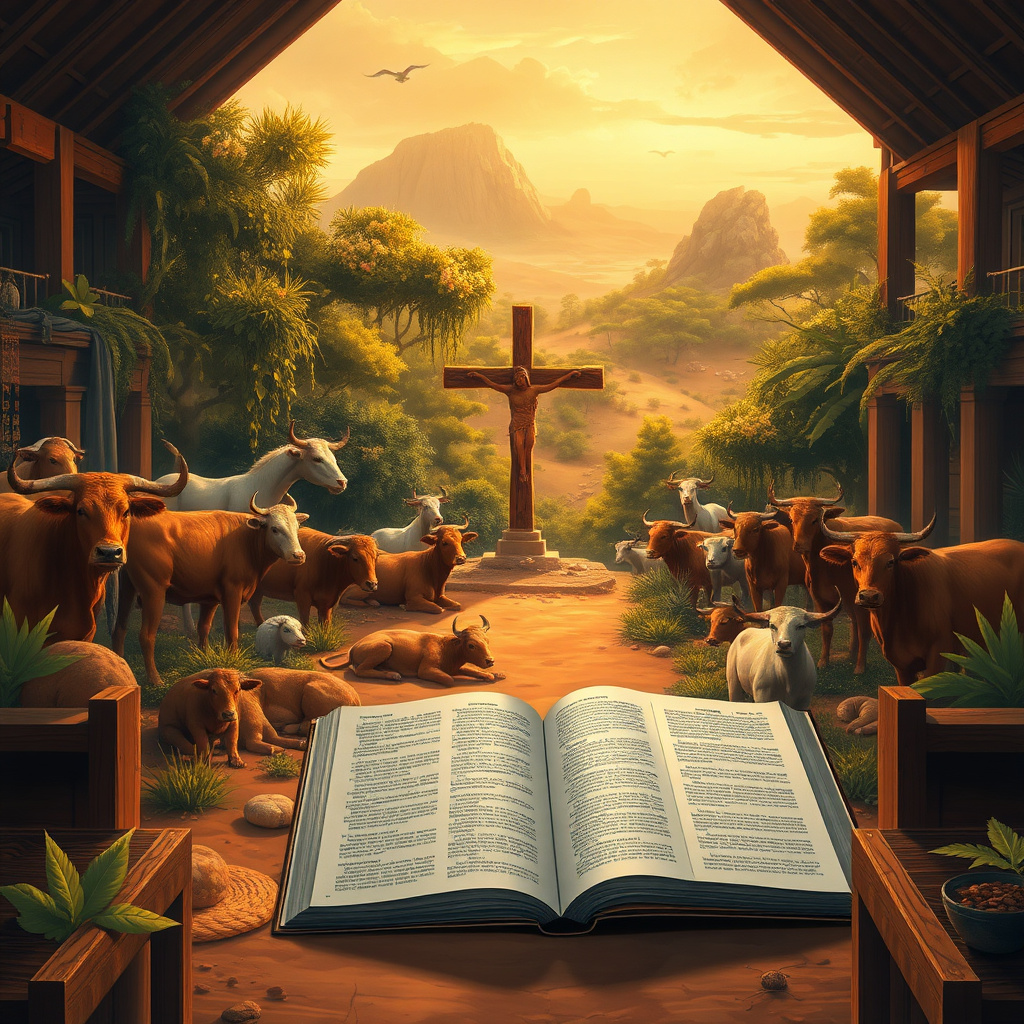
How does Catholic theology connect the binding of Isaac with Christ's sacrifice on the cross?
How do typology and redemption echo between Mount Moriah and Golgotha?
What role does the divine word play in the act of creation?
Light emerges from speech—how does this echo John's 'In the beginning was the Word'?
What does the institution of Sabbath teach about modern life?
God rested on day seven—is rest the crown of creation, or simply equal to work?