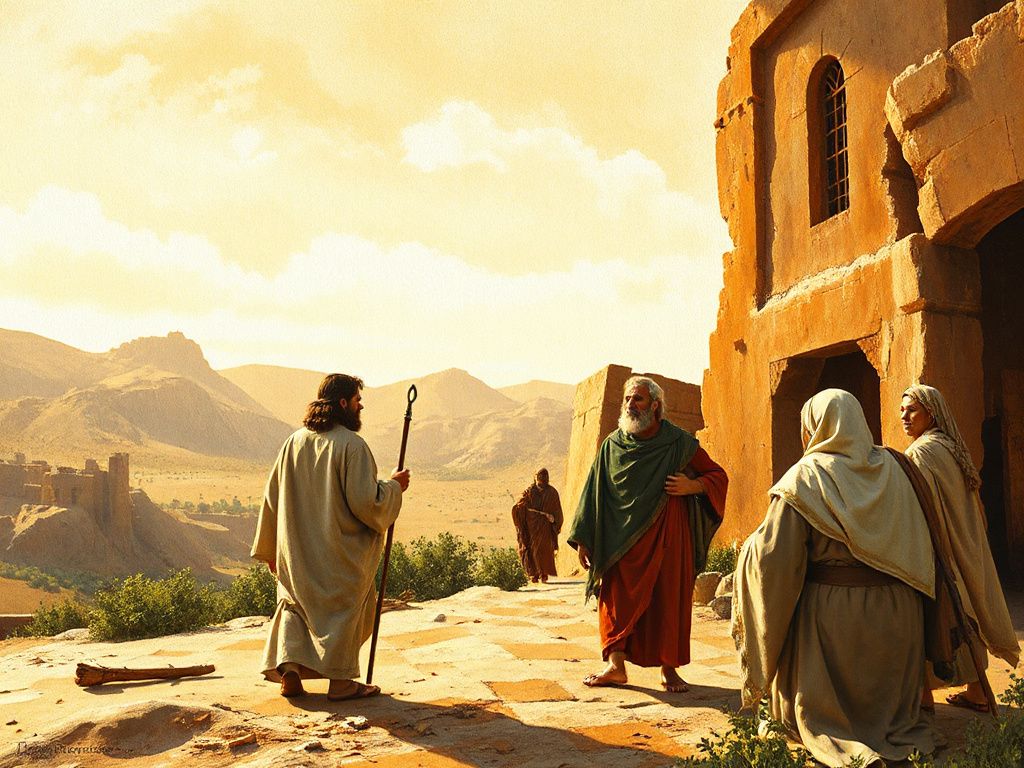
经文研读

Jeremiah 1:5 — Predestination and Prophetic Calling

Jeremiah 1:5 records the Lord's words to Jeremiah, declaring that He knew him and consecrated him before birth, and appointed him a prophet to the nations.

经文

  1. 5.我 未 將 你 造 在 腹 中 , 我 已 曉 得 你 ; 你 未 出 母 胎 , 我 已 分 別 你 為 聖 ; 我 已 派 你 作 列 國 的 先 知 。Before I formed thee in the belly I knew thee, and before thou camest forth out of the womb I sanctified thee; I have appointed thee a prophet unto the nations.

这段经文的意思

The verse opens the Lord's address to Jeremiah with three sequential acts joined to stages of human development. Before any forming in the belly, the Lord states 'I knew thee'; this knowing is presented in the verse itself as preceding both formation and birth, rather than following them. 'Knew' here is the term the verse uses to describe the Lord's prior recognition of Jeremiah's person, without the passage defining how that knowledge relates to others.

The second act is sanctification tied to the moment of coming forth from the womb: 'before thou camest forth out of the womb I sanctified thee.' The verse itself frames this consecration as occurring prior to birth, presenting Jeremiah as set apart for his role before he enters the world. The chapter does not say what ritual or ceremony accomplished the setting apart — the text simply states that the Lord did it.

The third act is appointment: 'I have appointed thee a prophet unto the nations.' The verse presents this commissioning as the stated purpose of the prior knowing and sanctifying. The phrase 'unto the nations' widens the scope beyond Judah, and this universal scope is repeated in the following context where the Lord says 'I have this day set thee over the nations and over the kingdoms.' The passage as a whole moves from private calling (known, sanctified) to public vocation (prophet to the nations).

背景

Jeremiah 1:5 sits inside the opening commissioning narrative of the book (verses 4–10), framed by the book's header (verses 1–3) identifying Jeremiah as the son of Hilkiah, of the priests in Anathoth, and dating the word of Jehovah that came to him in the days of Josiah and continuing through the exile. Verse 4 introduces the speech, verse 5 is its content, and verse 6 records Jeremiah's objection that he is a child and does not know how to speak.

The chapter's surrounding verses (7–10) continue the same commissioning: the Lord tells Jeremiah not to say 'I am a child,' promises 'I am with thee to deliver thee,' touches his mouth and places His words in it, and restates the nations-wide scope with 'I have this day set thee over the nations and over the kingdoms, to pluck up and to break down and to destroy and to overthrow, to build and to plant.' Verses 11–19 then add visions and promises of opposition but also of divine preservation ('they shall not prevail against thee: for I am with thee').

常见问题

Does 'I knew thee' in Jeremiah 1:5 mean God predestined Jeremiah?

The verse itself states that the Lord's knowing preceded Jeremiah's forming in the belly and his coming forth from the womb, and that this knowing was followed by sanctification and appointment as a prophet to the nations. The passage does not define 'knew' in technical terms or compare it with anyone else; it simply places the Lord's prior recognition before birth, alongside the consecrating and the commissioning the verse also records.

What does 'I sanctified thee' mean in this verse?

According to the verse, the Lord sanctified Jeremiah before he came forth from the womb. The chapter itself does not describe what ritual or ceremony performed the setting apart, nor does it specify the content of the consecration beyond tying it directly to being appointed 'a prophet unto the nations.' The verse treats the sanctification as a completed act by the Lord prior to birth.

Why does the Lord call Jeremiah 'a prophet unto the nations' rather than only to Judah?

The verse itself names the role 'a prophet unto the nations,' and the chapter's adjacent verse (verse 10) restates the same scope, 'I have this day set thee over the nations and over the kingdoms.' The surrounding context, identifying Jeremiah as a priest from Anathoth in the land of Benjamin during the reigns ending in Jerusalem's exile, explains why a prophet sent from within Judah would address nations beyond it as well as his own people.

继续研读

HomeDiscoverStudyReadMe