经文研读
Job 1:21 — Job Blesses the Name of Jehovah
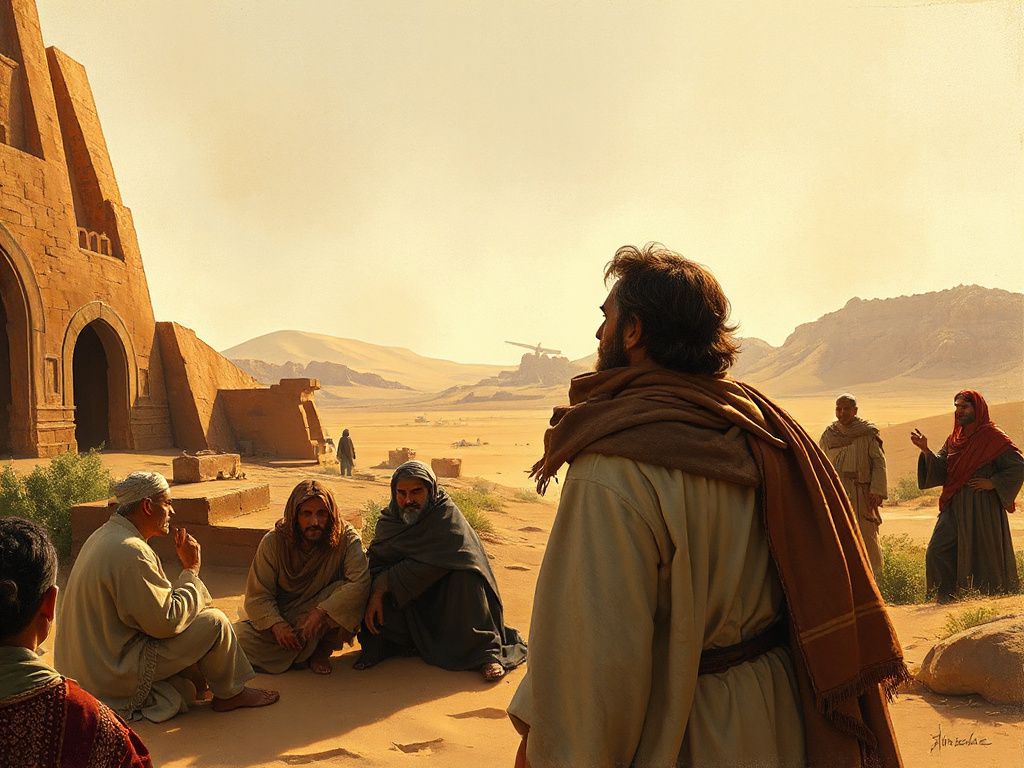
After losing his children and all his possessions in a single day, Job declares that he came into the world naked and will leave it naked, and blesses the name of Jehovah.
经文
- 21.說 : 「 我 赤 身 出 於 母 胎 , 也 必 赤 身 歸 回 ; 賞 賜 的 是 耶 和 華 , 收 取 的 也 是 耶 和 華 。 耶 和 華 的 名 是 應 當 稱 頌 的 。 」and he said, Naked came I out of my mother's womb, and naked shall I return thither: Jehovah gave, and Jehovah hath taken away; blessed be the name of Jehovah.
这段经文的意思
Job's statement is built on a confession about the human condition: life begins with nothing and ends with nothing. The phrase "Naked came I out of my mother's womb, and naked shall I return thither" frames possessions as temporary loans rather than permanent rights. Since nothing truly belongs to the person at birth or at death, losing material things is not an unjust deprivation but a return to the original condition.
The second clause shifts the ground of Job's speech from resignation to worship: "Jehovah gave, and Jehovah hath taken away." By naming Jehovah as both the giver and the taker, Job attributes every change in his circumstances to the same sovereign God. Loss does not signal a different God or a broken covenant; it is the continued action of the One who first provided. The closing benediction, "blessed be the name of Jehovah," is therefore not a stoic acceptance of fate but an act of praise directed to a Person.
Read together, the verse teaches that authentic worship does not depend on circumstances being favorable. Job tears his robe and shaves his head in mourning (v. 20), yet the next movement of his mouth is blessing. Grief and praise coexist because Job's identity and hope are anchored in God's character rather than in what God currently gives. Verse 22 then makes the editorial point explicit: in saying this, Job "sinned not, nor charged God foolishly."
背景
Job 1:21 sits inside the rapid sequence of messengers who report the loss of his livestock, servants, and ten children (vv. 13–19). Before speaking, Job performs physical acts of mourning—tearing his robe, shaving his head, and falling to the ground—before the surprising move of worshipping (v. 20). The chapter frames these losses against the heavenly scene in which Satan challenges whether Job's fear of God is disinterested (vv. 9–11), and Jehovah permits the test while protecting Job's life (v. 12). The chapter ends by stating the result: in all this Job did not sin (v. 22).
The opening portrait of Job—perfect, upright, fearing God, and turning from evil (v. 1), the greatest of the easterners (v. 3)—establishes the stakes. What Job says in v. 21 after losing everything is meant to be read as the response of a man whose integrity has been publicly described. The verse therefore functions as the book's first answer to the question raised in the prologue: whether the human creature can bless God apart from what God gives.
常见问题
Why does Job say he will return "naked" to his mother's womb?
Within the verse itself, the point is comparison rather than literal return: just as he entered the world with nothing, so he will leave with nothing. The verse frames possessions as something held only between birth and death, not as permanent property.
Is Job resigned or worshipful in this verse?
Both movements are present, but the verse tips toward worship. Job acknowledges that the giver and taker are the same Jehovah, and the closing line, "blessed be the name of Jehovah," is a doxology rather than a complaint. The chapter's editorial summary (v. 22) treats this speech as the opposite of "charging God foolishly."
Does this verse teach that all suffering is God's direct will?
The verse attributes the giving and the taking to Jehovah without explaining the mechanism behind the loss. The chapter itself distinguishes between Satan's agency in carrying out the disaster (vv. 6–19) and Jehovah's sovereign permission (v. 12). Job speaks only of who ultimately stands behind every change; the verse does not address secondary causes.