经文研读
Judges 6:12 — Gideon Called a Mighty Warrior
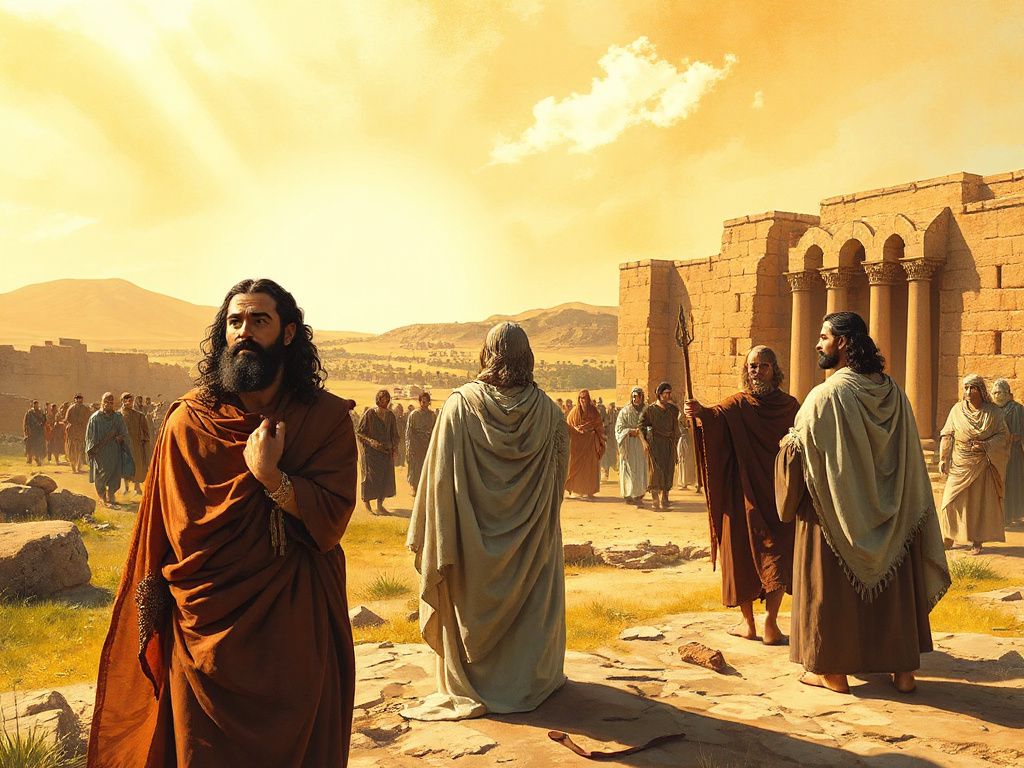
While Gideon hides from the Midianites, the Angel of the LORD declares, 'Jehovah is with thee, thou mighty man of valor.'
经文
- 12.耶 和 華 的 使 者 向 基 甸 顯 現 , 對 他 說 : 大 能 的 勇 士 啊 , 耶 和 華 與 你 同 在 !And the angel of Jehovah appeared unto him, and said unto him, Jehovah is with thee, thou mighty man of valor.
这段经文的意思
The verse opens with the Angel of the LORD 'appearing' to Gideon, the same figure who had just sat under the oak at Ophrah (v. 11). The shift from sitting to appearing marks a turn from a hidden, casual presence to an open, commissioning address. Gideon is threshing wheat in a winepress to conceal it, yet he is singled out for divine speech.
The declaration 'Jehovah is with thee' is a statement of fact, not a wish. It locates the ground of any future victory in God's presence, not in Gideon's ability or Israel's strength. The address is therefore theological before it is motivational: the mission that follows is grounded in who God is.
The title 'mighty man of valor' (Hebrew: gibbor hayil) is striking because Gideon is hiding grain, is from the weakest clan in Manasseh, and is 'the least in my father's house' (v. 15). The label is not a description of present character but a divine declaration of what Gideon will become. God's call creates the reality it names.
背景
Judges 6 opens with Israel in sin, handed over to Midian for seven years. Raiders destroy crops and livestock (vv. 1–5) until Israel cries out (v. 6). God sends a prophet who rehearses redemption history — deliverance from Egypt, the gift of the land — and rebukes Israel's disobedience (vv. 8–10). Immediately after, the Angel of the LORD visits Gideon at Ophrah, producing the tension that verse 12 addresses: the promise of God's presence set against the reality of Midianite oppression.
Verses 13–15 show Gideon's response. He questions whether God is really with Israel (v. 13), and when called to deliver them, protests that his clan is the poorest in Manasseh and he is the least in his family (v. 15). The chapter then moves to confirmation (the sign of the fleece, vv. 36–40), the altar episode (vv. 25–32), and the gathering of troops (vv. 33–35). Verse 12 is therefore the hinge: the moment God names the deliverer before the deliverer knows he is one.
常见问题
Why is Gideon called a 'mighty man of valor' when he is hiding grain?
The title is a divine declaration of what Gideon will be, not a description of what he currently is. The chapter makes the contrast explicit: Gideon hides from the Midianites (v. 11), questions God's presence (v. 13), and protests that he is the least in his family (v. 15). The label in v. 12 functions as God's word creating the reality it announces, consistent with the verse note that this call shows grace in weakness.
Does 'Jehovah is with thee' mean God approves of Gideon's situation?
The statement is not about Gideon's situation but about God's covenant commitment. Verse 10 has already established that Israel disobeyed, so 'with thee' is God's word to a specific person in the midst of a failing nation. God's presence becomes the basis for the mission announced in v. 14, not a stamp of approval on the status quo.
How does verse 12 shape the rest of the chapter?
Verse 12 supplies the thesis the rest of the chapter tests. Gideon's objections in vv. 13 and 15 are answered by the prior declaration of God's presence and calling. The signs with the fleece (vv. 36–40), the altar episode (vv. 25–32), and the Spirit coming upon Gideon (v. 34) all serve to confirm the word spoken in v. 12. The verse is therefore the hinge on which the call, the hesitation, and the eventual victory turn.