经文研读
Leviticus 16:30 — Cleansed From All Sins Before Jehovah
On the Day of Atonement, atonement is made for the people so that they are cleansed from every sin before Jehovah.
经文
- 30.因 在 這 日 要 為 你 們 贖 罪 , 使 你 們 潔 淨 。 你 們 要 在 耶 和 華 面 前 得 以 潔 淨 , 脫 盡 一 切 的 罪 愆 。for on this day shall atonement be made for you, to cleanse you; from all your sins shall ye be clean before Jehovah.
这段经文的意思
Verse 30 states the purpose of the Day of Atonement stated in verse 29: the afflictions and the cessation from work on the tenth day of the seventh month exist because 'on this day shall atonement be made for you.' The verse explains why the people do what verse 29 commands — the goal of the ritual is that atonement be made so that cleansing follows.
The verse gives the result of the ritual: 'to cleanse you.' The Day of Atonement is not merely a ritual observance; its stated effect is purification. It then broadens the scope of the cleansing: 'from all your sins shall ye be clean before Jehovah.' The phrase 'all your sins' is unqualified, and the standard 'before Jehovah' places the cleansing in the realm of God's presence rather than mere social or ritual status.
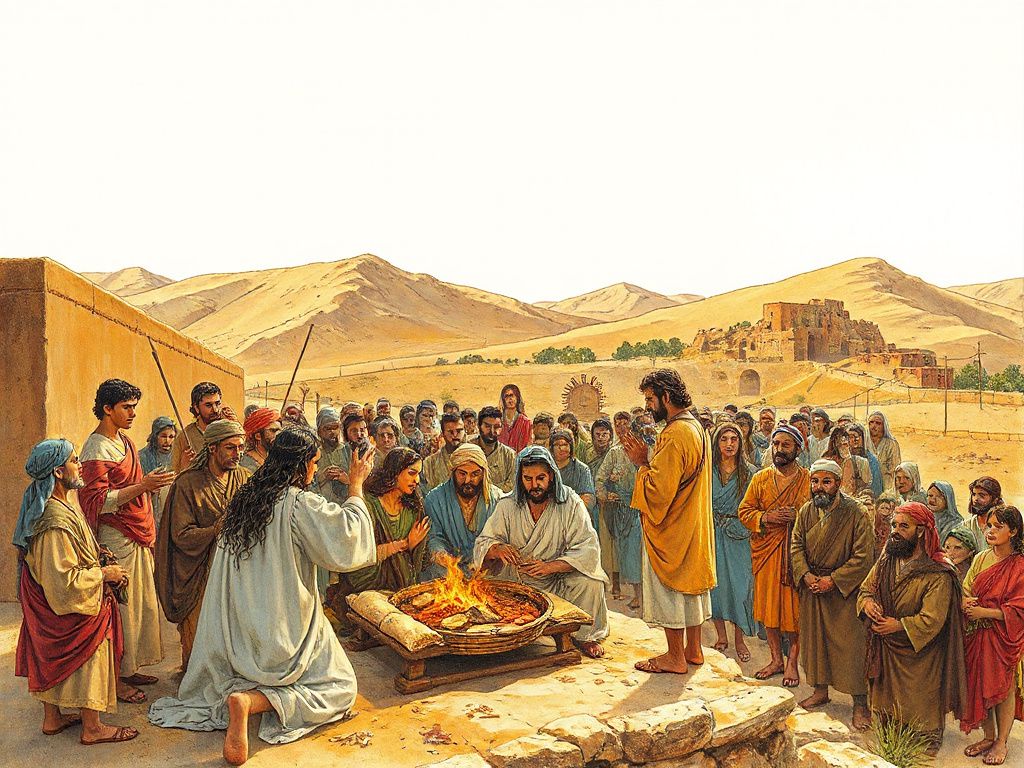
The verse anchors the Day of Atonement as the supreme moment of covenant cleansing in the year. Because the whole chapter has described a complex ritual with blood brought into the holy place, a goat sent into the wilderness, and atonement made for the sanctuary, tent of meeting, altar, priests, and people, verse 30 condenses all of this into one declaration: on this day, the outcome is full cleansing before Jehovah.
背景
Leviticus 16 opens with the death of Aaron's two sons, who drew near before Jehovah and died (v. 1), establishing that approaching God's presence without proper preparation is fatal. The chapter then prescribes a once-per-year ritual in which the high priest brings blood into the holy place, sprinkles it on the mercy-seat, sends a live goat into the wilderness after confessing Israel's sins over it, and makes atonement for the holy place, tent of meeting, altar, priests, and people (vv. 2–24). The bodies of the sin-offering animals are burned outside the camp, and those who handle them must wash before re-entering (vv. 27–28).
Verse 29 commands the people to afflict their souls and do no work on the tenth day of the seventh month, and verse 30 supplies the theological reason for that command. Verse 31 then calls the day a 'sabbath of solemn rest' and an everlasting statute, and verse 32–33 specifies that the anointed priest makes atonement for the holy sanctuary, the tent of meeting, the altar, the priests, and all the people. Verse 34 closes the chapter by calling this 'an everlasting statute' to make atonement for Israel once in the year. Verse 30 thus functions as the central declaration of effect within this statutory frame: the ritual day brings cleansing before Jehovah.
常见问题
Why does verse 30 explain verse 29?
Verse 29 commands the people to afflict their souls and do no work, and verse 30 gives the theological reason: 'on this day shall atonement be made for you.' The observance of the day is grounded in the cleansing that the ritual accomplishes before Jehovah.
Does verse 30 say the cleansing is complete or partial?
Verse 30 speaks of cleansing 'from all your sins,' with no qualification or limit. In the context of Leviticus 16, this comprehensive language is given as the stated result of the once-yearly atonement ritual described in the chapter.
What does 'before Jehovah' add to the idea of cleansing?
The phrase 'before Jehovah' places the standard of the cleansing in God's presence rather than in merely human or social evaluation. The verse declares that on this day the people are clean from all their sins in relation to Jehovah Himself.