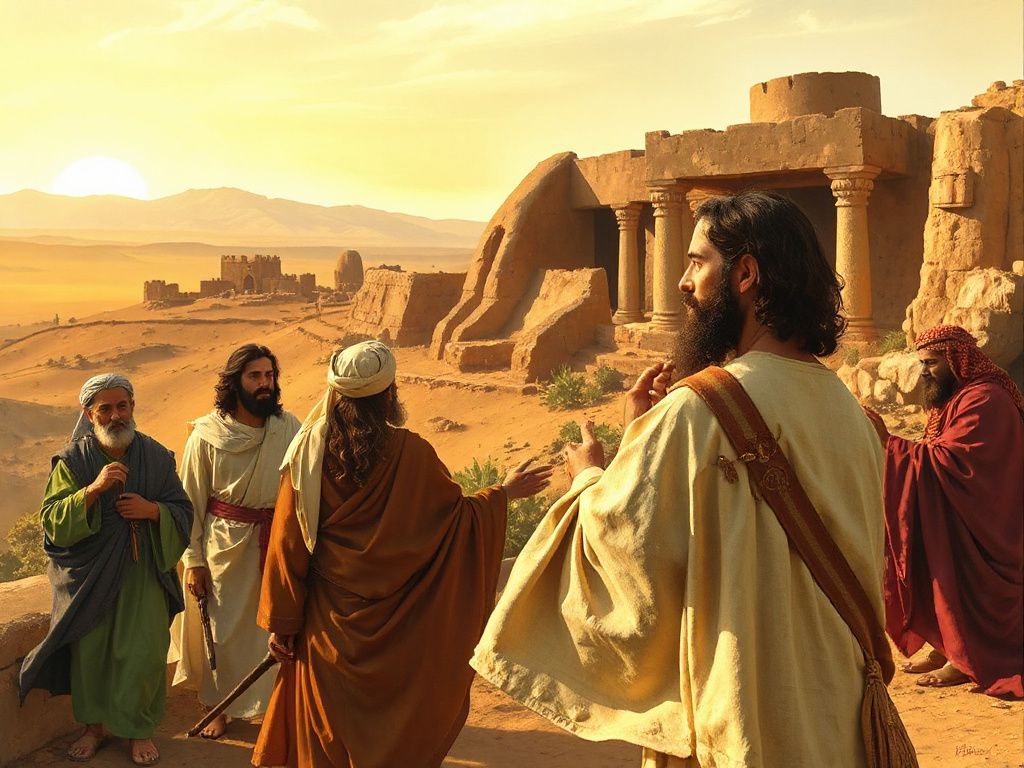
经文研读

Matthew 7:24-27 — The Two Builders and Their Foundations

Jesus closes the Sermon on the Mount with a parable of two builders whose identical storms expose their different foundations.

经文

  1. 24.所 以 , 凡 聽 見 我 這 話 就 去 行 的 , 好 比 一 個 聰 明 人 , 把 房 子 蓋 在 磐 石 上 ;Every one therefore that heareth these words of mine, and doeth them, shall be likened unto a wise man, who built his house upon the rock:
  2. 25.雨 淋 , 水 沖 , 風 吹 , 撞 著 那 房 子 , 房 子 總 不 倒 塌 , 因 為 根 基 立 在 磐 石 上 。and the rain descended, and the floods came, and the winds blew, and beat upon that house; and if fell not: for it was founded upon the rock.
  3. 26.凡 聽 見 我 這 話 不 去 行 的 , 好 比 一 個 無 知 的 人 , 把 房 子 蓋 在 沙 土 上 ;And every one that heareth these words of mine, and doeth them not, shall be likened unto a foolish man, who built his house upon the sand:
  4. 27.雨 淋 , 水 沖 , 風 吹 , 撞 著 那 房 子 , 房 子 就 倒 塌 了 , 並 且 倒 塌 得 很 大 。and the rain descended, and the floods came, and the winds blew, and smote upon that house; and it fell: and great was the fall thereof.

这段经文的意思

The passage is structured as two parallel sentences whose only difference is what each builder does with Jesus' words. The wise man hears 'these words of mine' and does them; the foolish man hears the same 'these words of mine' and does not do them. That single contrast—hearing-with-doing versus hearing-without-doing—is the theological hinge of the unit.

The houses are identical on the outside and face the same storm. 'The rain descended, and the floods came, and the winds blew, and beat upon that house' is repeated almost word for word for both builders (the second adds 'smote upon that house; and it fell: and great was the fall thereof'). The point is not the severity of the trial but the foundation beneath it. The rock-house 'was founded upon the rock'; the sand-house has no such grounding.

By framing obedience as the foundation rather than the roof, the passage treats hearing Jesus' words as necessary but not sufficient. The same sermon that produces the wise builder, if heard without action, produces the foolish one. Verse 27's emphasis that 'great was the fall thereof' indicates that the difference between the two outcomes is total and irreversible, not a matter of degree.

背景

Verses 24-27 sit at the end of the Sermon on the Mount and function as its conclusion. They follow immediately after the warning of verses 21-23, where Jesus says that not everyone who addresses him as 'Lord, Lord' will enter the kingdom, but only the one who does the will of his Father. The two builders then illustrate the same divide between profession and practice: both men build, both face the same storm, but only one had a foundation that held.

The chapter closes in verses 28-29 with the crowd's reaction: they 'were astonished at his teaching: for he taught them as one having authority, and not as their scribes.' The parable of the two builders is thus the last word Jesus speaks in this discourse, the moment where the sermon's demands are pressed home with an image that the hearers could see and weigh.

原文关键词

  • G4073 In verse 24 the rock is πέτραν (G4073), defined in the entry as 'a (mass of) rock.' In 25 the same word recurs as the reason the house does not fall: it 'was founded upon the rock.'
  • G3618 The wise builder's action is ᾠκοδόμησεν (G3618, from οἰκοδομέω), 'to build a house,' used here literally for constructing a dwelling. The foolish builder in 26 builds the same way; the difference lies entirely in the foundation chosen afterward.
  • G5429 The wise man is called φρονίμῳ (G5429, φρόνιμος). The entry defines this as 'thoughtful, i.e. sagacious or discreet,' distinguishing it from σοφός (practical skill) and συνετός (mental acquirement). In context, the 'wisdom' praised here is specifically the wisdom of acting on Jesus' words.

常见问题

What does 'rock' mean in Matthew 7:24?

Within the passage itself, the rock is simply the foundation on which the wise man builds. The text does not identify it further; it functions as the contrast to sand in the parallel builders.

Is the storm the same for both houses?

Yes. Verses 25 and 27 use nearly identical wording—rain descending, floods coming, winds blowing and striking the house. The only added note in 27 is that the sand-house fell and 'great was the fall thereof.'

Does the passage say belief is enough?

No. The passage explicitly contrasts hearing Jesus' words with doing them, and assigns the standing house only to the one who both hears and does. Hearing alone, in the second builder, ends in collapse.

继续研读

HomeDiscoverStudyReadMe