经文研读
Psalms 23:5 — A Table Before Enemies, An Overflowing Cup
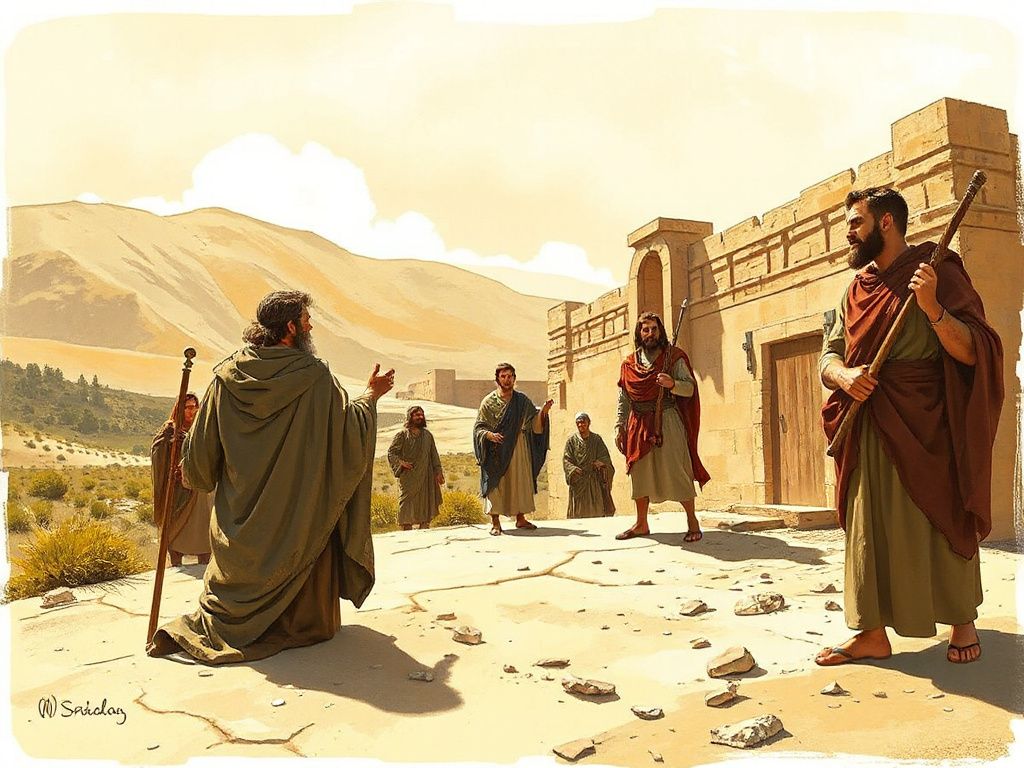
Psalm 23:5 pictures the Lord as host who sets a table in view of the psalmist's enemies, anoints his head with oil, and fills his cup so full it overflows.
经文
- 5.在 我 敵 人 面 前 , 你 為 我 擺 設 筵 席 ; 你 用 油 膏 了 我 的 頭 , 使 我 的 福 杯 滿 溢 。Thou preparest a table before me in the presence of mine enemies: Thou hast anointed my head with oil; My cup runneth over.
这段经文的意思
The speaker shifts from the shepherd imagery of the first verses to a scene of hospitality: the Lord lays out and arranges (Hebrew 'arakh, to set in a row) a table (shulchan) directly in front of the speaker's enemies. The verb 'arakh connotes deliberate arrangement, so the meal is not accidental but prepared with intention. While enemies are present and watching, the Lord proceeds to host the speaker as honored guest, not as refugee.
Two acts of honor follow. First, the host anoints the speaker's head with oil — a customary gesture of welcoming or refreshment at a banquet. Second, the cup is filled so generously that it 'overflows' (rewiyah, satisfaction/overflow). The Hebrew places 'runneth over' at the line's end, giving it emphatic placement: the abundance is the closing note of the verse.
Rather than depicting the enemies as threats from whom the speaker must flee, the verse frames them as onlookers of a feast they cannot touch. The pastoral protection of verses 2–4 (green pastures, still waters, rod and staff) now becomes commensal protection: the host shields the guest simply by serving him in plain sight of the opposition. The transition from out in pastures to seated at a table also marks an escalation of care — from a wandering flock to a seated, honored diner.
背景
In the preceding verses, the Lord as shepherd provides rest, restoration, righteous paths, and presence in the valley of death. Psalm 23:5 turns from outdoor shepherding to an indoor banquet, and the rod and staff of verse 4 give way to oil and overflowing cup. The chapter's closing verse (23:6) widens the horizon to a lifetime: 'goodness and lovingkindness shall follow me all the days of my life; and I shall dwell in the house of Jehovah for ever,' so the table in verse 5 sits within a sustained, lifelong commitment, not a one-time rescue.
The enemies in 23:5 are not named in the chapter itself; the psalm as a whole does not identify who they are. The provided cross references treat the table/cup and the anointing as images that recur elsewhere in Scripture, and the original-language data does not specify the occasion of the psalm. Without external claims coming from the provided material, the enemies remain the unnamed opposition against which the host's hospitality is displayed.
原文关键词
- H6186 Hebrew 'arakh (עָרַךְ), gloss "prepare". The provided definition: to set in a row, arrange, put in order. In 23:5 the verb frames the table arrangement as a deliberate act of ordering, not a casual laying-out of food.
- H7979 Hebrew shulchan (שֻׁלְחָן), gloss "table". The provided definition: a table (as spread out); by implication, a meal. The same word covers both the piece of furniture and the meal set upon it, so the verse is about both the feast and the surface on which it sits.
- H7310 Hebrew rewiyah (רְוָיָה), gloss "overflows". The provided definition: satisfaction. The root idea is fullness to the point of overflow, which is why the verse can speak of a cup that literally runs over while the underlying notion is abundant satisfaction.
相关经文
- Psalms 16:5 Pairs the cup of 23:5 with the idea of the Lord as the psalmist's assigned portion and cup. The provided text of 16:5, 'Jehovah is the portion of mine inheritance and of my cup: Thou maintainest my lot,' makes the overflowing cup of 23:5 not merely a full drink but a share of the Lord himself.
- Psalms 92:10 Echoes the anointing with fresh oil. The provided text of 92:10, 'I am anointed with fresh oil,' parallels the head-anointing of 23:5 and suggests the oil is not leftover but new and strengthening.
- Ephesians 3:20 The provided text of Ephesians 3:20 speaks of God being 'able to do exceeding abundantly above all that we ask or think.' The 'overflowing cup' of 23:5 functions as a concrete Old Testament image of the same abundance that Ephesians 3:20 later presses beyond asking and thinking.
常见问题
Who is the speaker in Psalm 23:5?
The chapter is introduced as 'A Psalm of David,' and the first-person speaker throughout verses 1–6 is the psalmist. The provided material does not turn the speaker into a messianic figure in this verse; the speaker is the one being hosted by the Lord, and the enemies are introduced without identification.
What does 'anointing my head with oil' mean in this verse?
In the language of the verse it is an act of hospitality at a feast, performed by the host on the guest. The provided cross reference Psalms 92:10 pairs head-anointing with fresh oil, and the provided Hebrew word diššanətā (דָּשֵׁן) is defined as related to anointing and to fatness or satisfying, so the gesture also carries the sense of refreshment and abundant provision.
Does 'my cup runneth over' mean literal wine?
The provided Hebrew for 'cup' is kos (כּוֹס), which the provided definition describes as a cup as a container, often figuratively a lot or portion. The verse does not specify the drink; the emphasis falls on the overflow (rewiyah, satisfaction/overflow), so the image is most naturally read as a picture of generous provision rather than a precise beverage.