BIBLE BOOK GUIDE
Hosea
14 chapters
Through the broken and restored marriage of Hosea, God reveals His unrelenting, redeeming love for unfaithful Israel.
Hosea
Choose a chapter
Pick a chapter and it opens in the Current chapter tab. Come back here whenever you want to choose another one.
Why this book was written
Written to the northern kingdom of Israel during its moral and political decline after Jeroboam II, Hosea warns that persistent idolatry and covenant unfaithfulness will bring divine judgment through Assyria, while pleading with the people to return to the LORD, whose covenant love endures.
Structure
- 1–3Hosea's Family and Broken Marriage: A Picture of God's Love
- 4–7Israel's Sin and Coming Judgment
- 8–10Rebellious Folly: Idolatry and Political Trust
- 11–13Fatherly Compassion and Wrath: God's Inner Struggle
- 14Call to Repentance and Promise of Restoration
Major themes
God's Unfailing Love for Unfaithful Israel
Hosea's marriage to Gomer symbolizes God's covenant bond with unfaithful Israel (Hos 1:2; 3:1). The prophet declares, 'I will betroth you to me forever' (2:19), showing that divine love persists despite human betrayal.
Judgment and Restoration
The book weaves together doom and hope: judgment for Baal worship (2:13; 4:12-13) alongside promises of 'latter days' restoration (3:5; 14:4-7), when 'Jacob shall seek God' and his beauty shall be 'like the olive tree.'
Knowledge of God
Hosea repeatedly stresses that 'knowing the LORD' is central (4:1; 6:3; 8:2). This is not merely cognitive assent but relational intimacy—'let us know the LORD.'
The Folly of Idolatry
Israel's worship of Baal and calf-idols (2:13; 8:4-6; 10:5-6) is exposed as futile: 'They sow the wind and reap the whirlwind' (8:7).
Covenant Faithfulness and Unfaithfulness
God is covenant-faithful (4:1-2; 6:7; 8:1), yet Israel becomes 'a deceitful bow' (7:16)—breaking law, lying, stealing, committing adultery. Covenant breach brings curse; repentance brings healing.
Repentance and Returning to the LORD
The book closes with a call: 'return to your God' (12:6; 14:1). True repentance is not ritual but the removal of idols and turning to the LORD, who promises to 'heal their apostasy and love them freely' (14:1-4).
How it points to Christ
Hosea prefigures Christ: the Son of God incarnate takes an unfaithful bride—His church (Eph 5:25-27). The cross fulfills Hosea 2:19-20—'I will betroth you to me forever in righteousness, justice, lovingkindness, and compassion.' Hosea 13:14, 'I will ransom them from Sheol... O death, where is your sting,' is cited by Paul as a prophecy of resurrection victory (1 Cor 15:55). Christ is the true 'Husband' (Hos 2:16, 'my Lord'), who transforms the adulterous into a holy, spotless bride.
Key verses
- 1:2God commands Hosea to marry an unfaithful woman as a living parable of Israel's spiritual adultery against the LORD.
- 3:1The LORD again tells Hosea to love his wayward wife, illustrating His persistent love for an idol-loving people.
- 4:1–2The LORD indicts Israel for the absence of faithfulness, love, and knowledge of God, and for the spread of lying, stealing, adultery, and bloodshed.
- 6:6What God desires is mercy, not sacrifice, and knowledge of Him rather than burnt offerings—a verse Jesus cites to prioritize grace over ritual.
- 11:8–9God's heart wavers between judgment and compassion; His mercy restrains Him from utterly destroying His own children.
- 12:6A call to return to the LORD, wait for Him, and uphold justice and mercy—true repentance is not only feeling but action.
- 13:4The LORD reaffirms His exclusive sovereignty—'You shall acknowledge no God but Me'—against the backdrop of Baal and calf worship.
- 14:1–4A glorious promise for returning penitents: God will heal their backsliding, freely love them, and turn His anger away—our prayers becoming 'the fruit of our lips.'
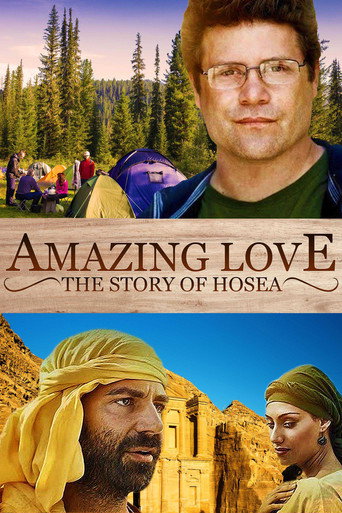
Films & series on Hosea
Each has a guide: scripture sources, where it departs from the Bible, discussion questions, and where to watch
People in this book
Questions for reflection
- ·Hosea 2:19-20 describes God betrothing us 'in righteousness, justice, steadfast love, and mercy.' Which aspect of His love does your life most need to receive today?
- ·Hosea 6:6 says, 'I desire steadfast love and not sacrifice.' Has religious routine in your life replaced authentic love for God and neighbor?
- ·Hosea 7:8-9 pictures Israel 'mingling with the nations' while 'gray hairs are here and there upon him, yet he does not know it.' What 'gray hairs'—signs of compromise—are you overlooking?
- ·Hosea 10:12 urges, 'Sow for yourselves righteousness; reap steadfast love.' What are you sowing today, and what will you reap?
- ·Hosea 14:1-3 gives the language of repentance: 'take away all iniquity; receive us graciously.' What is the deepest 'idol' in your heart that you need God to dismantle?
Where Hosea fits in the Bible's storyline
This book appears in the 12-stop storyline at:
Where to start reading the Bible? See the full 12-stop storyline
Want to read Hosea start to finish? Open the reader for parallel Chinese/English text and ask anything as you go.
Start reading HoseaHosea
Chapter 14
1O Israel, return unto Jehovah thy God; for thou hast fallen by thine iniquity.
2Take with you words, and return unto Jehovah: say unto him, Take away all iniquity, and accept that which is good: so will we render as bullocks the offering of our lips.
3Assyria shall not save us; we will not ride upon horses; neither will we say any more to the work of our hands, Ye are our gods; for in thee the fatherless findeth mercy.
4I will heal their backsliding, I will love them freely; for mine anger is turned away from him.
5I will be as the dew unto Israel; he shall blossom as the lily, and cast forth his roots as Lebanon.
6His branches shall spread, and his beauty shall be as the olive-tree, and his smell as Lebanon.
7They that dwell under his shadow shall return; they shall revive as the grain, and blossom as the vine: the scent thereof shall be as the wine of Lebanon.
8Ephraim shall say, What have I to do any more with idols? I have answered, and will regard him: I am like a green fir-tree; from me is thy fruit found.
9Who is wise, that he may understand these things? prudent, that he may know them? for the ways of Jehovah are right, and the just shall walk in them; but transgressors shall fall therein.