BIBLE BOOK GUIDE
Leviticus
27 chapters
How Israel, through sacrifice, purification, and holy living, lives as a people set apart before a holy God.
Leviticus
Choose a chapter
Pick a chapter and it opens in the Current chapter tab. Come back here whenever you want to choose another one.
Why this book was written
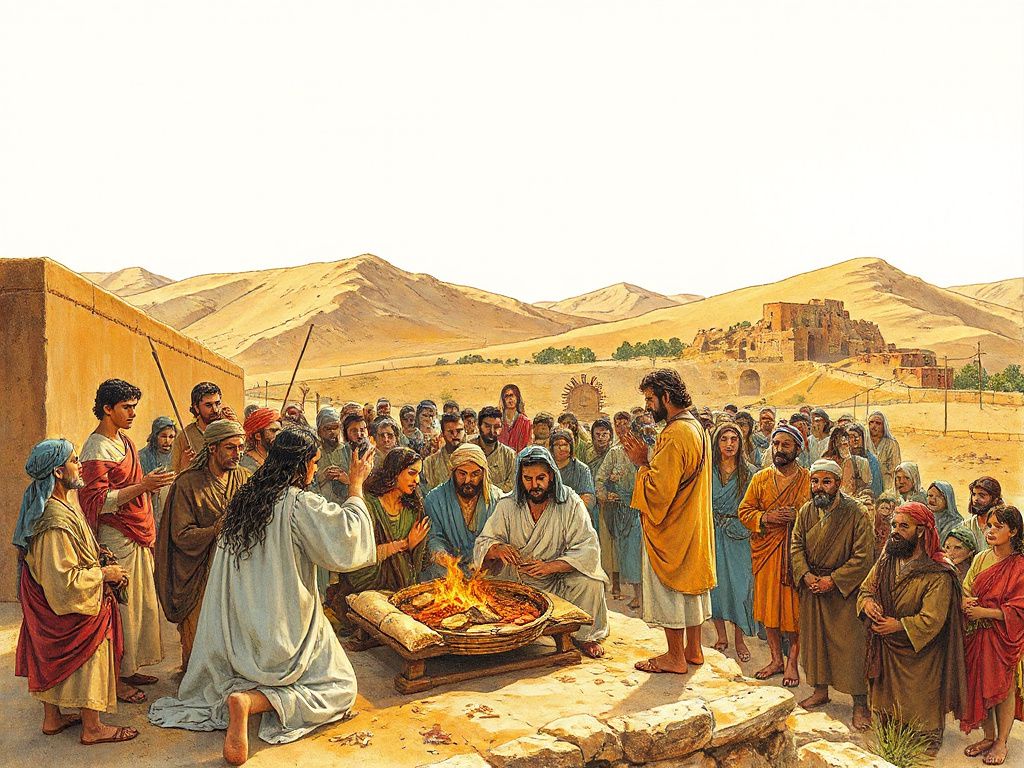
Written by Moses after Israel entered covenant at Sinai, Leviticus instructs the redeemed congregation of Israel on God's holiness, the handling of sin, and how they must live; its purpose is to make them a holy, priestly nation through sacrifice and statutes.
Structure
- 1–7Laws of Sacrifices
- 8–10Consecration and Service of the Priests
- 11–16Laws of Clean and Unclean
- 17–22Commands for Holy Living
- 23–27Feasts, the Sanctuary, and Vows
Major themes
Holiness and Purification
Leviticus provides detailed instructions on how Israel was to maintain holiness in body, ritual, and morality—covering clean and unclean laws, priestly purification, and separation from defilement—emphasizing that God's holiness requires a corresponding holiness in His people (Lev. 11–15).
Atonement and Intercession
The Day of Atonement (Lev. 16) stands as the book's climax, with the high priest entering the Most Holy Place once a year to atone for himself and the people, foreshadowing Christ's ultimate atoning work. The priestly mediator role pervades the book.
Sacrifice and Substitution
The five offerings—burnt, grain, fellowship, sin, and guilt offerings (Lev. 1–7)—provided substitutionary atonement, teaching that sin demands a price while revealing God's grace and forgiveness.
Holiness in Covenant Community
Leviticus 17–27 emphasizes ethical and communal life within the covenant—sexual morality, justice toward neighbors, Sabbath and Jubilee years, festivals, and faithful stewardship—calling Israel to live out its covenant identity (Lev. 17–27).
God's Sovereignty and Provision
God's detailed directions for offerings, priesthood, festivals, and land sabbaths reveal His sovereignty over every aspect of life, while Sabbath years, Jubilee, and festivals demonstrate His faithful provision and mercy.
Consecration and Service
The consecration of priests (Lev. 8–10) and the setting apart of the Levites for service show that ministering to God requires cleansing, anointing, and full dedication to His service.
How it points to Christ
Leviticus points to Christ as the ultimate High Priest and the ultimate sacrifice. He is the mediator of a better covenant (Heb. 8:6), whose one offering of His body forever accomplishes what the repeated Day of Atonement could only foreshadow (Heb. 9:11–14; 10:1–14). The offerings typify Christ: the burnt offering (perfect consecration), the sin offering (bearing the penalty of sin), and the fellowship offering (restored communion with God). The Sabbath and Jubilee years foreshadow the true rest and liberty Christ brings. The command, "Be holy, because I, the LORD your God, am holy" (Lev. 19:2), is fulfilled in believers through Christ's holiness imputed and imparted.
Key verses
- 1:3–4The burnt offering foreshadows Christ offering Himself without blemish as the substitute.
- 16:30The Day of Atonement — God's provision of atonement for the whole congregation, the supreme OT picture of redemption.
- 17:11'For the life of the flesh is in the blood' — the theological foundation of substitutionary atonement.
- 19:2'You shall be holy, for I am holy' — the central summons of the book.
- 20:7–8Holiness is God's own work, sanctifying the people from within.
- 23:5The Passover points to Christ, our Passover Lamb.
- 25:10The Jubilee year foreshadows the freedom and restoration accomplished in Christ.
- 27:30The tithe belongs to the Lord, echoing the NT principle of giving all to God.
Reflections on Leviticus
Questions for reflection
- ·How do the purity laws in Leviticus deepen your understanding of the seriousness of sin and God's demand for holiness?
- ·How does the detail of the Day of Atonement point you to Christ as the once-for-all sacrifice for your sin?
- ·As a New Covenant believer, how do you understand the relationship between grace and the call to "be holy"?
- ·How does the Jubilee command to free slaves and return inheritance reflect the freedom and restoration Christ brings in the gospel?
- ·The priest had to first atone for himself before atoning for the people (Lev. 16)—how does this show that no one can approach God on their own merit?
Want to read Leviticus start to finish? Open the reader for parallel Chinese/English text and ask anything as you go.
Start reading LeviticusLeviticus
Chapter 1
1And Jehovah called unto Moses, and spake unto him out of the tent of meeting, saying,
2Speak unto the children of Israel, and say unto them, When any man of you offereth an oblation unto Jehovah, ye shall offer your oblation of the cattle, even of the herd and of the flock.
3If his oblation be a burnt-offering of the herd, he shall offer it a male without blemish: he shall offer it at the door of the tent of meeting, that he may be accepted before Jehovah.
4And he shall lay his hand upon the head of the burnt-offering; and it shall be accepted for him to make atonement for him.
5And he shall kill the bullock before Jehovah: and Aaron's sons, the priests, shall present the blood, and sprinkle the blood round about upon the altar that is at the door of the tent of meeting.
6And he shall flay the burnt-offering, and cut it into its pieces.
7And the sons of Aaron the priest shall put fire upon the altar, and lay wood in order upon the fire;
8and Aaron's sons, the priests, shall lay the pieces, the head, and the fat, in order upon the wood that is on the fire which is upon the altar:
9but its inwards and its legs shall he wash with water. And the priest shall burn the whole on the altar, for a burnt-offering, an offering made by fire, of a sweet savor unto Jehovah.
10And if his oblation be of the flock, of the sheep, or of the goats, for a burnt-offering; he shall offer it a male without blemish.
11And he shall kill it on the side of the altar northward before Jehovah: and Aaron's sons, the priests, shall sprinkle its blood upon the altar round about.
12And he shall cut it into its pieces, with its head and its fat; and the priest shall lay them in order on the wood that is on the fire which is upon the altar:
13but the inwards and the legs shall he wash with water. And the priest shall offer the whole, and burn it upon the altar: it is a burnt-offering, an offering made by fire, of a sweet savor unto Jehovah.
14And if his oblation to Jehovah be a burnt-offering of birds, then he shall offer his oblation of turtle-doves, or of young pigeons.
15And the priest shall bring it unto the altar, and wring off its head, and burn it on the altar; and the blood thereof shall be drained out on the side of the altar;
16and he shall take away its crop with the filth thereof, and cast it beside the altar on the east part, in the place of the ashes:
17and he shall rend it by the wings thereof, but shall not divide it asunder. And the priest shall burn it upon the altar, upon the wood that is upon the fire: it is a burnt-offering, an offering made by fire, of a sweet savor unto Jehovah.