BIBLE CHAPTER STUDY
Psalms 54 — David's Prayer for Vindication Against Betrayal
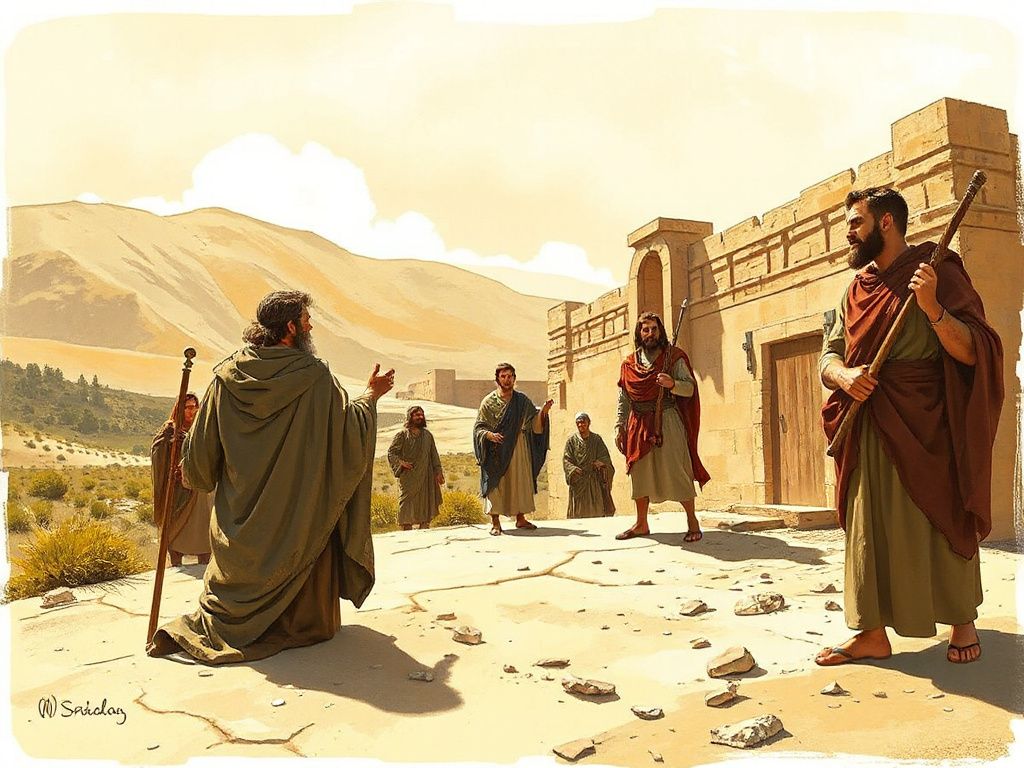
Psalm 54 is David's urgent plea for God's saving name and mighty vindication when the Ziphites informed Saul of his hiding place, ending in confident thanks for deliverance.
Scripture
1For the Chief Musician; on stringed instruments. Maschil of David; when the Ziphites came and said to Saul, Doth not David hide himself with us? Save me, O God, by thy name, And judge me in thy might.
2Hear my prayer, O God; Give ear to the words of my mouth.
3For strangers are risen up against me, And violent men have sought after my soul: They have not set God before them. [[Selah
4Behold, God is my helper: The Lord is of them that uphold my soul.
5He will requite the evil unto mine enemies: Destroy thou them in thy truth.
6With a freewill-offering will I sacrifice unto thee: I will give thanks unto thy name, O Jehovah, for it is good.
7For he hath delivered me out of all trouble; And mine eye hath seen my desire upon mine enemies.
What this passage means
Psalm 54 is structured as a short but complete movement of lament-confession-thanks. The opening verses (1–3) lay out the crisis: strangers—specifically Saul's informants, the Ziphites—have risen against David, and violent men seek his life. The complaint is theological: 'They have not set God before them' (v. 3). This phrase diagnoses the enemies' problem not merely as hostility but as practical atheism; they act without regard for God's presence or judgment.
The middle verses (4–5) pivot to confident trust: 'Behold, God is my helper' and 'He will requite the evil unto mine enemies.' David does not take vengeance himself; he commits the cause to God's justice and 'truth' (v. 5), a faithfulness that can be trusted to set things right. The closing verses (6–7) are preemptive worship: David vows a freewill offering and gives thanks because God has already, in some sense, delivered him and let him see his enemies' downfall.
For the reader, the psalm teaches that betrayal by those considered insiders is treated as seriously as open violence, and that the right response is not self-defense or retaliation but appeal to God's name and might, followed by willing sacrifice and praise when God acts.
Context
The chapter's heading situates the psalm in a specific historical moment: 'when the Ziphites came and said to Saul, Doth not David hide himself with us?' This references the events recorded in 1 Samuel 23, where the people of Ziph, a town in Judah, betrayed David's location to Saul, who then pursued him. The heading also classifies the psalm as a 'Maschil of David' set 'on stringed instruments,' indicating it was composed for musical temple worship and was understood as an instructive poem.
The Hebrew heading supplies key terms: מְנַצֵּחַ (director, for the choir director), נְגִינֹת (stringed instruments), מַשְׂכִּיל (maskil, an instructive composition), and identifies the place name זִּיפִים (Ziphites). Within the chapter itself, the psalm moves from crisis (vv. 1–3) through trust (vv. 4–5) to vowed thanksgiving (vv. 6–7), giving it the classic shape of an individual lament that resolves in praise.
Key words in the original
- H4905 The term מַשְׂכִּיל (maskil) in the psalm heading marks the poem as 'instructive' or didactic. It signals to readers that the psalm is meant not only for lament but for teaching—showing how a believer responds to betrayal and unjust pursuit.
- H2130 The form זִּיפִים (Ziphites) names the inhabitants of Ziph, the Judahite town whose citizens informed Saul of David's location. Their appearance in the heading identifies the concrete betrayal that prompts the prayer.
- H5058
Related verses
- Hebrews 13:6 The psalm's declaration 'The Lord is of them that uphold my soul' (v. 4) is echoed and applied by Hebrews 13:6 to the Christian community: 'The Lord is my helper; I will not fear.' Both texts turn fear into confession by anchoring confidence in God's sustaining role.
- Psalms 118:7 Verse 7's 'mine eye hath seen my desire upon mine enemies' closely mirrors Psalm 118:7. Both psalms share the same vocabulary of divine vindication, allowing readers to read 54 as part of a wider collection of prayers that resolve with the sight of God's justice.
- Psalms 86:14 Psalm 86:14 uses nearly identical wording to verse 3: 'The proud are risen up against me… a company of violent men have sought after my soul, and have not set thee before them.' The repetition shows that the diagnosis of enemies as those who 'do not set God before them' is a recurring biblical way of naming arrogant violence.
Common questions
Why does Psalm 54 mention the Ziphites specifically?
The heading identifies the historical occasion: the Ziphites went to Saul and reported that David was hiding in their territory. This concrete betrayal is what prompts David's urgent prayer for God's saving name and vindication.
What does 'They have not set God before them' (v. 3) mean?
The phrase diagnoses the enemies' fundamental orientation: they act without regard for God's presence, standards, or judgment. Their violence is therefore not only cruel but theologically reckless—they do not factor God into their plans at all.
How does the psalm move from lament to praise so quickly?
Verses 1–5 build the case: enemies threaten, but God is named as helper and judge. Once that foundation is laid, verses 6–7 voice preemptive thanksgiving—David praises God not after the rescue is visibly complete but because God's character and prior acts of deliverance make confidence warranted in advance.