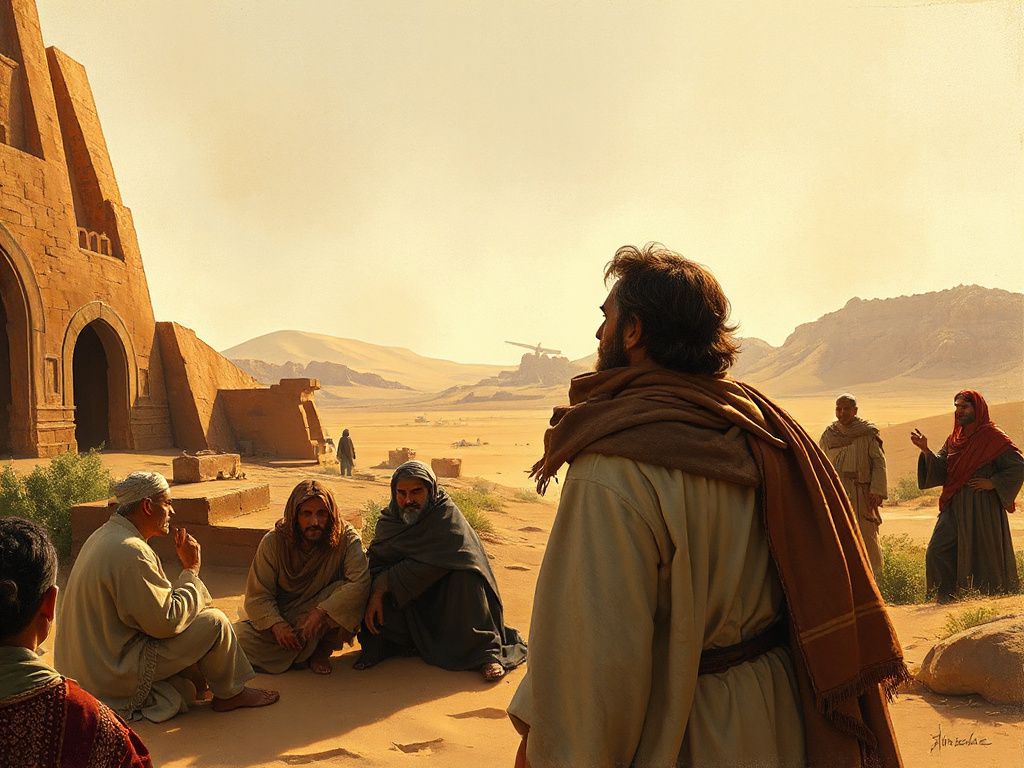
ESTUDIO DEL CAPÍTULO
Job 16 — El clamor de Job por un testigo celestial
Job responde a sus amigos con una dura reprensión, luego se vuelve hacia un lamento gráfico que describe a Dios como su atacante, antes de apelar a un testigo e intercesor celestial.
Escritura
- 1.Respondió Job, y dijo:Then Job answered and said,
- 2.Muchas veces he oído cosas como estas; Consoladores molestos sois todos vosotros.I have heard many such things: Miserable comforters are ye all.
- 3.¿Tendrán fin las palabras vacías? ¿O qué te anima a responder?Shall vain words have an end? Or what provoketh thee that thou answerest?
- 4.También yo podría hablar como vosotros, Si vuestra alma estuviera en lugar de la mía; Yo podría hilvanar contra vosotros palabras, Y sobre vosotros mover mi cabeza.I also could speak as ye do; If your soul were in my soul's stead, I could join words together against you, And shake my head at you.
- 5.Pero yo os alentaría con mis palabras, Y la consolación de mis labios apaciguaría vuestro dolor.But I would strengthen you with my mouth, And the solace of my lips would assuage your grief.
- 6.Si hablo, mi dolor no cesa; Y si dejo de hablar, no se aparta de mí.Though I speak, my grief is not assuaged; And though I forbear, what am I eased?
- 7.Pero ahora tú me has fatigado; Has asolado toda mi compañía.But now he hath made me weary: Thou hast made desolate all my company.
- 8.Tú me has llenado de arrugas; testigo es mi flacura, Que se levanta contra mí para testificar en mi rostro.And thou hast laid fast hold on me, which is a witness against me: And my leanness riseth up against me, It testifieth to my face.
- 9.Su furor me despedazó, y me ha sido contrario; Crujió sus dientes contra mí; Contra mí aguzó sus ojos mi enemigo.He hath torn me in his wrath, and persecuted me; He hath gnashed upon me with his teeth: Mine adversary sharpeneth his eyes upon me.
- 10.Abrieron contra mí su boca; Hirieron mis mejillas con afrenta; Contra mí se juntaron todos.They have gaped upon me with their mouth; They have smitten me upon the cheek reproachfully: They gather themselves together against me.
- 11.Me ha entregado Dios al mentiroso, Y en las manos de los impíos me hizo caer.God delivereth me to the ungodly, And casteth me into the hands of the wicked.
- 12.Próspero estaba, y me desmenuzó; Me arrebató por la cerviz y me despedazó, Y me puso por blanco suyo.I was at ease, and he brake me asunder; Yea, he hath taken me by the neck, and dashed me to pieces: He hath also set me up for his mark.
- 13.Me rodearon sus flecheros, Partió mis riñones, y no perdonó; Mi hiel derramó por tierra.His archers compass me round about; He cleaveth my reins asunder, and doth not spare; He poureth out my gall upon the ground.
- 14.Me quebrantó de quebranto en quebranto; Corrió contra mí como un gigante.He breaketh me with breach upon breach; He runneth upon me like a giant.
- 15.Cosí cilicio sobre mi piel, Y puse mi cabeza en el polvo.I have sewed sackcloth upon my skin, And have laid my horn in the dust.
- 16.Mi rostro está inflamado con el lloro, Y mis párpados entenebrecidos,My face is red with weeping, And on my eyelids is the shadow of death;
- 17.A pesar de no haber iniquidad en mis manos, Y de haber sido mi oración pura.Although there is no violence in my hands, And my prayer is pure.
- 18.¡Oh tierra! no cubras mi sangre, Y no haya lugar para mi clamor.O earth, cover not thou my blood, And let my cry have no resting -place.
- 19.Mas he aquí que en los cielos está mi testigo, Y mi testimonio en las alturas.Even now, behold, my witness is in heaven, And he that voucheth for me is on high.
- 20.Disputadores son mis amigos; Mas ante Dios derramaré mis lágrimas.My friends scoff at me: But mine eye poureth out tears unto God,
- 21.¡Ojalá pudiese disputar el hombre con Dios, Como con su prójimo!That he would maintain the right of a man with God, And of a son of man with his neighbor!
- 22.Mas los años contados vendrán, Y yo iré por el camino de donde no volveré.For when a few years are come, I shall go the way whence I shall not return.
Qué significa este pasaje
El capítulo comienza con Job despidiendo a los tres amigos como 'consoladores miserables' (v. 2). Insiste en que las palabras vacías y ventosas no tienen fin y en que fácilmente podría responder con la misma moneda si los papeles estuvieran intercambiados (vv. 3–4). Lo que en cambio desea hacer es genuinamente fortalecerlos y aliviarlos: 'Yo os fortalecería con mi boca, y el consuelo de mis labios aliviaría vuestro dolor' (v. 5), lo cual hace que su fracaso real resulte aún más elocuente. El capítulo establece así un contraste entre el consuelo que Job podría ofrecer y el consuelo que realmente recibe: ninguno.
La parte central del capítulo (vv. 7–17) se desplaza hacia una queja contra Dios. Job describe a Dios como quien lo ha agotado, ha desolado su hogar, lo ha tomado como testigo y lo ha desgarrado con ira (vv. 7–9). El lenguaje se intensifica: los enemigos abren la boca, golpean su mejilla, y Dios 'me entrega al impío' (vv. 10–11). Dios es presentado como un guerrero que lo quebranta, lo toma por el cuello, lo pone como blanco y lo rodea de arqueros que le atraviesan los riñones sin compasión (vv. 12–14). Job responde con ritos de duelo —cosiendo cilicio sobre su piel, arrastrando su cuerno por el polvo (v. 15)— y confiesa que su rostro está enrojecido por el llanto mientras sus manos están libres de violencia y su oración es pura (vv. 16–17).
La sección final (vv. 18–22) pasa de la acusación a la súplica. Job clama a la tierra para que no cubra su sangre ni dé reposo a su clamor (v. 18). Luego, contra todo lo que Dios parece estar haciendo, declara: 'Aun ahora, he aquí, mi testigo está en el cielo, y el que aboga por mí está en lo alto' (v. 19). Anhela uno que arbitre entre el hombre y Dios, 'como el hijo del hombre con su prójimo' (v. 21). El capítulo concluye con una nota de mortalidad: unos pocos años, y Job irá por el camino sin retorno (v. 22). La súplica por un mediador se sitúa, por tanto, al borde mismo de la muerte.
Contexto
Job 16 se ubica dentro de la sección de diálogo poético del libro y continúa el ciclo de discursos entre Job y sus tres amigos. En los capítulos inmediatamente anteriores, Job ya ha protestado que Dios lo trata como enemigo (Job 13:24) y ha planteado la pregunta perenne: 'Si el hombre muere, ¿volverá a vivir?' (Job 14:10–14). Job 10:17 ya se había quejado antes de que Dios 'renuevas tus testimonios contra mí' y 'aumentas tu indignación'. El capítulo hace eco, pues, de la sensación previa de Job de estar asediado por testigos e indictes divinos, al tiempo que avanza hacia la esperanza de un abogado celestial.
La apelación culminante del capítulo —que hay un testigo en el cielo y un mediador entre el hombre y Dios— anticipa desarrollos escriturísticos posteriores sobre la intercesión y la abogacía, y las referencias cruzadas proporcionadas conectan este clamor con salmos paralelos del sufriente que es escarnecido, golpeado y derramado en queja (Salmos 22, 35, 109, 142), con Génesis 37:34, donde el cilicio señala duelo por el acusado injustamente, y con los discursos previos del propio Job en Job 10 y 13–14.
Palabras clave del original
- H5162 Del hebreo nāḥam (suspirar, compadecer, consolar o vengar). En Job 16:2 se usa irónicamente de los amigos como 'consoladores': Job inmediatamente los califica de 'miserables', ya que el consuelo que ofrecen solo aumenta su dolor.
- H7307 rûaḥ significa viento, aliento, espíritu. En Job 16:3 Job califica las palabras de los amigos de 'ventosas': un habla hueca y vacía, sin sustancia real, lo que subraya que su consejo es más aire que verdad.
- H8242 El sustantivo śāḥal, traducido a menudo como 'cilicio', designa la prenda de duelo áspera que se lleva contra la piel. En 16:15 Job lo 'cose' sobre su piel y deposita su cuerno en el polvo: signos de humillación total ante Dios y de reconocimiento de que su fortaleza anterior ha quedado reducida a nada.
Versículos relacionados
- Psalms 22:13 Tanto Job como el salmista describen a enemigos que 'abren la boca' contra el sufriente. La imaginería animal de un depredador rugiente acentúa la impotencia que Job siente al verse rodeado de burladores hostiles.
- Psalms 35:15 Este salmo lamenta que los adversarios 'se reúnen' contra el sufriente y 'me despedazaron, y no cesaron'. El mismo lenguaje de asalto colectivo aparece en Job 16:10, donde los burladores se juntan contra él.
- Job 13:24 Job ya había preguntado antes por qué Dios 'me cuentas por enemigo'. El capítulo 16 profundiza esa pregunta al presentar a Dios como el propio atacante, al tiempo que se aferra a la esperanza de que en alguna parte, en lo alto, haya un testigo que abogue por él.
Preguntas frecuentes
¿Por qué llama Job a sus amigos 'consoladores miserables' en Job 16:2?
Job quiere decir que, en lugar de aliviar su sufrimiento, sus explicaciones y acusaciones lo han profundizado. Contrasta cómo sería el consuelo genuino (vv. 4–5) con lo que realmente ha recibido de ellos: palabras vacías y ventosas que solo añaden a su dolor.
¿Quién es el 'testigo en el cielo' al que Job apela en Job 16:19?
El texto no identifica a la figura por su nombre; Job se limita a declarar que su testigo está en el cielo y que su abogado defensor está en lo alto (v. 19), y ora por uno que arbitre entre el hombre y Dios (v. 21). El pasaje mismo no llega a precisar quién es esa figura, dejándola como un anhelo no resuelto dentro del capítulo.
¿Cuál es el significado de que Job cosa cilicio sobre su piel en Job 16:15?
Coser el cilicio sobre la piel es un gesto de duelo extremo, que va más allá de simplemente llevarlo puesto. Al hacerlo, Job señala una humillación total ante Dios y reconoce que su antiguo 'cuerno' —símbolo de fuerza y dignidad— ha sido arrastrado hasta el polvo.