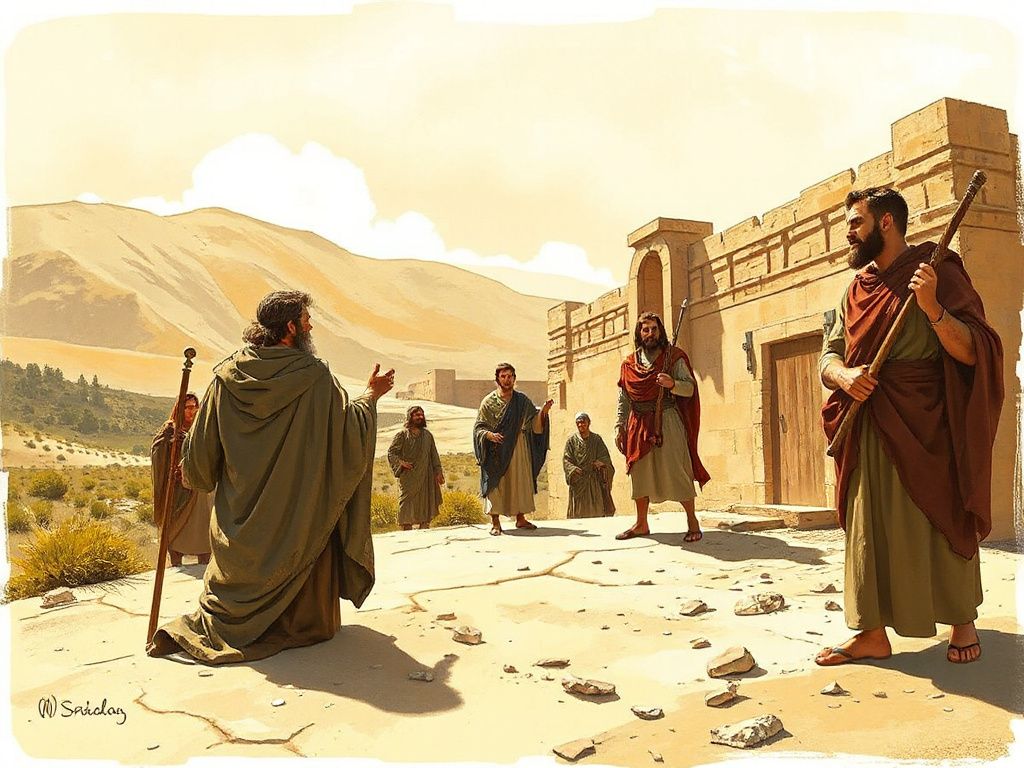
ESTUDIO DEL CAPÍTULO
Salmos 48 — Sion, la ciudad del gran Rey
El Salmo 48 celebra al monte Sion como la ciudad inexpugnable del gran Rey, donde los reyes extranjeros se aterrorizan ante la presencia de Dios y donde el pueblo de Dios recuerda su amor leal y confía en él como su guía eterno.
Escritura
- 1.Grande es Jehová, y digno de ser en gran manera alabado En la ciudad de nuestro Dios, en su monte santo.A Song; a Psalm of the sons of Korah. Great is Jehovah, and greatly to be praised, In the city of our God, in his holy mountain.
- 2.Hermosa provincia, el gozo de toda la tierra, Es el monte de Sion, a los lados del norte, La ciudad del gran Rey.Beautiful in elevation, the joy of the whole earth, Is mount Zion, on the sides of the north, The city of the great King.
- 3.En sus palacios Dios es conocido por refugio.God hath made himself known in her palaces for a refuge.
- 4.Porque he aquí los reyes de la tierra se reunieron; Pasaron todos.For, lo, the kings assembled themselves, They passed by together.
- 5.Y viéndola ellos así, se maravillaron, Se turbaron, se apresuraron a huir.They saw it, then were they amazed; They were dismayed, they hasted away.
- 6.Les tomó allí temblor; Dolor como de mujer que da a luz.Trembling took hold of them there, Pain, as of a woman in travail.
- 7.Con viento solano Quiebras tú las naves de Tarsis.With the east wind Thou breakest the ships of Tarshish.
- 8.Como lo oímos, así lo hemos visto En la ciudad de Jehová de los ejércitos, en la ciudad de nuestro Dios; La afirmará Dios para siempre. SelahAs we have heard, so have we seen In the city of Jehovah of hosts, in the city of our God: God will establish it for ever. [[Selah
- 9.Nos acordamos de tu misericordia, oh Dios, En medio de tu templo.We have thought on thy lovingkindness, O God, In the midst of thy temple.
- 10.Conforme a tu nombre, oh Dios, Así es tu loor hasta los fines de la tierra; De justicia está llena tu diestra.As is thy name, O God, So is thy praise unto the ends of the earth: Thy right hand is full of righteousness.
- 11.Se alegrará el monte de Sion; Se gozarán las hijas de Judá Por tus juicios.Let mount Zion be glad, Let the daughters of Judah rejoice, Because of thy judgments.
- 12.Andad alrededor de Sion, y rodeadla; Contad sus torres.Walk about Zion, and go round about her; Number the towers thereof;
- 13.Considerad atentamente su antemuro, Mirad sus palacios; Para que lo contéis a la generación venidera.480 ye well her bulwarks; Consider her palaces: That ye may tell it to the generation following.
- 14.Porque este Dios es Dios nuestro eternamente y para siempre; El nos guiará aun más allá de la muerte.For this God is our God for ever and ever: He will be our guide even unto death.
Qué significa este pasaje
El Salmo 48 abre con un llamado a la alabanza debido a quién es Dios y al lugar que él ha elegido para habitar. El salmista ubica la grandeza y la renombre no en el cielo de manera abstracta, sino 'en la ciudad de nuestro Dios, en su santo monte' (versículo 1). La geografía de la adoración importa: la majestad de Dios está vinculada concretamente a Sion, el lugar donde el cielo se encuentra con la tierra en la experiencia de Israel. Esta es una afirmación teológica tanto como litúrgica: la grandeza está ligada a la presencia.
El movimiento central del salmo es el contraste entre los reyes humanos y el Rey divino. Los monarcas terrenales se reúnen, avanzan, ven y huyen; el temblor los sobrecoge 'como de mujer en parto', y el viento del oriente destroza las naves de Tarsis (versículos 4–7). La imagen es una derrota decisiva sin que se describa una batalla: basta la mera autorrevelación de Dios en sus baluartes (versículo 3). Las pausas de Selah invitan a la congregación a absorber que lo que solo habían oído acerca de la protección de Dios ahora se confirma visiblemente: 'Como habíamos oído, así hemos visto' (versículo 8).
El salmo cierra al volver la mirada de la congregación desde la victoria pasada hacia la confianza continua. Dentro del templo meditan sobre el amor leal de Dios (versículo 9), su diestra justa (versículo 10) y sus juicios rectos (versículo 11). Luego se les ordena recorrer los muros, contar las torres e inspeccionar los palacios para que la próxima generación pueda ser informada (versículos 12–13). La confesión que corona el salmo es también su destino: 'Este Dios es nuestro Dios por los siglos de los siglos; él será nuestra guía aun más allá de la muerte' (versículo 14). El hebreo cierra con la palabra מָוֶת (muerte), de modo que la promesa de guía del salmo no depende de la seguridad presente, sino que se extiende hasta el límite final de la vida humana.
Contexto
El salmo se atribuye a 'los hijos de Coré', un gremio levítico asociado con la liturgia del templo en el Salterio hebreo. La colección coreíta (Salmos 42–49) se agrupa en torno a temas de Sion, refugio y el reinado de Dios, lo que proporciona el contexto literario inmediato para la celebración de la ciudad en el Salmo 48. El título inicial vincula la adoración a un 'Cántico' (H7892 שִׁיר) y un 'Salmo' (H4210 מִזְמוֹר), un poema musical, marcándolo como material congregacional más que privado.
Dentro del propio salmo, el escenario son los recintos del templo de Sion: la adoración tiene lugar 'en medio de tu templo' (versículo 9) y los participantes recorren los muros de la ciudad (versículos 12–13). Esto coincide con la preocupación coreíta por Sion como morada de 'Jehová de los ejércitos' (versículo 8) y distingue al salmo de los salmos reales o sapienciales que se centran en el trono o la ley. La ocasión histórica del pánico de los reyes (versículos 4–7) no se especifica en el propio texto; el salmo funciona litúrgicamente como una representación de la defensa pasada de Dios sobre Sion, más que como un relato fechado.
Palabras clave del original
- H1419 El hebreo גָּדוֹל (gāḏôl) se traduce como 'grande' en el versículo 1 y de nuevo al final del versículo 2 ('grandemente'). En el Salmo 48, la palabra lleva tanto un sentido ontológico —la grandeza intrínseca de Dios— como un sentido espacial-cúltico, ya que esa grandeza está ubicada en Sion. El emparejamiento con מְאֹד ('grandemente', H3966) intensifica la alabanza y conecta el título 'gran Rey' (versículo 2) con la doxología que enmarca el salmo.
- H4869 La palabra מִשְׂגָּב (miśgāḇ), 'fortaleza' o 'alto refugio', aparece en el versículo 3. La forma utilizada aquí implica que Dios mismo es conocido como el refugio dentro de los baluartes (אַרְמְנוֹתֶיהָ) de Sion. La metáfora fusiona arquitectura y carácter divino: las torres fortificadas de la ciudad son confiables solo porque su verdadero defensor es Dios.
- H2617 Nota: esta entrada se limita a la lista proporcionada; la glosa 'amor leal' (חֶסֶד, H2617) no aparece explícitamente en la lista de palabras originales suministrada, por lo que no se ofrece aquí más discusión en lengua original aparte de lo que el texto del versículo en sí establece en el versículo 9.
Versículos relacionados
- Isaiah 58:11 Isaías 58:11 es paralelo a la promesa de guía continua del Salmo 48:14, usando 'te guiará continuamente' para el mismo concepto de raíz hebrea de dirección divina. Ambos textos vinculan la presencia de Dios con el sustento de la comunidad peregrina.
- Psalms 23:4 El Salmo 23:4 hace eco de la confianza del Salmo 48:14 en la presencia de Dios ante el peligro mortal. Mientras que el Salmo 23 enmarca la amenaza como 'el valle de sombra de muerte', el Salmo 48 cierra con la guía de Dios 'aun más allá de la muerte', usando el mismo horizonte de mortalidad para anclar la confianza.
- Micah 4:1 Miqueas 4:1 amplía la teología de Sion del Salmo 48:2. Mientras que el Salmo 48 llama a Sion 'la alegría de toda la tierra' situada en 'los lados del norte', Miqueas visualiza el monte de la casa de Jehová 'establecido en la cumbre de los montes', excelso sobre los collados y recibiendo el flujo de los pueblos. Ambos textos enmarcan a Sion como el centro escatológico de la adoración.
Preguntas frecuentes
¿Quién escribió el Salmo 48?
El encabezado lo atribuye a 'los hijos de Coré', un gremio levítico; el texto no da un autor personal, y la nota del capítulo proporcionada no especifica un escritor.
¿Por qué los reyes están aterrorizados sin que se describa una batalla?
El salmo presenta la autorrevelación de Dios en los baluartes (versículo 3) como la causa misma del pánico. El temblor y la imagen del viento del oriente en el versículo 7 implican una intervención divina decisiva sin un enfrentamiento militar narrado.
¿Enseña el Salmo 48 que Dios nunca dejará morir a su pueblo?
No. El versículo 14 dice que Dios 'será nuestra guía aun más allá de la muerte', situando la guía dentro de la vida humana incluyendo su final, sin prometer inmunidad frente a la muerte misma.