Related Books
Filter by Era
1samuel 17
1samuel · Ch.17
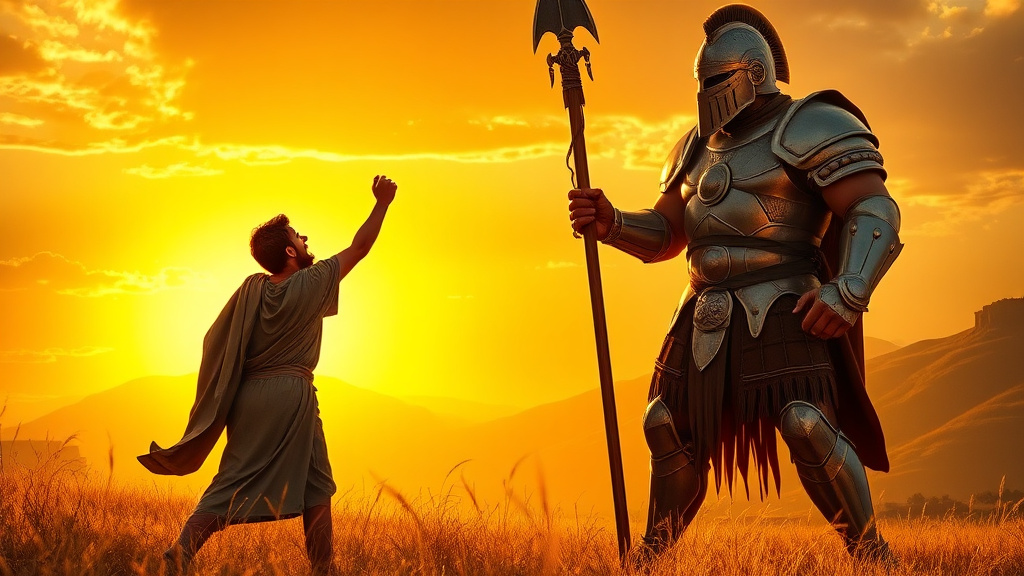
David vs Goliath: A Battle of Faith
1 Samuel 7:2
judaism「A long time elapsed from the day that the Ark was housed in Kiriath-jearim, twenty years in all; and all the House of Israel yearned after GOD.」
How does the Catholic tradition understand David vs. Goliath as a model of faith?
Drawing on patristic exegesis and tradition as a type of spiritual warfare.
1samuel 17
1samuel · Ch.17
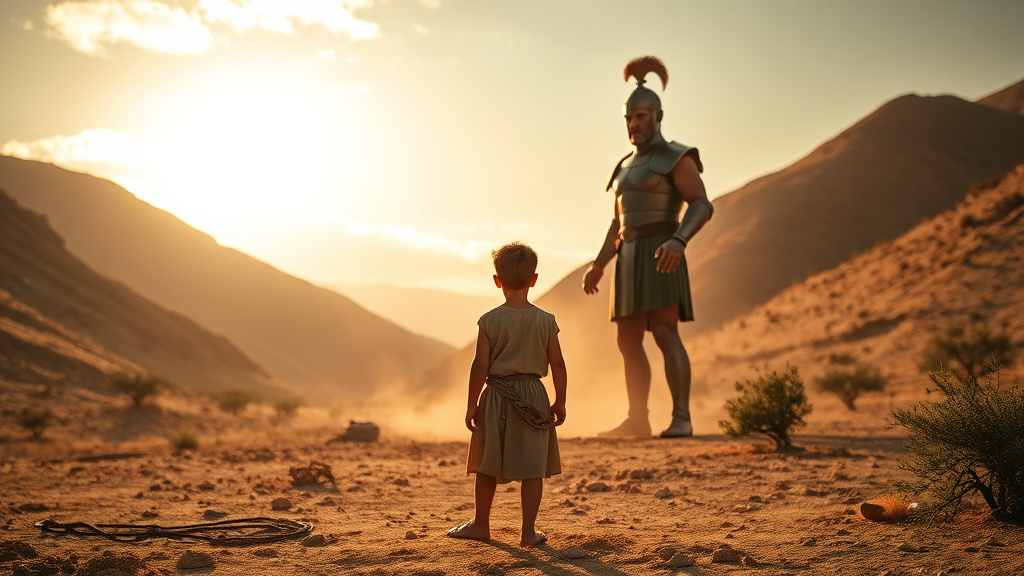
Stone Against the Champion
1 Samuel 25:3
protestant「Now the name of the man was Nabal; and the name of his wife Abigail; and the woman was of good understanding, and of a beautiful countenance: but the man was churlish and evil in his doings; and he was of the house of Caleb.」
Why does the Philistine champion propose single combat to decide the fate of two armies?
Ancient Near Eastern customs of champion warfare—what cultural and theological assumptions underlie this proposal?
1 Samuel 31:9
judaism「They cut off his head and stripped him of his armor, and they sent them throughout the land of the Philistines, to spread the news in the temples of their idols and among the people.」
Did Goliath boast in military might or in his gods, and how does this clash with Israel's monotheism?
The Philistine threat was not only spears but the arrogance of idolatry itself.
1 Samuel 20:8
judaism「Deal faithfully with your servant, since you have taken your servant into a covenant of GOD with you. And if I am guilty, kill me yourself, but don’t make me go back to your father.”」
How does Catholic tradition see David's victory over Goliath as a type of Christ?
Typological reading of the shepherd boy's triumph over the giant.
1 Samuel 26:7
judaism「So David and Abishai approached the troops by night, and found Saul fast asleep inside the barricade, his spear stuck in the ground at his head, and Abner and the troops sleeping around him.」
What is the symbolic significance of Goliath's armor versus David's chosen weapon?
Heavy armor and a sword versus five smooth stones — who is truly mighty?
1 Samuel 9:1
judaism「There was a man in Benjamin whose name was Kish son of Abiel son of Zeror son of Becorath son of Aphiah, a Benjaminite, a man of substance.」
In 1 Samuel 17:45-47, David declares to Goliath, 'You come against me with sword and spear... but I come against you in the name of the LORD Almighty.' How does David's theological framing of the battle shape our understanding of spiritual warfare?
How David's words frame the nature of true conflict.
1 Samuel 8:7
protestant「And Jehovah said unto Samuel, Hearken unto the voice of the people in all that they say unto thee; for they have not rejected thee, but they have rejected me, that I should not be king over them.」
What gave David the confidence to refuse Saul's armor before facing Goliath?
A shepherd boy rejecting royal armor — reckless faith or deeper wisdom?
1 Samuel 16:18
judaism「One of the attendants spoke up, “I have observed a son of Jesse the Bethlehemite who is skilled in music; he is a stalwart fellow and a warrior, sensible in speech, and handsome in appearance—and GOD is with him.”」
After David kills Goliath, how do the women of Israel celebrate, and what is the significance of this scene?
Songs over Goliath's fall launch a shepherd onto the stage of history.
1 Samuel 24:9
protestant「And David said to Saul, Wherefore hearkenest thou to men's words, saying, Behold, David seeketh thy hurt?」
David's question, 'Who is this uncircumcised Philistine that he should defy the armies of the living God?' (1 Samuel 17:26) frames the battle as a theological issue, not merely a military one. How does this framing change the way we read the rest of the chapter?
A theological reading of David's confrontation with Goliath.
1 Samuel 8:15
judaism「He will take a tenth part of your grain and vintage and give it to his eunuchs and courtiers.」
In 1 Samuel 17:34–37, David recounts his past as a shepherd defending his flock from lions and bears. How does this background shape his confidence when facing Goliath, and what does it reveal about how God prepares people for unexpected challenges?
Explore how David's pastoral background becomes the unlikely training ground for Israel's greatest military moment.
1 Samuel 29:8
judaism「David, however, said to Achish, “But what have I done, what fault have you found in your servant from the day I appeared before you to this day, that I should not go and fight against the enemies of my lord the king?”」
What is the deeper meaning of David's famous declaration to Goliath?
'You come against me with sword and spear'—how should this declaration be understood?
1 Samuel 14:8
judaism「Jonathan said, “We’ll cross over to those men and let them see us.」
How does Saul's jealousy reveal a spiritual crisis after David's victory over Goliath?
After the victory, the real battle is just beginning.
1 Samuel 20:14
protestant「And thou shalt not only while yet I live show me the lovingkindness of Jehovah, that I die not;」
How does the Talmud comment on David's refusal to wear Saul's armor?
What does the Rabbinic tradition say about David's light equipment as trust in God?
1 Samuel 15:5
judaism「Then Saul advanced as far as the city of Amalek and lay in wait in the wadi.」
Why did David select five smooth stones, and is there significance to the number?
Did the five stones hint at Goliath's brothers, or reflect David's prudent preparation?
1 Samuel 5:9
protestant「And it was so, that, after they had carried it about, the hand of Jehovah was against the city with a very great discomfiture: and he smote the men of the city, both small and great; and tumors brake out upon them.」
Why did David choose a sling and stones instead of Saul's armor when facing the giant?
From shepherd to warrior—what does David's seemingly illogical choice reveal about faith and courage?
1 Samuel 1:16
protestant「Count not thy handmaid for a wicked woman; for out of the abundance of my complaint and my provocation have I spoken hitherto.」
Why did David refuse Saul's armor and choose a sling and stones instead?
Rejecting human armor to rely fully on God's power.
1 Samuel 2:11
judaism「Then Elkanah [and Hannah] went home to Ramah; and the boy entered the service of GOD under the priest Eli.」
In 1 Samuel 17:45, David responds to Goliath with 'You come against me with sword and spear and javelin, but I come against you in the name of the LORD of hosts.' What does this contrast reveal about the nature of true spiritual authority?
Examine how David's reliance on God's name redefines victory and authority in the face of overwhelming odds.
1 Samuel 6:8
protestant「and take the ark of Jehovah, and lay it upon the cart; and put the jewels of gold, which ye return him for a trespass-offering, in a coffer by the side thereof; and send it away, that it may go.」
Where did David's confidence truly come from before facing Goliath?
What gave a young shepherd the courage to challenge a seasoned warrior giant?
1 Samuel 11:13
judaism「But Saul replied, “Nobody shall be put to death this day! For this day GOD has brought victory to Israel.”」
What does David's refusal of Saul's armor teach us about spiritual battles today?
Can stepping out in weakness be more powerful than wearing borrowed strength?
1 Samuel 4:2
judaism「The Philistines arrayed themselves against Israel; and when the battle was fought, Israel was routed by the Philistines, who slew about four thousand men on the field of battle.」
How do David's words before facing Goliath demonstrate his trust in God?
"I come against you in the name of the Lord of hosts"—how deep is the spiritual meaning of this declaration?
1 Samuel 21:11
judaism「That day David continued on his flight from Saul and he came to King Achish of Gath.」
David declares to Goliath in 1 Samuel 17:45-47, 'You come against me with sword and spear, but I come against you in the name of the Lord.' How should Christians understand the contrast between conventional weapons and spiritual authority?
Spiritual warfare themes in David's confrontation.
1 Samuel 26:11
protestant「Jehovah forbid that I should put forth my hand against Jehovah's anointed: but now take, I pray thee, the spear that is at his head, and the cruse of water, and let us go.」
What does David's confident declaration 'You come against me with sword and spear and javelin, but I come against you in the name of the Lord of hosts' (1 Samuel 17:45) reveal about his understanding of who truly wins battles? How does this perspective challenge modern approaches to conflict?
Explore the theological heart of David's victory speech and what it means to fight 'in God's name' rather than by conventional means of power.
1 Samuel 23:19
protestant「Then came up the Ziphites to Saul to Gibeah, saying, Doth not David hide himself with us in the strongholds in the wood, in the hill of Hachilah, which is on the south of the desert?」
Why does Saul appear so passive and fearful while David steps forward to face Goliath?
A contrast of two leaders: Saul's silence versus David's initiative—what spiritual realities does this expose?
1 Samuel 2:18
protestant「But Samuel ministered before Jehovah, being a child, girded with a linen ephod.」
Why did David choose five smooth stones from the stream?
Five stones when one was needed—was there a hidden meaning?