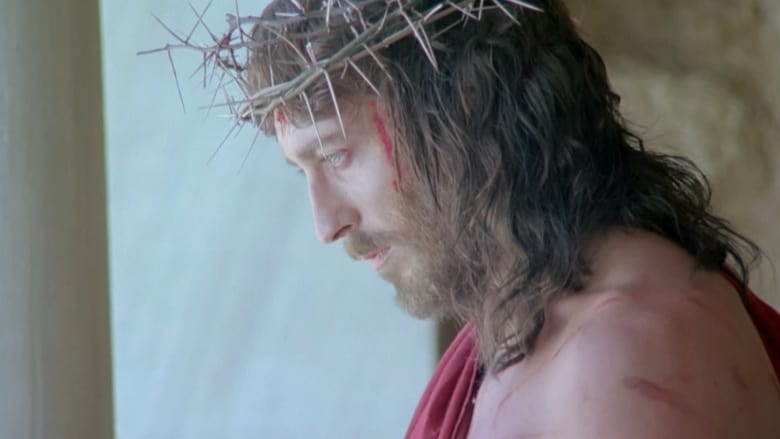
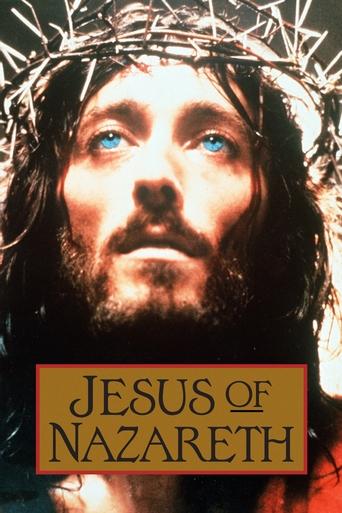
What the story covers
According to the provided overview, the series dramatizes the Birth, Life, Ministry, Crucifixion, and Resurrection of Jesus Christ, largely following the New Testament Gospels. It opens with Mary and Joseph in Nazareth under Roman rule, moves through Jesus' baptism, and follows his public ministry across Israel, ending with his death and resurrection. Figures named in the overview include Mary, Joseph, John the Baptist, Peter, and Judas Iscariot.
The story is drawn from the four New Testament Gospels. The provided passages are anchored in Matthew 1-28, which traces Jesus' lineage from Abraham and David, records his teaching and healing ministry, follows his journey toward Jerusalem, and concludes with his crucifixion and resurrection. Because the series spans the full arc of the Gospels, viewers can place nearly every episode against a specific chapter of Matthew.
Where it is in the Bible
- Matthew 1:1Matthew opens his Gospel with a genealogy tracing Jesus from Abraham through David to 'the Christ.' This line of ancestry frames everything that follows in the series: Jesus is presented as the long-promised descendant of David whom Israel was waiting for in the opening scenes.
- Matthew 5:17-18In the Sermon on the Mount, Jesus declares he came not to abolish the law and the prophets but to fulfil them. Watch for how the miniseries frames Jesus' teaching: whether his words to the crowds are presented as a continuation of Israel's scriptures or as a break from them.
- Matthew 11:28-30Jesus invites those who labor and are heavy laden to find rest in him, calling his yoke easy and his burden light. As the series follows Jesus through his ministry, this passage names what he offers to the crowds who gather around him in the episodes.
- Matthew 16:16Simon Peter confesses, 'Thou art the Christ, the Son of the living God.' This is the hinge of Matthew's Gospel, where the disciples recognise who Jesus is. Watch for how the series stages this moment between Jesus and Peter.
- Matthew 26:26-28At the Last Supper, Jesus takes bread and a cup, identifies them with his body and 'the blood of the covenant,' poured out for many for the forgiveness of sins. The series includes Judas among its named figures, so this scene is also the threshold of his betrayal and the events leading to the crucifixion.
How it differs from the Bible
The provided overview does not list specific scenes, dialogue, or character choices that diverge from the biblical text. What the overview does note is the historical setting it foregrounds: at the time of Jesus' birth, Israel lived under Roman occupation, with a Jewish king who nevertheless ruled as a subject of Rome, and many groups were expecting a coming Messiah. The series also portrays the relationship between Joseph and Mary, his struggle to believe her account of the conception, and the angelic reassurance he receives before their marriage — all of which the overview presents as drawn from Matthew 1 and Luke 1.
Viewers may notice that the series compresses events. Matthew 1:1 opens with the genealogy from Abraham to David to Christ; the overview does not describe how the miniseries presents this list, so watch for whether the film shows it or skips past it. Other passages used here — the Sermon on the Mount (Matthew 5:17-18), the invitation to the weary (Matthew 11:28-30), Peter's confession (Matthew 16:16), and the Last Supper (Matthew 26:26-28) — are moments where adaptations often combine events from different Gospels, rearrange order, or add dialogue. Comparing each scene with the listed Matthew passages is a good way to see where the series is faithfully following the text and where it is shaping the story for the screen.
Discussion questions
- 1
How does the series connect to the genealogy in Matthew 1:1?
Matthew 1:1 traces Jesus from Abraham through David to 'the Christ.' The series opens with Mary and Joseph in the line of David and with Israelites expecting the promised Messiah, so the opening scenes set up the very lineage Matthew names in his first verse.
- 2
Where does Jesus' teaching fit in Matthew, and what should we watch for?
Matthew places key teaching in chapters 5-7 and again at chapter 11 with the invitation, 'Come unto me... and I will give you rest' (Matthew 11:28-30). When the series shows Jesus addressing crowds, compare his words with Matthew 5 and 11 to see which teachings appear and in what order.
- 3
What is the significance of the Last Supper scene in Matthew 26:26-28?
In Matthew 26:26-28, Jesus identifies the bread and cup with his body and 'the blood of the covenant, which is poured out for many unto remission of sins.' This sets up the meaning of his death, which the series' overview names as one of the events it dramatizes, and it sits right next to Judas' betrayal, a figure the series includes.
Where to watch
Availability is for Canada and changes over time — check the platform before watching. TMDb ↗
Reflections on Matthew
After watching, read the passage itself — you will find details no film has time to show.