
BIBLE FILM GUIDE
The Gospel of John
Film · 2003 · 180 min
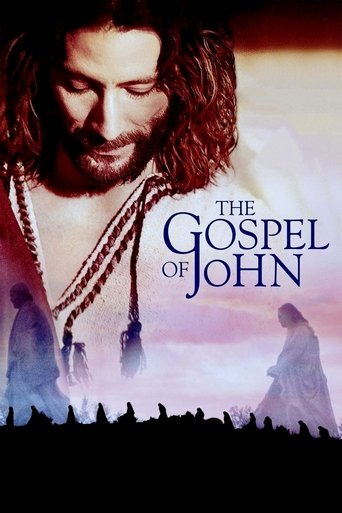
A word-for-word film adaptation of the Gospel of John that presents the life of Jesus Christ as recorded in John's Gospel.
What the story covers
The 2003 film is a literal, word-for-word adaptation of the Gospel of John, using the Good News Translation Bible as its script. Running three hours, it moves through John's account of Jesus' ministry, narrated by Christopher Plummer, with Henry Ian Cusick in the role of Jesus. The production was filmed in Spain with roughly two thousand extras, and care was taken with biblical-era clothing, housing, and scenery of the New Testament period.
The story sits in the New Testament book of John, chapters 1 through 21. It features John the Baptist, Nicodemus, Lazarus, and Peter, alongside the figure of John whose Gospel frames the narrative. The film follows the order and content of John's Gospel from its prologue through the Passion and resurrection appearances.
Where it is in the Bible
- John 1:1John's prologue opens with the Word already present with God and being God, before the ministry begins. This sets the theological frame for everything the film portrays.
- John 3:16A summary of the Gospel's claim: God's gift of the Son so that believers would not perish but have eternal life. Watch for how the film places this within Jesus' exchange with Nicodemus.
- John 6:35One of the 'I am' sayings in John. Jesus identifies himself as the bread of life, linking physical need to spiritual sustenance.
- John 10:10-11Jesus contrasts the thief's intent with his own: life in abundance, and the good shepherd who lays down his life for the sheep.
- John 14:6In John's farewell discourse, Jesus declares himself the way, the truth, and the life, with exclusive access to the Father through him.
- John 15:5The vine-and-branches image expresses mutual abiding: fruitfulness depends on remaining in Christ, and apart from him disciples can do nothing.
How it differs from the Bible
Because the film is described as a word-for-word rendering of the Gospel of John, expect the dialogue to follow the GNT translation closely. When watching, pay attention to how the prologue in John 1 is presented visually, since John's theological openings (the Word, light, glory) are often the passages that adaptations have to compress or dramatise through imagery rather than dialogue. Compare what the film shows on screen with what John 1:1 actually states in your Bible.
John records several scenes and figures unique to his Gospel — the wedding at Cana is not mentioned in the Synoptic Gospels, and Nicodemus, the Samaritan woman, and the raising of Lazarus appear only here. Watch for how the film handles these John-only episodes, and how the 'I am' sayings are distributed across the three-hour runtime. Note also that John does not include a Gethsemane agony or the institution of the Lord's Supper in the same form as the Synoptics, so look for where the film's Passion scenes draw on John alone.
Discussion questions
- 1
How closely does the film follow the Bible?
The overview describes it as a word-for-word depiction using the Good News Translation, so dialogue follows John's Gospel in order. Compare specific scenes against John 1-21 in your own Bible to gauge the faithfulness.
- 2
What makes John's Gospel different from the other Gospels?
John's Gospel contains unique episodes such as Nicodemus and the raising of Lazarus, and structures Jesus' teaching around 'I am' sayings. See John 1:1 and John 6:35 for John's theological framing.
- 3
What should a group discuss after watching?
Consider how the film presents Jesus' claims in John 14:6 and John 15:5, and whether the visual treatment matches the weight of the text. Discuss what 'abiding in Christ' looks like in practice.
Where to watch
Availability is for Canada and changes over time — check the platform before watching. TMDb ↗
Reflections on John
After watching, read the passage itself — you will find details no film has time to show.