Exodus 5:15
「Then the overseers of the Israelites came to Pharaoh and cried: “Why do you deal thus with your servants?」
Exodus 9:1
「GOD said to Moses, “Go to Pharaoh and say to him, ‘Thus says the ETERNAL, the God of the Hebrews: Let My people go to worship Me.」
Exodus 7:29
「The frogs shall come up on you and on your people and on all your courtiers.’”」
Exodus 12:9
「Do not eat any of it raw, or cooked in any way with water, but roasted—head, legs, and entrails—over the fire.」
Exodus 20:9
「Six days you shall labor and do all your work,」
Exodus 11:1
「And GOD said to Moses, “I will bring but one more plague upon Pharaoh and upon Egypt; after that he shall let you go from here; indeed, when he lets you go, he will drive you out of here one and all.」
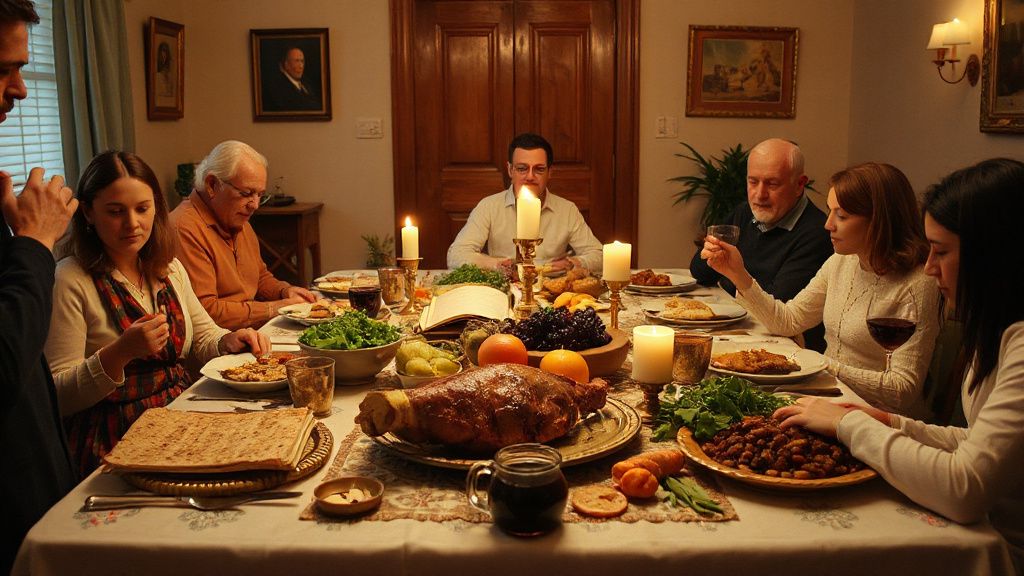
Pesach
The feast commemorating Israel's deliverance when the destroyer passed over houses marked by lamb's blood; the supreme OT redemption type foreshadowing Christ's atoning sacrifice.
What is the contemporary meaning of the Sabbath?
The Sabbath teaching in the Ten Commandments
Why did Pharaoh's heart repeatedly harden through the ten plagues, and what does this reveal about human resistance to divine authority?
Exploring the spiritual dynamics behind Pharaoh's hardened heart as plagues unfold.
Why does only the tenth plague require the special act of marking the doorposts with blood, and what makes this night different?
The blood-marked night stands apart as the night of redemption itself.
How does Judaism emphasize the commandment to honor parents?
Honoring parents is a foundational ethic in Judaism.
How does rabbinic tradition interpret the theological symbolism of the burning bush?
What spiritual meanings do the rabbis attribute to the bush that burned yet was not consumed?