ERA
Early Church and Epistles
30 AD
Coming of the Holy Spirit and church formation: Acts 2:1-4; justification by faith: Romans 8:28, 5:1
Key Passages
Filter by Place
Acts
Acts
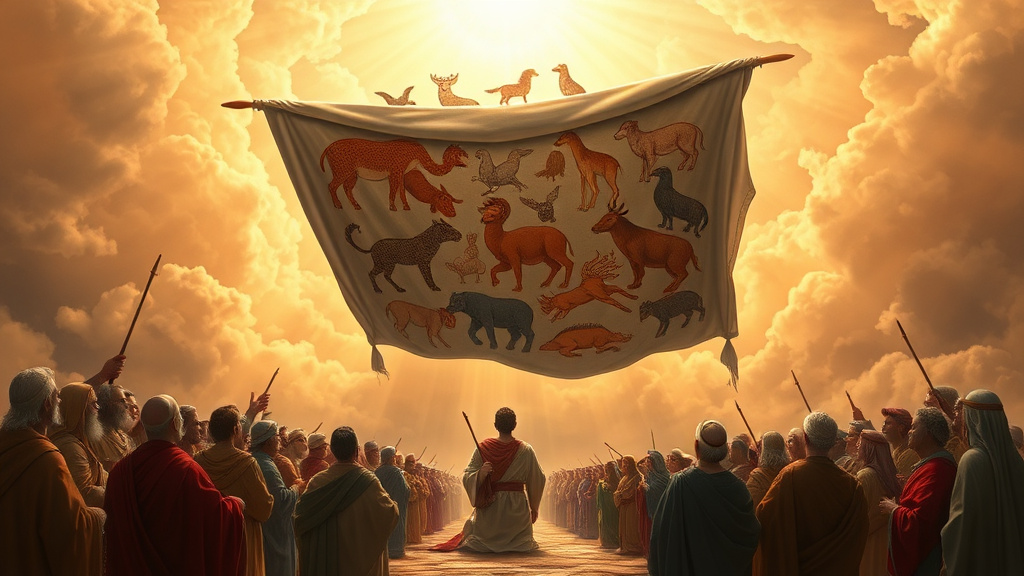
The Gentile Inclusion: God's Expanding Family
Colossians 2:3
protestant「in whom are all the treasures of wisdom and knowledge hidden.」
Eternal God
catholicThe living and everlasting God, the object of Tobit's praise, emphasizing God's eternity and sovereignty.
Does Ephesians 2:8-9’s “grace through faith” exclude any role for works in salvation?
How can grace be both freely given and require response?
Acts
Acts
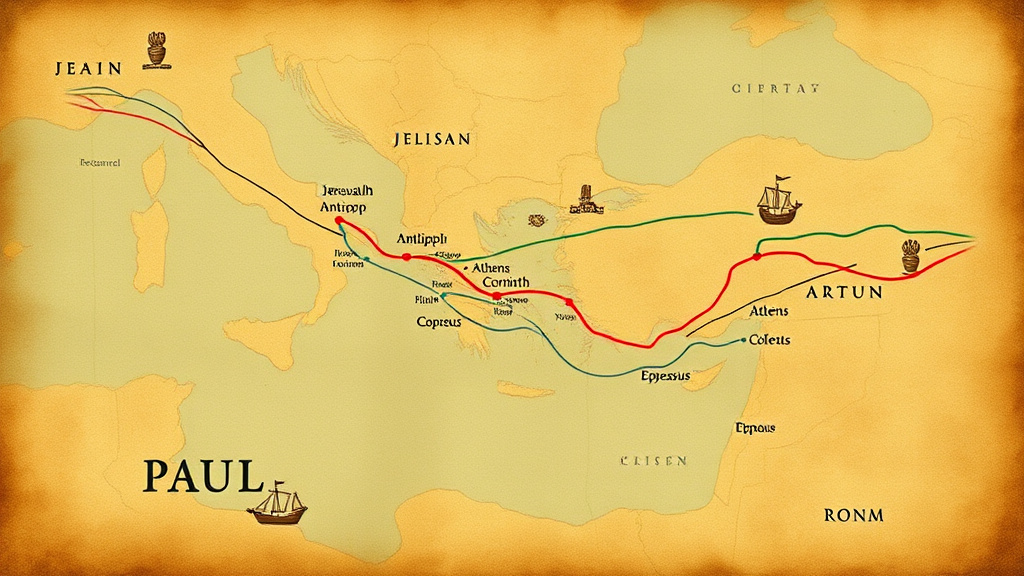
Paul's Three Missionary Journeys
2 Thessalonians 1:9
protestant「who shall suffer punishment, even eternal destruction from the face of the Lord and from the glory of his might,」
Gifts
allSpiritual gifts given by the ascended Christ to the church for building up the body.
How does justification by faith differ from works?
Paul's teaching on justification by faith in Romans
2 Timothy 4:12
protestant「But Tychicus I sent to Ephesus.」
Promise
allThe divine promise given to Abraham and the patriarchs, forming the basis of the life of faith and pointing to the future heavenly city and eternal inheritance.
How do grace and works balance in Ephesians 2:8-9?
This passage emphasizes salvation by grace, but what role do works play in the Christian life?
Romans 8:15
protestant「For ye received not the spirit of bondage again unto fear; but ye received the spirit of adoption, whereby we cry, Abba, Father.」
Raised with Christ
allBelievers are raised with Christ and seated with Him, seeking heavenly things since their life is hidden with Christ in God.
How do Sacred Tradition and Scripture work together in the life of the Church?
One faith, two channels—an ancient conversation.
Acts 22:18
protestant「and saw him saying unto me, Make haste, and get thee quickly out of Jerusalem; because they will not receive of thee testimony concerning me.」
Exaltation
allGod's act of raising Christ to the highest position, giving him the name above all names.
Is "justification by faith" contradicted by James's "justification by works"?
How do we reconcile the Reformers' core doctrine with the Epistle of James?
James 4:9
protestant「Be afflicted, and mourn, and weep: let your laughter be turned to mourning, and your joy to heaviness.」
Fasting
allA spiritual discipline paired with prayer and almsgiving, signifying humility and dependence on God.
Which better discerns God's will—personal Bible reading or communal study?
Tension and complementarity between meditation and community.
2 Peter 2:8
protestant「(for that righteous man dwelling among them, in seeing and hearing, vexed his righteous soul from day to day with their lawless deeds):」
Redemption
allLiberation from sin and forgiveness through Christ's blood sacrifice.
Why did Peter quote the prophet Joel in his Pentecost sermon?
Peter stood up to explain the signs of the last days, citing Joel to show the Spirit's outpouring in the end times.
Tobit 13:3
catholic「Acknowledge him before the nations, O sons of Israel; for he has scattered us among them.」
Speech Seasoned with Salt
allSpeech marked by grace and seasoned with wisdom, symbolizing purity, preservation, and edifying power of Christian words.
Does Ephesians 2:8-9 on justification by faith exclude the role of works?
Faith is the start, not the finish—genuine faith inevitably bears fruit.
1 John 4:13
protestant「hereby we know that we abide in him and he in us, because he hath given us of his Spirit.」
Righteousness
allMoral uprightness according to God's will, linked with almsgiving and prayer, leading to fullness of life.
In 'All Scripture is God-breathed,' what does 'theopneustos' precisely mean?
Verbal or conceptual inspiration? What is the human author's role?
Philippians 2:6
protestant「who, existing in the form of God, counted not the being on an equality with God a thing to be grasped,」
Image of God
allHuman beings are made after the likeness of God. To curse fellow image-bearers while blessing God reveals an inconsistency that ought not to be.
How is Romans 8:28 'all things work together for good' real in suffering?
God's 'working together' in brokenness often demands a long view.
Tobit 12:9
catholic「For almsgiving delivers from death, and it will purge away every sin. Those who perform deeds of charity and of righteousness will have fulness of life;」
Tithe
allThe tenth Abraham gave to Melchizedek, demonstrating Melchizedek's superiority over the Levitical priesthood.
How should the Reformed doctrine of biblical inerrancy be responsibly interpreted amid historical and literary diversity?
Inerrancy does not erase genre, history, or progressive revelation.
Romans 10:20
protestant「And Isaiah is very bold, and saith, I was found of them that sought me not; I became manifest unto them that asked not of me.」
Eternal Salvation
allChrist, made perfect through suffering, becomes the source of eternal salvation for all who obey Him, bestowing everlasting redemption.
Is "justification by faith" contradicted by James's "justification by works"?
How do we reconcile the Reformers' core doctrine with the Epistle of James?
2 Timothy 3:2
protestant「For men shall be lovers of self, lovers of money, boastful, haughty, railers, disobedient to parents, unthankful, unholy,」
Sound Doctrine
protestantHealthy, correct teaching according to Scripture, essential for church leadership and refuting falsehood, emphasized in Titus.
Does 'justification by faith' mean works are completely irrelevant?
Romans 3:28 is a core Protestant doctrine, often misinterpreted as excluding all works.
Romans 6:5
protestant「For if we have become united with him in the likeness of his death, we shall be also in the likeness of his resurrection;」
Predestination
allGod's sovereign choice before creation to adopt believers as sons in Christ.
How do you understand 'faith without works is dead'?
James says 'faith without works is dead'—does this contradict Paul, or complete his teaching?
Colossians 1:7
protestant「even as ye learned of Epaphras our beloved fellow-servant, who is a faithful minister of Christ on our behalf,」
Saviour
allTitle for Jesus Christ and God the Father, indicating the source and agent of salvation, used frequently in Titus.
What continuity exists between Pentecost and believers' experience today?
Is the Spirit's work in apostolic times continuous with today?
1 Thessalonians 1:1
protestant「Paul, and Silvanus, and Timothy, unto the church of the Thessalonians in God the Father and the Lord Jesus Christ: Grace to you and peace.」
Altar
allThe altar of Christian worship, symbolizing Christ's sacrifice surpassing the rituals of the Old Testament tabernacle.
What is the dialectic between grace and works?
The rich meaning of salvation by grace in Ephesians
2 Timothy 1:15
protestant「This thou knowest, that all that are in Asia turned away from me; of whom are Phygelus and Hermogenes.」
Grace
allGod's unmerited favor that establishes the heart, not through external dietary rituals.
How does Paul in Romans argue the relationship between justification by faith and the old law?
Are faith and law opposed or complementary?
1 Corinthians 5:4
protestant「in the name of our Lord Jesus, ye being gathered together, and my spirit, with the power of our Lord Jesus,」
Witnesses
allThe great cloud of faith heroes whose testimony surrounds believers, inspiring perseverance in the race of faith set before us.
How does the birth of the Church at Pentecost connect to our identity as God's people?
Acts 2 portrays the Spirit founding the Church — how does Catholic tradition view this day as the dawn of the age of grace?
2 Thessalonians 3:18
protestant「The grace of our Lord Jesus Christ be with you all.」
Revelation
allGod's unveiling of hidden truth, especially the gospel mystery to apostles and prophets.
How does "Sola Scriptura" function in practice for Christians today?
When tradition and individual interpretation collide, how is biblical authority defined?
2 Corinthians 11:6
protestant「But though I be rude in speech, yet am I not in knowledge; nay, in every way have we made this manifest unto you in all things.」
In Bonds for Christ
protestantPaul's imprisonment for the sake of proclaiming the mystery of Christ, showing suffering and sacrifice often accompany gospel ministry.
What does biblical inerrancy mean, and how do we account for diverse literary styles?
Faithful to the text and its genres—the interpretive balance.
1 Corinthians 12:5
protestant「And there are diversities of ministrations, and the same Lord.」
Exact Image
allChrist is the exact imprint of God's substance, precisely expressing the essence and attributes of God.
How does Paul's 'justification by faith' in Ephesians harmonize with James on works?
Paul and James seem contradictory — are they really?
1 Timothy 5:4
protestant「But if any widow hath children or grandchildren, let them learn first to show piety towards their own family, and to requite their parents: for this is acceptable in the sight of God.」
Truth
allIn Johannine epistles, the divine reality that believers are to love, follow, and testify to, central to Christian life.
1 Corinthians 13 says love never ends — how does this fit with eternal punishment?
Is God's love universal? Does eternal punishment conflict with love's nature?
Acts 15:10
protestant「Now therefore why make ye trial of God, that ye should put a yoke upon the neck of the disciples which neither our fathers nor we were able to bear?」
New Covenant
allThe new covenant established by God with His people, characterized by internalized law and forgiveness, superseding the old.
Is salvation by grace alone, or also through our works?
'By grace you have been saved'—how does this verse address the long debate over works and faith?
2 Corinthians 8:6
protestant「Insomuch that we exhorted Titus, that as he made a beginning before, so he would also complete in you this grace also.」
Hospitality
allThe act of lovingkindness to strangers, which may unknowingly serve angels and reflect God's grace.
How does Paul in Romans argue the relationship between justification by faith and the old law?
Are faith and law opposed or complementary?