BIBLE BOOK GUIDE
1 Samuel
31 chapters
God establishes His kingdom through prophets, kings, and faithful servants, faithfully fulfilling His purposes through the Davidic covenant even amid rebellion and failure.
1 Samuel
Choose a chapter
Pick a chapter and it opens in the Current chapter tab. Come back here whenever you want to choose another one.
Why this book was written
1 Samuel records Israel's transition from the judges to the monarchy, showing that God exalts the obedient (Samuel, Saul, David), rejects the proud, and chooses David as a king after His own heart—pointing ultimately to the Messianic King who would come from his line.
Structure
- 1–3Samuel's Call and the Rise of the Prophetic Office
- 4–7The Philistine Threat and the Return of the Ark
- 8–12Israel Demands a King and Samuel's Warning
- 13–15Saul's Reign and Rejection
- 16–20David Anointed and Serving Saul
- 21–31David's Exile and Saul's Downfall
Major themes
God's Sovereign Choice vs. Human Rejection
Israel demands a king to replace Yahweh; God grants their request yet warns of the cost (chs. 8–12). He chooses Saul, then David, showing His purpose overrides human leadership.
Faithful vs. Faithless Leadership
Samuel and David lead in reverence; Saul falls through disobedience and envy. The contrast shows spiritual character outweighs position.
God's Mercy and the Call to Repentance
God shows mercy to a rebellious people; Samuel intercedes, and even rejected Saul is given a chance to repent (ch. 15).
Anointing, Preparation, and Suffering
After anointing, David is shaped in the wilderness, learning to trust God (chs. 16–31). His trials foreshadow the greater Anointed One.
Yahweh's Warfare and Covenant Faithfulness
God fights for Israel against the Philistines (chs. 4–7, 17), showing His covenant faithfulness and personal deliverance.
Worship, Sanctuary, and the Priestly Office
Eli's house collapses through contempt for the sanctuary; Samuel's faithful service highlights the value of holy worship and intercession.
How it points to Christ
1 Samuel portrays the rise and fall of anointed kings as a pattern for the Messiah. David, the shepherd after God's own heart (13:14; 16:12), suffers under rejection yet triumphs by faith—a shadow of Christ. Saul's loss of the throne shows that an outward king cannot establish God's kingdom; only the faithful, obedient Son of David, Jesus Christ, is the true Messianic King. Samuel's triple office as prophet, priest, and judge further prefigures Christ as the everlasting Prophet, Priest, and King.
Key verses
- 2:2Hannah's song declares the LORD alone as the holy Rock, setting the theological基调 of the book: God alone is trustworthy.
- 8:7God reveals that Israel's rejection of Samuel is ultimately a rejection of His own kingship, exposing the spiritual cost of demanding a human king.
- 13:14God declares Saul's kingdom will not endure because of his disobedience, paving the way for David's election.
- 15:22–23Samuel proclaims that obedience is better than sacrifice, and rebellion is like the sin of divination—exposing the root of Saul's failure.
- 16:7God chooses David not by outward appearance but by the heart, affirming divine sovereignty and true values.
- 17:47David declares that victory belongs to the LORD of hosts, displaying God's power to defeat the mighty through the humble.
- 18:14David prospers in all he does because the LORD is with him, contrasting sharply with Saul's decline.
- 28:19Saul, having lost God's presence through disobedience, faces death—a tragic ending warning of the consequences of abandoning God.
Films & series on 1 Samuel
Each has a guide: scripture sources, where it departs from the Bible, discussion questions, and where to watch

David
Film · 2025
From the songs of his mother’s heart to the whispers of a faithful God, David’s story begins in quiet devotion. When the giant Goliath rises to terrorize a nation, a young shepherd armed with only a sling, a few stones, and unshakable faith steps forward. Pursued by power and driven by purpose, his journey tests the limits of loyalty, love, and courage—culminating in a battle not just for a crown, but for the soul of a kingdom.
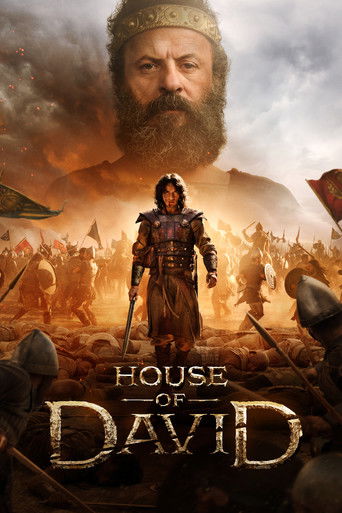
House of David
Series · 2025
Tells the story of the ascent of the biblical figure, David, who becomes the most celebrated king of Israel. The series follows the once-mighty King Saul as he falls victim to his own pride. At the direction of God, the prophet Samuel anoints an unlikely, outcast teenager as the new king.

Young David
Series · 2023
In the quiet hills of Bethlehem, a shepherd boy named David finds meaning in every melody and strength in every trial. Follow the early adventures of Israel’s future king as he learns courage in the fields, kindness through friendship, and faith in the face of fear. Each story reveals the humble beginnings of a legend whose greatest victories began long before the battlefield.
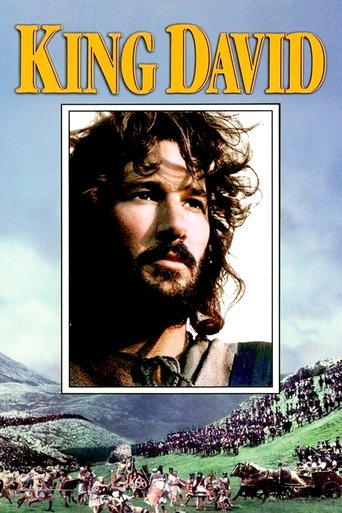
King David
Film · 1985
This is a movie about the life of Israel's king David.
People in this book
Questions for reflection
- ·In the contrast between Saul and David, have I allowed envy or fear to replace my trust in God?
- ·When God does not act on my timetable (as with Israel's request for a king), how do I respond—with complaint or reverent faith?
- ·Like Samuel, am I willing to intercede for others even when they disappoint me?
- ·David faced Goliath by looking to the Lord of Hosts (17:47). Are the 'giants' in my life still greater to me than God?
- ·The Spirit's departure from Saul (16:14) warns me that God's presence is not taken for granted. Am I walking by the Spirit, or drifting away?
Want to read 1 Samuel start to finish? Open the reader for parallel Chinese/English text and ask anything as you go.
Start reading 1 Samuel1 Samuel
Chapter 30
1And it came to pass, when David and his men were come to Ziklag on the third day, that the Amalekites had made a raid upon the South, and upon Ziklag, and had smitten Ziklag, and burned it with fire,
2and had taken captive the women and all that were therein, both small and great: they slew not any, but carried them off, and went their way.
3And when David and his men came to the city, behold, it was burned with fire; and their wives, and their sons, and their daughters, were taken captive.
4Then David and the people that were with him lifted up their voice and wept, until they had no more power to weep.
5And David's two wives were taken captive, Ahinoam the Jezreelitess, and Abigail the wife of Nabal the Carmelite.
6And David was greatly distressed; for the people spake of stoning him, because the soul of all the people was grieved, every man for his sons and for his daughters: but David strengthened himself in Jehovah his God.
7And David said to Abiathar the priest, the son of Ahimelech, I pray thee, bring me hither the ephod. And Abiathar brought thither the ephod to David.
8And David inquired of Jehovah, saying, If I pursue after this troop, shall I overtake them? And he answered him, Pursue; for thou shalt surely overtake them, and shalt without fail recover all.
9So David went, he and the six hundred men that were with him, and came to the brook Besor, where those that were left behind stayed.
10But David pursued, he and four hundred men; for two hundred stayed behind, who were so faint that they could not go over the brook Besor.
11And they found an Egyptian in the field, and brought him to David, and gave him bread, and he did eat; and they gave him water to drink.
12And they gave him a piece of a cake of figs, and two clusters of raisins: and when he had eaten, his spirit came again to him; for he had eaten no bread, nor drunk any water, three days and three nights.
13And David said unto him, To whom belongest thou? and whence art thou? And he said, I am a young man of Egypt, servant to an Amalekite; and my master left me, because three days ago I fell sick.
14We made a raid upon the South of the Cherethites, and upon that which belongeth to Judah, and upon the South of Caleb; and we burned Ziklag with fire.
15And David said to him, Wilt thou bring me down to this troop? And he said, Swear unto me by God, that thou wilt neither kill me, nor deliver me up into the hands of my master, and I will bring thee down to this troop.
16And when he had brought him down, behold, they were spread abroad over all the ground, eating and drinking, and dancing, because of all the great spoil that they had taken out of the land of the Philistines, and out of the land of Judah.
17And David smote them from the twilight even unto the evening of the next day: and there escaped not a man of them, save four hundred young men, who rode upon camels and fled.
18And David recovered all that the Amalekites had taken; and David rescued his two wives.
19And there was nothing lacking to them, neither small nor great, neither sons nor daughters, neither spoil, nor anything that they had taken to them: David brought back all.
20And David took all the flocks and the herds, which they drove before those other cattle, and said, This is David's spoil.
21And David came to the two hundred men, who were so faint that they could not follow David, whom also they had made to abide at the brook Besor; and they went forth to meet David, and to meet the people that were with him: and when David came near to the people, he saluted them.
22Then answered all the wicked men and base fellows, of those that went with David, and said, Because they went not with us, we will not give them aught of the spoil that we have recovered, save to every man his wife and his children, that he may lead them away, and depart.
23Then said David, Ye shall not do so, my brethren, with that which Jehovah hath given unto us, who hath preserved us, and delivered the troop that came against us into our hand.
24And who will hearken unto you in this matter? for as his share is that goeth down to the battle, so shall his share be that tarrieth by the baggage: they shall share alike.
25And it was so from that day forward, that he made it a statute and an ordinance for Israel unto this day.
26And when David came to Ziklag, he sent of the spoil unto the elders of Judah, even to his friends, saying, Behold, a present for you of the spoil of the enemies of Jehovah:
27To them that were in Beth-el, and to them that were in Ramoth of the South, and to them that were in Jattir,
28and to them that were in Aroer, and to them that were in Siphmoth, and to them that were in Eshtemoa,
29and to them that were in Racal, and to them that were in the cities of the Jerahmeelites, and to them that were in the cities of the Kenites,
30and to them that were in Hormah, and to them that were in Bor-ashan, and to them that were in Athach,
31and to them that were in Hebron, and to all the places where David himself and his men were wont to haunt.