BIBLE BOOK GUIDE
2 Samuel
24 chapters
The rise, testing, and establishment of the Davidic covenant, showing God's faithfulness and mercy in history.
2 Samuel
Choose a chapter
Pick a chapter and it opens in the Current chapter tab. Come back here whenever you want to choose another one.
Why this book was written
Continuing from 1 Samuel, this book records David's reign. Written for Israel emerging from the judges era into a united monarchy, it shows that David's dynasty rises or falls according to obedience to God, and that the Lord fulfills the covenant made through Samuel, calling readers to covenant faithfulness.
Structure
- 1–4David's Rise and Mourning
- 5–10Kingdom Expansion and the Ark
- 11–14David's Sin and Family Broken
- 15–20Absalom's Rebellion and Exile
- 21–24Appendix: Shadows over David's Reign
Major themes
David's Kingdom and God's Promise
The book traces David from his anointing as king of Judah at Hebron through his consolidation of a powerful kingdom in Jerusalem (2:1–10), culminating in God's covenant through Nathan (7:1–17) that David's house, kingdom, and throne would be established forever.
The Devastation of Sin and Restoration through Repentance
The Bathsheba episode (11:1–12:31) marks the turning point: David's sin triggers family collapse, the murder of Uriah, and national plague (ch. 24), yet his genuine repentance shows both God's discipline and His willingness to forgive the contrite heart.
God's Justice and Judgment
God is shown as one who will by no means clear the wicked: Saul's house is judged (2:4–4:12), Absalom's rebellion ends in death (ch. 15–18), Shimei is restrained by divine purpose (16:5–14), and Adonijah's conspiracy fails.
God's Presence and Protection
From fugitive to victor, David repeatedly experiences divine protection: recovery of his family at Ziklag, victory over Goliath, deliverance from Absalom (18:19–33), and provision in the wilderness (23:13–17). The LORD is David's stronghold.
The King and the People of God
The book reveals how a king after God's own heart leads the people in worship (ch. 6, bringing up the ark), gratitude (ch. 22, David's song), and warfare (ch. 8), while warning against royal pride and tyranny (ch. 24, the census).
How it points to Christ
2 Samuel most clearly points to Christ through the Davidic covenant declared by Nathan (7:12–16): 'Your throne shall be established forever' (cf. Luke 1:32–33). This promise finds its ultimate fulfillment in Jesus Christ—descendant of David, seated on the throne of glory, establishing an everlasting kingdom. David's heart after God, his suffering and victory, and his psalms (ch. 22 foreshadowing the cross; ch. 23 foreshadowing resurrection) all prefigure the greater Shepherd, King, and Suffering Servant.
Key verses
- 7:12–16God's everlasting covenant with David—the heart of the Davidic promise of seed, throne, and an enduring kingdom.
- 11:27David's deed was evil in the Lord's sight, setting the trajectory for later family and national tragedy.
- 12:13David confesses 'I have sinned against the Lord,' modeling repentance and divine forgiveness.
- 15:30David goes up barefoot with covered head, weeping—portraying the suffering king.
- 18:33The king weeps for rebellious Absalom, exposing the tension between grace, love, and justice.
- 22:2David names God 'my rock, my fortress, my Savior'—a confessional summary of the book.
- 22:51God shows 'lovingkindness to His anointed forever,' affirming and reissuing the Davidic covenant.
- 24:17David takes responsibility, asking God's hand to fall on him and his house—leadership in repentance.
Films & series on 2 Samuel
Each has a guide: scripture sources, where it departs from the Bible, discussion questions, and where to watch
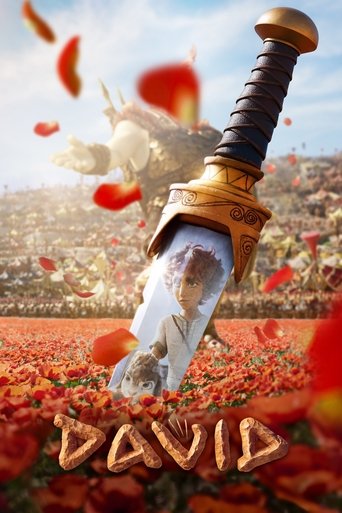
David
Film · 2025
From the songs of his mother’s heart to the whispers of a faithful God, David’s story begins in quiet devotion. When the giant Goliath rises to terrorize a nation, a young shepherd armed with only a sling, a few stones, and unshakable faith steps forward. Pursued by power and driven by purpose, his journey tests the limits of loyalty, love, and courage—culminating in a battle not just for a crown, but for the soul of a kingdom.
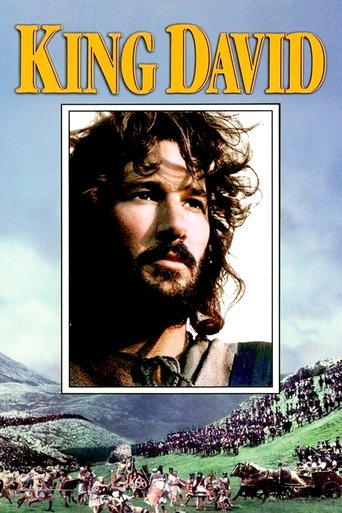
King David
Film · 1985
This is a movie about the life of Israel's king David.
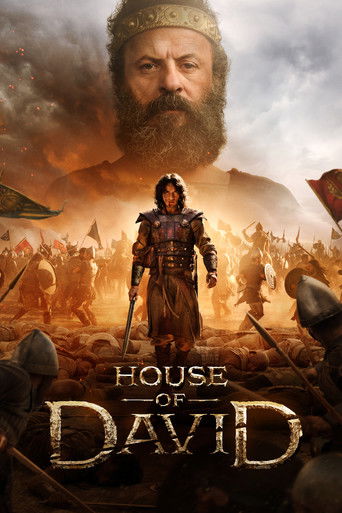
House of David
Series · 2025
Tells the story of the ascent of the biblical figure, David, who becomes the most celebrated king of Israel. The series follows the once-mighty King Saul as he falls victim to his own pride. At the direction of God, the prophet Samuel anoints an unlikely, outcast teenager as the new king.
People in this book
Questions for reflection
- ·When Nathan confronted him, David said 'I have sinned against the LORD' (12:13), which contrasts sharply with his earlier self-deception (11:25). Am I willing to confess quickly, or do I wait until my sin is exposed?
- ·In 2 Samuel 7, God promises David 'rest' (7:11), yet simultaneously allows turmoil in his family and kingdom. How can I praise in prosperity and still trust the covenant God in trial?
- ·David danced with all his might before the LORD (6:14), while Michal despised him (6:16). When the joy of worship meets the scorn of the world, toward which does my heart lean?
- ·Absalom's tragedy (ch. 18) shows that the consequences of sin often extend to others. How did David's family sin affect his descendants? Do I seriously consider how my present sins may impact those around me?
- ·In David's last words (23:1–7) he calls God 'the Rock of Israel' (23:3). In the storms and twilight of life, is my faith built on God's promises or on my own achievements?
Where 2 Samuel fits in the Bible's storyline
This book appears in the 12-stop storyline at:
Where to start reading the Bible? See the full 12-stop storyline
Want to read 2 Samuel start to finish? Open the reader for parallel Chinese/English text and ask anything as you go.
Start reading 2 Samuel2 Samuel
Chapter 18
1And David numbered the people that were with him, and set captains of thousands and captains of hundreds over them.
2And David sent forth the people, a third part under the hand of Joab, and a third part under the hand of Abishai the son of Zeruiah, Joab's brother, and a third part under the hand of Ittai the Gittite. And the king said unto the people, I will surely go forth with you myself also.
3But the people said, Thou shalt not go forth: for if we flee away, they will not care for us; neither if half of us die, will they care for us: but thou art worth ten thousand of us; therefore now it is better that thou be ready to succor us out of the city.
4And the king said unto them, What seemeth you best I will do. And the king stood by the gate-side, and all the people went out by hundreds and by thousands.
5And the king commanded Joab and Abishai and Ittai, saying, Deal gently for my sake with the young man, even with Absalom. And all the people heard when the king gave all the captains charge concerning Absalom.
6So the people went out into the field against Israel: and the battle was in the forest of Ephraim.
7And the people of Israel were smitten there before the servants of David, and there was a great slaughter there that day of twenty thousand men.
8For the battle was there spread over the face of all the country; and the forest devoured more people that day than the sword devoured.
9And Absalom chanced to meet the servants of David. And Absalom was riding upon his mule, and the mule went under the thick boughs of a great oak, and his head caught hold of the oak, and he was taken up between heaven and earth; and the mule that was under him went on.
10And a certain man saw it, and told Joab, and said, Behold, I saw Absalom hanging in an oak.
11And Joab said unto the man that told him, And, behold, thou sawest it, and why didst thou not smite him there to the ground? and I would have given thee ten pieces of silver, and a girdle.
12And the man said unto Joab, Though I should receive a thousand pieces of silver in my hand, yet would I not put forth my hand against the king's son; for in our hearing the king charged thee and Abishai and Ittai, saying, Beware that none touch the young man Absalom.
13Otherwise if I had dealt falsely against his life (and there is no matter hid from the king), then thou thyself wouldest have set thyself against me.
14Then said Joab, I may not tarry thus with thee. And he took three darts in his hand, and thrust them through the heart of Absalom, while he was yet alive in the midst of the oak.
15And ten young men that bare Joab's armor compassed about and smote Absalom, and slew him.
16And Joab blew the trumpet, and the people returned from pursuing after Israel; for Joab held back the people.
17And they took Absalom, and cast him into the great pit in the forest, and raised over him a very great heap of stones: and all Israel fled every one to his tent.
18Now Absalom in his lifetime had taken and reared up for himself the pillar, which is in the king's dale; for he said, I have no son to keep my name in remembrance: and he called the pillar after his own name; and it is called Absalom's monument, unto this day.
19Then said Ahimaaz the son of Zadok, Let me now run, and bear the king tidings, how that Jehovah hath avenged him of his enemies.
20And Joab said unto him, Thou shalt not be the bearer of tidings this day, but thou shalt bear tidings another day; but this day thou shalt bear no tidings, because the king's son is dead.
21Then said Joab to the Cushite, Go, tell the king what thou hast seen. And the Cushite bowed himself unto Joab, and ran.
22Then said Ahimaaz the son of Zadok yet again to Joab, But come what may, let me, I pray thee, also run after the Cushite. And Joab said, Wherefore wilt thou run, my son, seeing that thou wilt have no reward for the tidings?
23But come what may, said he, I will run. And he said unto him, Run. Then Ahimaaz ran by the way of the Plain, and outran the Cushite.
24Now David was sitting between the two gates: and the watchman went up to the roof of the gate unto the wall, and lifted up his eyes, and looked, and, behold, a man running alone.
25And the watchman cried, and told the king. And the king said, If he be alone, there is tidings in his mouth. And he came apace, and drew near.
26And the watchman saw another man running; and the watchman called unto the porter, and said, Behold, another man running alone. And the king said, He also bringeth tidings.
27And the watchman said, I think the running of the foremost is like the running of Ahimaaz the son of Zadok. And the king said, He is a good man, and cometh with good tidings.
28And Ahimaaz called, and said unto the king, All is well. And he bowed himself before the king with his face to the earth, and said, Blessed be Jehovah thy God, who hath delivered up the men that lifted up their hand against my lord the king.
29And the king said, Is it well with the young man Absalom? And Ahimaaz answered, When Joab sent the king's servant, even me thy servant, I saw a great tumult, but I knew not what it was.
30And the king said, Turn aside, and stand here. And he turned aside, and stood still.
31And, behold, the Cushite came; and the Cushite said, Tidings for my lord the king; for Jehovah hath avenged thee this day of all them that rose up against thee.
32And the king said unto the Cushite, Is it well with the young man Absalom? And the Cushite answered, The enemies of my lord the king, and all that rise up against thee to do thee hurt, be as that young man is.
33And the king was much moved, and went up to the chamber over the gate, and wept: and as he went, thus he said, O my son Absalom, my son, my son Absalom! would I had died for thee, O Absalom, my son, my son!