BIBLE BOOK GUIDE
Esther
10 chapters
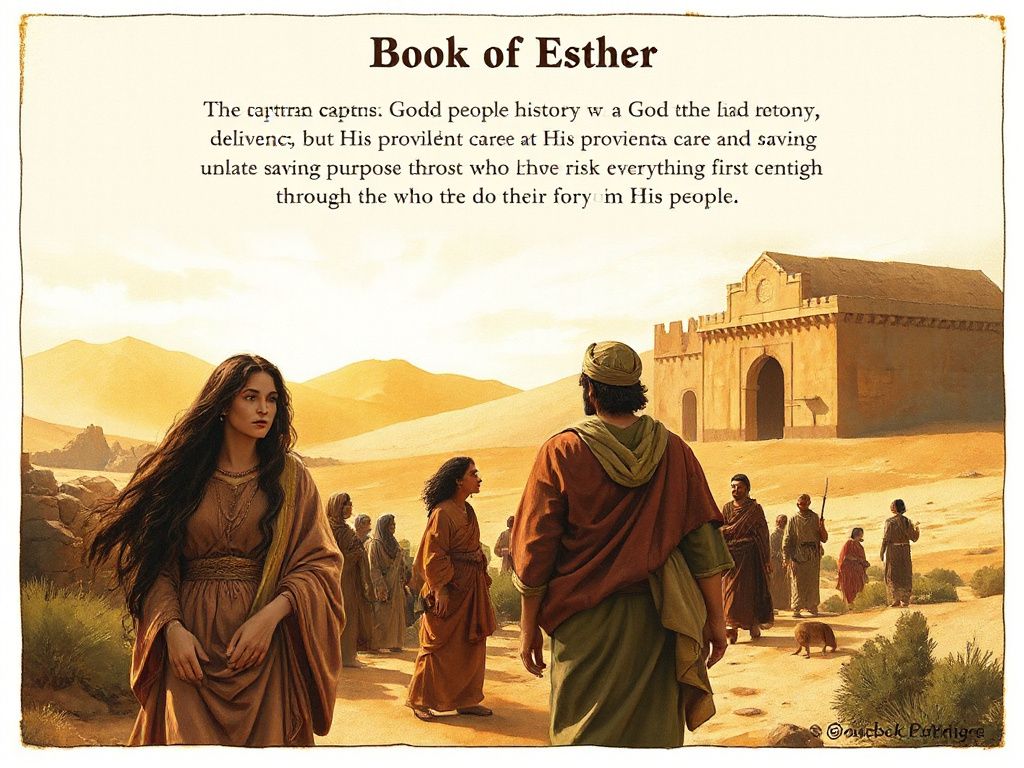
God's people are deliverance may seem hidden, but His providential care and saving purpose shine through those who risk everything for His people.
Esther
Choose a chapter
Pick a chapter and it opens in the Current chapter tab. Come back here whenever you want to choose another one.
Why this book was written
Written for the post-exilic Jewish community, Esther explains the origin of the Purim festival, reassures dispersed Israel that God remains faithful even when He seems silent, and calls believers to courageous faith when their people face annihilation.
Structure
- 1–2The Deposition of Vashti and the Rise of Esther
- 3–5Haman's Plot and Mordecai's Loyalty
- 6–7The King's Sleepless Night and Haman's Fall
- 8–9Jewish Deliverance and the Institution of Purim
- 10Mordecai's Exaltation and the King's Chronicle
Major themes
God's Hidden Providence
God's name never appears in all ten chapters, yet His providential hand governs every event—from Mordecai overhearing the plot (2:21-23), to Esther's elevation as queen (2:17), to Haman's downfall by his own scheme (7:10)—revealing that God accomplishes His purposes silently.
Courage for God's People
Mordecai's refusal to bow to Haman (3:2-5) and Esther's risk to approach the king unsummoned (4:15-16) demonstrate faith-driven courage and sacrifice for the deliverance of the Jewish people.
Reversal and Redemption
The book is full of dramatic reversals: the captive becomes queen (2:17-18), those marked for destruction are granted deliverance (8:11), and Haman is hanged on the gallows he built for Mordecai (7:10)—showing God's sovereign working for His people.
Covenant Identity and Loyalty
Facing genocide, the remnant in exile clings to their distinct identity (3:8 accuses them of not keeping the king's laws) and gathers in prayer and fasting through the crisis (4:16), reflecting covenant loyalty in a foreign land.
Faithfulness Rewarded, Wickedness Judged
Mordecai's loyalty in reporting the plot is recorded in the chronicles (2:23; 6:1-3) and ultimately honored (10:3), while Haman's pride and plot bring about his own ruin (6:13; 7:10), confirming God's righteous judgment.
The Establishment of Purim
Chapter 9 records the Jews' rest from their enemies and the establishment of Purim as a memorial (9:20-32), teaching God's people to respond to redemption with remembrance and gratitude.
How it points to Christ
Though Esther does not name the Messiah, God preserves His exiled people in suffering, foreshadowing Christ's redemption achieved for His people in an even greater crisis: Esther risks death to approach the king on behalf of her people (4:16), mirroring Christ as Mediator standing before the Father; her resolve that 'if I perish, I perish' (4:16) reflects Christ's self-giving love; Mordecai's exaltation (10:3) prefigures the triumphant Messianic King; and the Jews' deliverance from enemies points to the ultimate salvation Christ secures through His cross and resurrection for all who trust in Him—deliverance from the bondage of sin and death.
Key verses
- 4:14Mordecai's climactic challenge—'who knows whether you have come to the kingdom for such a time as this?'—captures the book's theology of divine providence working through human responsibility.
- 4:16Esther's courageous resolve to approach the unsummoned king, accompanied by a three-day communal fast, models faith-in-action and intercessory solidarity.
- 6:1The king's divinely orchestrated insomnia sets in motion the reversal that saves the Jews, illuminating God's hidden hand.
- 7:3–4Esther's second banquet plea for her people's life reveals her willingness to risk everything for her kindred.
- 7:10Haman is hanged on the gallows he prepared for Mordecai—poetic justice culminating the reversal.
- 8:15–17Mordecai's investiture and the Jews' gladness mark the public turn of fortune, even drawing outsiders to identify with Israel.
- 9:22–24Establishes the 'days of feasting and gladness' as Purim, the festival commemorating God's deliverance from Haman's 'lot' (pur).
- 10:3The book's closing note elevates Mordecai as second to the king and advocate for his people, sealing the theme of God-exalting deliverers.
Films & series on Esther
Each has a guide: scripture sources, where it departs from the Bible, discussion questions, and where to watch
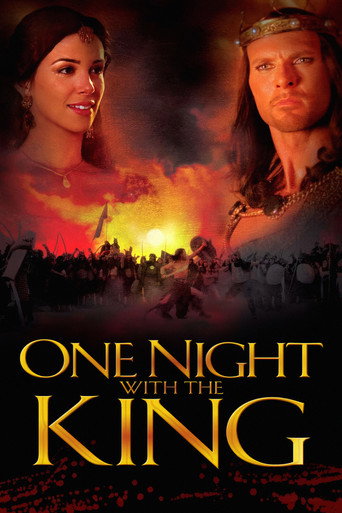
One Night with the King
Film · 2006
In Biblical times, a girl disguises her Jewish origins when the Persian king comes looking for a new bride among his subjects.
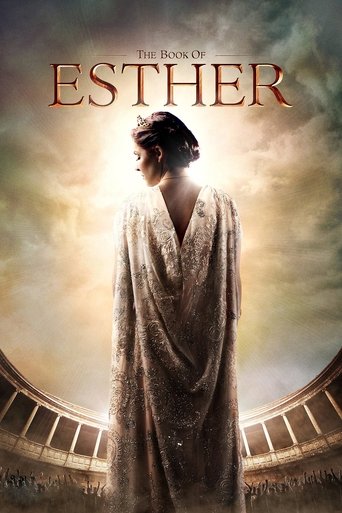
The Book of Esther
Film · 2013
When Ester becomes King Xerxes’ queen, her Cousin Mordecai and that despicable Haman engage in a dangerous game of intrigue for control of the young Persian King Xerxes.
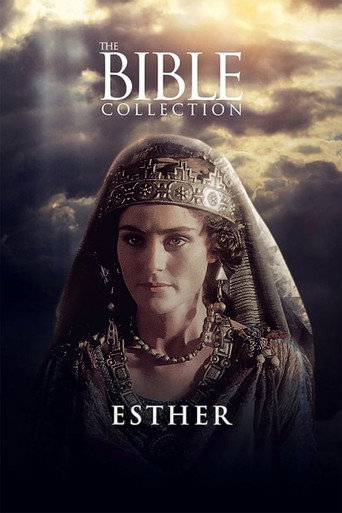
Esther
Film · 1999
Esther, the beautiful queen of Persia, intervenes to save the Jewish people from a bloody massacre.
People in this book
Questions for reflection
- ·God's name never appears in Esther. When you cannot see God's obvious hand at work in your life, how do you trust that He is still sovereign?
- ·Esther says 'if I perish, I perish' (4:16). Have you ever faced a similar call in faith—to risk yourself for others? How did you respond?
- ·Haman's pride grows from 3:2 to his self-destruction in 6:6. Are there areas of pride or envy in your life that need repentance?
- ·Mordecai's faithfulness was initially forgotten (2:23), yet later became the very reason for his honor (6:1-3). How does this encourage you to persist in doing good when unseen?
- ·The establishment of Purim (9:20-32) reminds God's people to remember His deliverance. How are you remembering Christ's redemption for you today—in prayer, the Lord's Supper, or daily life?
Want to read Esther start to finish? Open the reader for parallel Chinese/English text and ask anything as you go.
Start reading EstherEsther
Chapter 3
1After these things did king Ahasuerus promote Haman the son of Hammedatha the Agagite, and advanced him, and set his seat above all the princes that were with him.
2And all the king's servants, that were in the king's gate, bowed down, and did reverence to Haman; for the king had so commanded concerning him. But Mordecai bowed not down, nor did him reverence.
3Then the king's servants, that were in the king's gate, said unto Mordecai, Why transgressest thou the king's commandment?
4Now it came to pass, when they spake daily unto him, and he hearkened not unto them, that they told Haman, to see whether Mordecai's matters would stand: for he had told them that he was a Jew.
5And when Haman saw that Mordecai bowed not down, nor did him reverence, then was Haman full of wrath.
6But he thought scorn to lay hands on Mordecai alone; for they had made known to him the people of Mordecai: wherefore Haman sought to destroy all the Jews that were throughout the whole kingdom of Ahasuerus, even the people of Mordecai.
7In the first month, which is the month Nisan, in the twelfth year of king Ahasuerus, they cast Pur, that is, the lot, before Haman from day to day, and from month to month, to the twelfth month, which is the month Adar.
8And Haman said unto king Ahasuerus, There is a certain people scattered abroad and dispersed among the peoples in all the provinces of thy kingdom; and their laws are diverse from those of every people; neither keep they the king's laws: therefore it is not for the king's profit to suffer them.
9If it please the king, let it be written that they be destroyed: and I will pay ten thousand talents of silver into the hands of those that have the charge of the king's business, to bring it into the king's treasuries.
10And the king took his ring from his hand, and gave it unto Haman the son of Hammedatha the Agagite, the Jews' enemy.
11And the king said unto Haman, The silver is given to thee, the people also, to do with them as it seemeth good to thee.
12Then were the king's scribes called in the first month, on the thirteenth day thereof; and there was written according to all that Haman commanded unto the king's satraps, and to the governors that were over every province, and to the princes of every people, to every province according to the writing thereof, and to every people after their language; in the name of king Ahasuerus was it written, and it was sealed with the king's ring.
13And letters were sent by posts into all the king's provinces, to destroy, to slay, and to cause to perish, all Jews, both young and old, little children and women, in one day, even upon the thirteenth day of the twelfth month, which is the month Adar, and to take the spoil of them for a prey.
14A copy of the writing, that the decree should be given out in every province, was published unto all the peoples, that they should be ready against that day.
15The posts went forth in haste by the king's commandment, and the decree was given out in Shushan the palace. And the king and Haman sat down to drink; but the city of Shushan was perplexed.