BIBLE BOOK GUIDE
Ezra
10 chapters
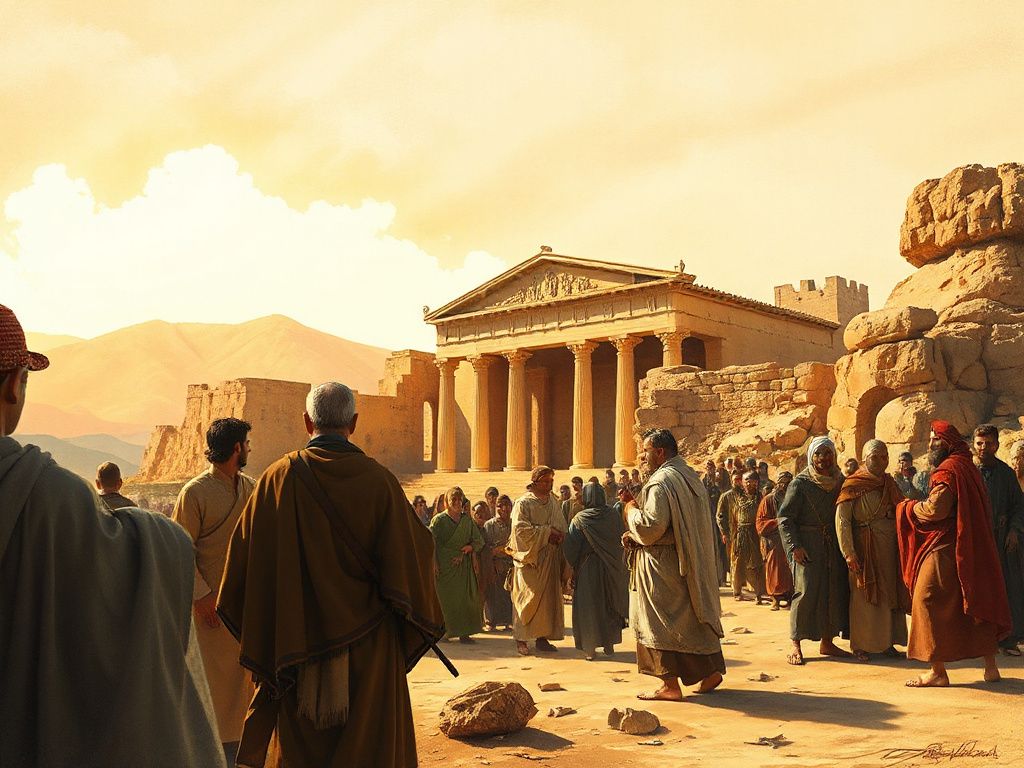
God's people, returning from exile by His grace and through faithful leaders, rebuild the temple, restore worship, and re-consecrate themselves to His law.
Ezra
Choose a chapter
Pick a chapter and it opens in the Current chapter tab. Come back here whenever you want to choose another one.
Why this book was written
Ezra records the return of the Israelites from Babylon to Jerusalem, showing the post-exilic community God's faithfulness in fulfilling His promise to bring His people home, sustaining them through the rebuilding of the temple, the restoration of worship, and the re-establishment of the Law, while calling them to holiness and separation unto the Lord in light of His grace.
Structure
- 1–2The Return: Zerubbabel Leads the First Wave Home
- 3–4Rebuilding the Temple: Foundation, Opposition, and Completion
- 5–6Temple Dedication and the Restoration of Festival Worship
- 7–8Ezra's Return and the Second Exodus
- 9–10Confession and Reformation: Dealing with Intermarriage
- 10Reformation Carried Out: Separation and Covenant Renewal
Major themes
God's Faithfulness to His Covenant
Ezra shows the LORD keeping His covenant by stirring the heart of Cyrus to release the exiles and fulfill the word spoken through Jeremiah (Ezr 1:1-3), proving His unchanging faithfulness.
Rebuilding the Temple and Restoring Worship
From the laying of the temple foundation (Ezr 3:10-13) to its dedication and the keeping of the Passover (Ezr 6:15-22), the book centers on reestablishing the place of worship so that God's presence returns among His people.
Holiness and Separation of the Community
Ezra confronts intermarriage with foreign women (Ezr 9-10) and insists that God's people must separate themselves from sin to preserve the purity of the covenant community.
Spiritual and Civil Leadership Working Together
Zerubbabel leads the rebuilding and return (Ezr 2:2; 3:8) while Ezra serves as priest-scribe to teach the Law (Ezr 7); together they show how God uses both civil and spiritual leaders to accomplish His purposes.
God's Sovereignty over the Nations
Cyrus is stirred by God (Ezr 1:1), Darius orders a search of the archives (Ezr 6:1-5), and Artaxerxes issues a decree (Ezr 7), revealing that pagan kings are instruments in God's salvation plan.
How it points to Christ
The return from exile and the rebuilding of the temple prefigure Christ, who brings captives of sin back to God and forms believers into a living 'spiritual temple' (1 Pet 2:5). Ezra, the priest-scribe, foreshadows Christ as our Teacher and Mediator (Heb 7-9), while the rebuilt temple points to Christ Himself—the very presence of God dwelling among His people (John 1:14) and the true center of worship.
Key verses
- 1:1The Lord stirs the heart of Cyrus king of Persia to rebuild Jerusalem — the fulfillment of divine sovereignty that launches the return.
- 1:5God raises up the leaders and the people to go up and build — the return is His work, stirring human hearts.
- 3:11At the laying of the foundation the people sing together, praising the Lord for His goodness and everlasting lovingkindness.
- 6:15–16The temple is finished in the sixth month, and the returned remnant joyfully dedicates the house of the Lord.
- 7:10Ezra set his heart to study, do, and teach the Law of the Lord — the leader's relationship with God's Word shapes the whole book.
- 9:6Ezra confesses the sin of intermarriage before God: 'O my God, I am ashamed and humiliated before You.'
- 10:4The people urge Ezra to act and make a covenant to put away the sin — true repentance demands concrete obedience.
People in this book
Questions for reflection
- ·When God stirred Cyrus to decree the return of the exiles (Ezr 1:1-4), do you believe He is still moving hearts today to accomplish His purposes?
- ·In the face of opposition, Zerubbabel and the elders pressed on with the rebuilding (Ezr 5:2). What 'rebuilding projects' in your life require persevering faith?
- ·Ezra set his heart to study, practice, and teach the Law (Ezr 7:10). Have you ordered your life with the same priorities of study, obedience, and teaching?
- ·Ezra tore his garments and wept in confession when he heard of the people's sin (Ezr 9:3-5). Is your response to sin marked by bold repentance and intercession, or by indifference?
- ·The people wept and shouted with joy at the foundation of the temple (Ezr 3:12-13). Have you experienced that mingled joy and grief that comes when God's presence is restored?
Want to read Ezra start to finish? Open the reader for parallel Chinese/English text and ask anything as you go.
Start reading EzraEzra
Chapter 3
1And when the seventh month was come, and the children of Israel were in the cities, the people gathered themselves together as one man to Jerusalem.
2Then stood up Jeshua the son of Jozadak, and his brethren the priests, and Zerubbabel the son of Shealtiel, and his brethren, and builded the altar of the God of Israel, to offer burnt-offerings thereon, as it is written in the law of Moses the man of God.
3And they set the altar upon its base; for fear was upon them because of the peoples of the countries: and they offered burnt-offerings thereon unto Jehovah, even burnt-offerings morning and evening.
4And they kept the feast of tabernacles, as it is written, and offered the daily burnt-offerings by number, according to the ordinance, as the duty of every day required;
5and afterward the continual burnt-offering, and the offerings of the new moons, and of all the set feasts of Jehovah that were consecrated, and of every one that willingly offered a freewill-offering unto Jehovah.
6From the first day of the seventh month began they to offer burnt-offerings unto Jehovah: but the foundation of the temple of Jehovah was not yet laid.
7They gave money also unto the masons, and to the carpenters; and food, and drink, and oil, unto them of Sidon, and to them of Tyre, to bring cedar - trees from Lebanon to the sea, unto Joppa, according to the grant that they had of Cyrus king of Persia.
8Now in the second year of their coming unto the house of God at Jerusalem, in the second month, began Zerubbabel the son of Shealtiel, and Jeshua the son of Jozadak, and the rest of their brethren the priests and the Levites, and all they that were come out of the captivity unto Jerusalem, and appointed the Levites, from twenty years old and upward, to have the oversight of the work of the house of Jehovah.
9Then stood Jeshua with his sons and his brethren, Kadmiel and his sons, the sons of Judah, together, to have the oversight of the workmen in the house of God: the sons of Henadad, with their sons and their brethren the Levites.
10And when the builders laid the foundation of the temple of Jehovah, they set the priests in their apparel with trumpets, and the Levites the sons of Asaph with cymbals, to praise Jehovah, after the order of David king of Israel.
11And they sang one to another in praising and giving thanks unto Jehovah, saying, For he is good, for his lovingkindness endureth for ever toward Israel. And all the people shouted with a great shout, when they praised Jehovah, because the foundation of the house of Jehovah was laid.
12But many of the priests and Levites and heads of fathers' houses, the old men that had seen the first house, when the foundation of this house was laid before their eyes, wept with a loud voice; and many shouted aloud for joy:
13so that the people could not discern the noise of the shout of joy from the noise of the weeping of the people; for the people shouted with a loud shout, and the noise was heard afar off.