BIBLE BOOK GUIDE
Sirach
51 chapters
The fear of the Lord is the beginning of wisdom, and the faithful are called to live the Torah in daily life, uniting reverence for God with practical wisdom.
Sirach
Choose a chapter
Pick a chapter and it opens in the Current chapter tab. Come back here whenever you want to choose another one.
Why this book was written
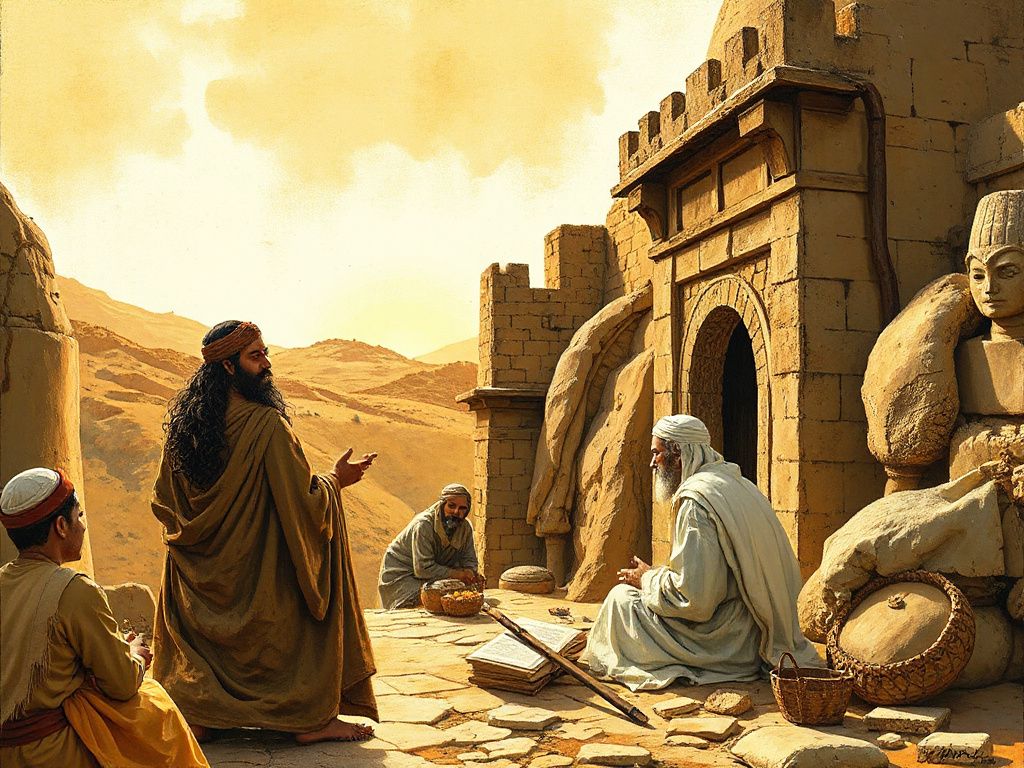
Written around 200–175 BC in Jerusalem by Yeshua ben Sira, addressed to Jewish students in a Hellenistic age, the book collects Israel's wisdom heritage to instruct readers in how to live a Torah-shaped life of prudence, piety, and moral discernment, equipping them to resist cultural assimilation and to honor God in every area of daily conduct.
Structure
- 1–4Prologue and the Origin of Wisdom
- 5–14Fear of the Lord and Daily Conduct
- 15–23God's Sovereignty, Election, and Human Responsibility
- 24–32Hymn to Wisdom and Piety in Practice
- 33–43Creation, the Patriarchs, and the Praise of the Fathers
- 44–51Continuation of the Praise of the Fathers and Conclusion
Major themes
The fear of the Lord is the beginning of wisdom
Sirach repeatedly affirms that true wisdom does not come from secular learning but from fearing the Lord and keeping His commandments (Sir 1:1-20; 19:20). The fear of the Lord leads one away from sin and bestows the glory and peace of life.
Ethics in family, marriage, and friendship
The author details duties and virtues between spouses, parents and children, masters and servants (Sir 3:1-16; 7:18-36; 25:1-26:18; 30:1-13; 40:1-11), and offers guidance on choosing friends (Sir 6:5-17; 22:19-26:28; 37:1-6), stressing fidelity, humility, and mutual love.
Attitudes toward poverty, wealth, and justice
Sirach warns of the dangers of wealth, urges mercy toward the poor, and denounces unjust oppression (Sir 4:1-10; 13:1-14; 29:1-20; 31:1-11). Riches themselves are not evil, but must be used with justice and compassion or they bring ruin.
Discipline of speech and conduct
The author frequently addresses the power of speech, urging restraint, careful listening, and avoidance of rash judgment (Sir 5:1-15; 19:4-17; 20:1-31; 23:7-15; 28:1-26), and emphasizes humility, patience, and self-mastery.
God's sovereignty, providence, and saving history
Sirach affirms God's sovereignty and providence over all creation (Sir 11:1-28; 16:24-18:14; 33:7-15; 39:12-35; 42:15-43:33), and in chapters 44-50 praises the patriarchs and ancestors, showing God's faithfulness throughout history.
How it points to Christ
Though Sirach does not directly name the Messiah, the wisdom it proclaims ultimately points to Christ, the eternal Wisdom of God incarnate (cf. Sir 24 and John 1:1-18; Col 1:15-20). The book's image of Wisdom dwelling in Israel and pitching a tent among the house of Jacob (Sir 24:8-12) prefigures Christ dwelling in the Virgin Mary at the Incarnation. The theme of the righteous sufferer who is ultimately glorified (Sir 2:1-18; chs. 44-50) foreshadows Christ's Passion and Resurrection. Jesus Christ, the Son of Wisdom, perfectly fulfills the Father's will and teaches mercy and justice—the embodiment of the perfect wisdom Sirach longs for.
Key verses
- 1:10Sets the foundational theme that the fear of the Lord is the beginning of wisdom.
- 2:1Calls the reader to prepare the heart and trust God in trials, a classic rule for endurance.
- 6:18–37On seeking and keeping wisdom, presenting disciplined pursuit of wisdom as greater than wealth.
- 24:1–34Wisdom's self-disclosure identifying her dwelling in Israel and the Temple, a counterpart to Proverbs 8.
- 34:9Wisdom in the experienced heart surpasses gifts, uniting piety and ethical discernment.
- 38:24After praising skilled trades, Ben Sira returns to his thesis: true wisdom rests in the fear of the Lord.
- 44:1Opens the Praise of the Fathers, recalling heroes of faith as models of reverent living.
- 51:23–26Ben Sira's closing testimony: from youth he sought wisdom and invites readers to praise God with heart and tongue.
Reflections on Sirach
Questions for reflection
- ·Sirach emphasizes that 'the fear of the Lord is the beginning of wisdom' (Sir 1:14). How can I concretely live out this reverence in my daily life today?
- ·In light of Sirach's teaching on poverty and injustice (Sir 4:1-10; 13:1-14), am I willing to share generously my time and resources, imitating God's justice and mercy?
- ·Sirach's warnings about speech (chapters 5, 19, 28) ask: do my words build up or tear down? Do I pause to pray in silence before speaking?
- ·How do the father's instructions and emphasis on family in Sirach (chapter 3) challenge me to fulfill love and responsibility in my family today?
- ·How is the 'Wisdom' described in Sirach (chapter 24) fully revealed in Christ? How can I allow Christ's wisdom to dwell more deeply within me?
Want to read Sirach start to finish? Open the reader for parallel Chinese/English text and ask anything as you go.
Start reading SirachSirach
Chapter 14
1Blessed is the man who does not blunder with his lips and need not suffer grief for sin.
2Blessed is he whose heart does not condemn him, and who has not given up his hope.
3Responsible Use of Wealth Riches are not seemly for a stingy man; and of what use is property to an envious man?
4Whoever accumulates by depriving himself, accumulates for others; and others will live in luxury on his goods.
5If a man is mean to himself, to whom will he be generous? He will not enjoy his own riches.
6No one is meaner than the man who is grudging to himself, and this is the retribution for his baseness;
7even if he does good, he does it unintentionally, and betrays his baseness in the end.
8Evil is the man with a grudging eye; he averts his face and disregards people.
9A greedy man’s eye is not satisfied with a portion, and mean injustice withers the soul.
10A stingy man’s eye begrudges bread, and it is lacking at his table.
11My son, treat yourself well, according to your means, and present worthy offerings to the Lord.
12Remember that death will not delay, and the decree of Hades has not been shown to you.
13Do good to a friend before you die, and reach out and give to him as much as you can.
14Do not deprive yourself of a happy day; let not your share of desired good pass by you.
15Will you not leave the fruit of your labors to another, and what you acquired by toil to be divided by lot?
16Give, and take, and beguile yourself, because in Hades one cannot look for luxury.
17All living beings become old like a garment, for the decree from of old is, “You must surely die!”
18Like flourishing leaves on a spreading tree which sheds some and puts forth others, so are the generations of flesh and blood: one dies and another is born.
19Every product decays and ceases to exist, and the man who made it will pass away with it.
20The Happiness of Seeking Wisdom Blessed is the man who meditates on wisdom and who reasons intelligently.
21He who reflects in his mind on her ways will also ponder her secrets.
22Pursue wisdom like a hunter, and lie in wait on her paths.
23He who peers through her windows will also listen at her doors;
24he who encamps near her house will also fasten his tent peg to her walls;
25he will pitch his tent near her, and will lodge in an excellent lodging place;
26he will place his children under her shelter, and will camp under her boughs;
27he will be sheltered by her from the heat, and will dwell in the midst of her glory.