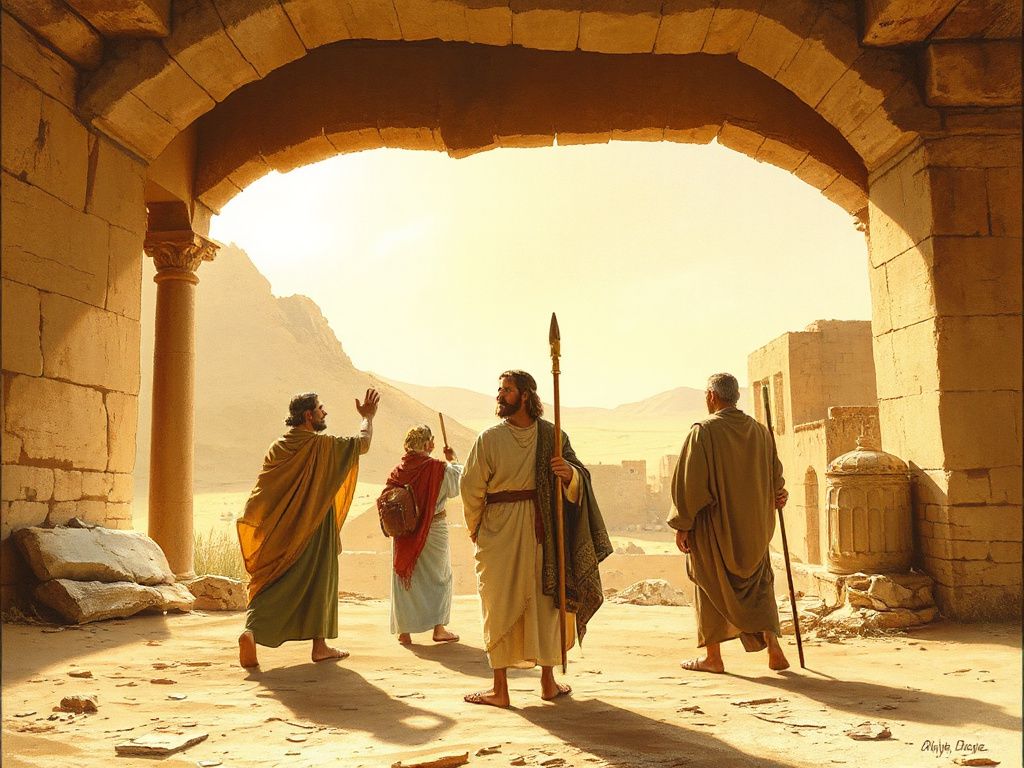
ESTUDIO DEL CAPÍTULO
Éxodo 23 — Justicia, pacto y presencia divina
Dios llama a Israel a una justicia veraz, a una misericordia práctica, a una adoración fiel y a una allegiance exclusiva, prometiendo a la vez guía, victoria y bendición.
Escritura
- 1.No admitirás falso rumor. No te concertarás con el impío para ser testigo falso.Thou shalt not take up a false report: put not thy hand with the wicked to be an unrighteous witness.
- 2.No seguirás a los muchos para hacer mal, ni responderás en litigio inclinándote a los más para hacer agravios;Thou shalt not follow a multitude to do evil; neither shalt thou speak in a cause to turn aside after a multitude to wrest justice:
- 3.ni al pobre distinguirás en su causa.neither shalt thou favor a poor man in his cause.
- 4.Si encontrares el buey de tu enemigo o su asno extraviado, vuelve a llevárselo.If thou meet thine enemy's ox or his ass going astray, thou shalt surely bring it back to him again.
- 5.Si vieres el asno del que te aborrece caído debajo de su carga, ¿le dejarás sin ayuda? Antes bien le ayudarás a levantarlo.If thou see the ass of him that hateth thee lying under his burden, thou shalt forbear to leave him, thou shalt surely release it with him.
- 6.No pervertirás el derecho de tu mendigo en su pleito.Thou shalt not wrest the justice due to thy poor in his cause.
- 7.De palabra de mentira te alejarás, y no matarás al inocente y justo; porque yo no justificaré al impío.Keep thee far from a false matter; and the innocent and righteous slay thou not: for I will not justify the wicked.
- 8.No recibirás presente; porque el presente ciega a los que ven, y pervierte las palabras de los justos.And thou shalt take no bribe: for a bribe blindeth them that have sight, and perverteth the words of the righteous.
- 9.Y no angustiarás al extranjero; porque vosotros sabéis cómo es el alma del extranjero, ya que extranjeros fuisteis en la tierra de Egipto.And a sojourner shalt thou not oppress: for ye know the heart of a sojourner, seeing ye were sojourners in the land of Egypt.
- 10.Seis años sembrarás tu tierra, y recogerás su cosecha;And six years thou shalt sow thy land, and shalt gather in the increase thereof:
- 11.mas el séptimo año la dejarás libre, para que coman los pobres de tu pueblo; y de lo que quedare comerán las bestias del campo; así harás con tu viña y con tu olivar.but the seventh year thou shalt let it rest and lie fallow, that the poor of thy people may eat: and what they leave the beast of the field shall eat. In like manner thou shalt deal with thy vineyard, and with thy oliveyard.
- 12.Seis días trabajarás, y al séptimo día reposarás, para que descanse tu buey y tu asno, y tome refrigerio el hijo de tu sierva, y el extranjero.Six days thou shalt do thy work, and on the seventh day thou shalt rest; that thine ox and thine ass may have rest, and the son of thy handmaid, and the sojourner, may be refreshed.
- 13.Y todo lo que os he dicho, guardadlo. Y nombre de otros dioses no mentaréis, ni se oirá de vuestra boca.And in all things that I have said unto you take ye heed: and make no mention of the name of other gods, neither let it be heard out of thy mouth.
- 14.Tres veces en el año me celebraréis fiesta.Three times thou shalt keep a feast unto me in the year.
- 15.La fiesta de los panes sin levadura guardarás. Siete días comerás los panes sin levadura, como yo te mandé, en el tiempo del mes de Abib, porque en él saliste de Egipto; y ninguno se presentará delante de mí con las manos vacías.The feast of unleavened bread shalt thou keep: seven days thou shalt eat unleavened bread, as I commanded thee, at the time appointed in the month Abib (for in it thou camest out from Egypt); and none shall appear before me empty:
- 16.También la fiesta de la siega, los primeros frutos de tus labores, que hubieres sembrado en el campo, y la fiesta de la cosecha a la salida del año, cuando hayas recogido los frutos de tus labores del campo.and the feast of harvest, the first-fruits of thy labors, which thou sowest in the field: and the feast of ingathering, at the end of the year, when thou gatherest in thy labors out of the field.
- 17.Tres veces en el año se presentará todo varón delante de Jehová el Señor.Three times in the year all thy males shall appear before the Lord Jehovah.
- 18.No ofrecerás con pan leudo la sangre de mi sacrificio, ni la grosura de mi víctima quedará de la noche hasta la mañana.Thou shalt not offer the blood of my sacrifice with leavened bread; neither shall the fat of my feast remain all night until the morning.
- 19.Las primicias de los primeros frutos de tu tierra traerás a la casa de Jehová tu Dios. No guisarás el cabrito en la leche de su madre.The first of the first-fruits of thy ground thou shalt bring into the house of Jehovah thy God. Thou shalt not boil a kid in it mother's milk.
- 20.He aquí yo envío mi Angel delante de ti para que te guarde en el camino, y te introduzca en el lugar que yo he preparado.Behold, I send an angel before thee, to keep thee by the way, and to bring thee into the place which I have prepared.
- 21.Guárdate delante de él, y oye su voz; no le seas rebelde; porque él no perdonará vuestra rebelión, porque mi nombre está en él.Take ye heed before him, and hearken unto his voice; provoke him not; for he will not pardon your transgression: for my name is in him.
- 22.Pero si en verdad oyeres su voz e hicieres todo lo que yo te dijere, seré enemigo de tus enemigos, y afligiré a los que te afligieren.But if thou shalt indeed hearken unto his voice, and do all that I speak; then I will be an enemy unto thine enemies, and an adversary unto thine adversaries.
- 23.Porque mi Angel irá delante de ti, y te llevará a la tierra del amorreo, del heteo, del ferezeo, del cananeo, del heveo y del jebuseo, a los cuales yo haré destruir.For mine angel shall go before thee, and bring thee in unto the Amorite, and the Hittite, and the Perizzite, and the Canaanite, the Hivite, and the Jebusite: and I will cut them off.
- 24.No te inclinarás a sus dioses, ni los servirás, ni harás como ellos hacen; antes los destruirás del todo, y quebrarás totalmente sus estatuas.Thou shalt not bow down to their gods, nor serve them, nor do after their works; but thou shalt utterly overthrow them, and break in pieces their pillars.
- 25.Mas a Jehová vuestro Dios serviréis, y él bendecirá tu pan y tus aguas; y yo quitaré toda enfermedad de en medio de ti.And ye shall serve Jehovah your God, and he will bless thy bread, and thy water; and I will take sickness away from the midst of thee.
- 26.No habrá mujer que aborte, ni estéril en tu tierra; y yo completaré el número de tus días.There shall none cast her young, nor be barren, in thy land: the number of thy days I will fulfil.
- 27.Yo enviaré mi terror delante de ti, y consternaré a todo pueblo donde entres, y te daré la cerviz de todos tus enemigos.I will send my terror before thee, and will discomfit all the people to whom thou shalt come, and I will make all thine enemies turn their backs unto thee.
- 28.Enviaré delante de ti la avispa, que eche fuera al heveo, al cananeo y al heteo, de delante de ti.And I will send the hornet before thee, which shall drive out the Hivite, the Canaanite, and the Hittite, from before thee.
- 29.No los echaré de delante de ti en un año, para que no quede la tierra desierta, y se aumenten contra ti las fieras del campo.I will not drive them out from before thee in one year, lest the land become desolate, and the beasts of the field multiply against thee.
- 30.Poco a poco los echaré de delante de ti, hasta que te multipliques y tomes posesión de la tierra.By little and little I will drive them out from before thee, until thou be increased, and inherit the land.
- 31.Y fijaré tus límites desde el Mar Rojo hasta el mar de los filisteos, y desde el desierto hasta el Eufrates; porque pondré en tus manos a los moradores de la tierra, y tú los echarás de delante de ti.And I will set thy border from the Red Sea even unto the sea of the Philistines, and from the wilderness unto the River: for I will deliver the inhabitants of the land into your hand; and thou shalt drive them out before thee.
- 32.No harás alianza con ellos, ni con sus dioses.Thou shalt make no covenant with them, nor with their gods.
- 33.En tu tierra no habitarán, no sea que te hagan pecar contra mí sirviendo a sus dioses, porque te será tropiezo.They shall not dwell in thy land, lest they make thee sin against me; for if thou serve their gods, it will surely be a snare unto thee.
Qué significa este pasaje
Los mandamientos iniciales protegen a la justicia de la falsedad, el soborno, la presión de las multitudes y el favoritismo. La misericordia se extiende incluso al ganado del enemigo, de modo que la justicia imparcial no requiere hostilidad personal ni indiferencia ante la necesidad ajena.
El descanso de la tierra en el séptimo año, el sábado del séptimo día y las tres fiestas anuales establecen un ritmo de provisión, descanso, recuerdo y adoración. Las instrucciones distinguen el servicio de Israel a Jehová de la adoración a otros dioses.
La promesa de Dios de enviar un ángel es condicional a una obediencia atenta. El capítulo presenta por tanto la presencia divina, la victoria, la fertilidad y la bendición no como beneficios aislados, sino como respuestas dentro de una relación de pacto que exige allegiance exclusiva.
Contexto
El capítulo pasa de los deberes legales y éticos a la observancia religiosa, y luego a la guía de Dios sobre Israel y a la derrota de los pueblos ya nombrados en el texto. Cierra prohibiendo pactos con ellos o con sus dioses, porque permanecer en la tierra podría llevar a Israel al pecado.
Las referencias cruzadas suministradas conectan los temas de la presencia prometida, la sanación, la obediencia diligente, la protección angélica, el servicio de todo corazón y la bendición para la tierra, la familia y el ganado.
Palabras clave del original
- H5375 La palabra provista se traduce como «difundir». En el versículo 1 forma parte del mandato de no difundir un falso informe.
- H5186 Las palabras provistas se traducen como «apartarse» y «pervertir la justicia». Describen la desviación del juicio alejándolo de lo recto.
- H1800 La palabra provista se traduce como «pobre». El versículo 3 advierte específicamente contra mostrar parcialidad en el pleito de una persona pobre.
Versículos relacionados
- Exodus 15:26 Ambos pasajes conectan el escuchar con cuidado, el hacer lo que es correcto, el guardar los estatutos de Dios y la libertad de las enfermedades traídas sobre Egipto.
- Exodus 33:14 Este versículo hace eco de la promesa de la presencia de Dios acompañando a Israel y dando descanso, reforzando el énfasis del capítulo en la guía divina y el refrigerio del sábado.
- Deuteronomy 7:13 Las referencias conectan la obediencia del pacto con la bendición de Dios sobre el pueblo, sus familias, el ganado, las cosechas y la tierra prometida.
Preguntas frecuentes
¿Cuál es la principal preocupación ética de Éxodo 23:1–9?
Israel debe preservar una justicia veraz e imparcial, rechazar el falso testimonio y el soborno, proteger a las personas vulnerables y mostrar misericordia incluso hacia un enemigo.
¿Por qué el capítulo ordena descanso para las personas, los animales y los forasteros?
El séptimo día es dado para restauración y aliento: el trabajo se detiene para que la comunidad, los trabajadores, los animales y los forasteros puedan ser refrescados.
¿Qué hay de condicional en la victoria prometida por Dios?
La promesa es dada a un pueblo que atiende la voz del ángel, obedece lo que Dios habla, rechaza a otros dioses y sirve solo a Jehová.